

Which Attenuator for Princeton Reverb?
Moderator: jingle_jangle
Which Attenuator for Princeton Reverb?
I bought a 1978 Princeton Reverb that I would like to use as a practice amp and I was wondering which attenuator would work well for low volume(bedroom)play?

-
jwargowski
- Junior Member
- Posts: 185
- Joined: Sat Apr 02, 2005 5:48 pm
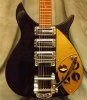
I'm looking into buying a blackface PR at the moment. What's your opinion of them as a match with a Ric? I guess if your looking into attenuators, it's plenty loud. Are they clean at high volume? What's your opinion of the reverb and trem? Does anyone have any experience comparing a PR to a VibroChamp?
The PRs are loud for their power rating. It does get a bit nasty cranked, but it is a very nice distortion. My 660/12 sounds very nice but a bit midrangy, I am still working that out. It sounds fabulous with my Carvin SC90. BTW, my PR has a Celestion vintage G12M-75 speaker in it, not the standard 10" speaker. The reverb is lush sounding and the tremolo is excellent sounding, better than the typical BF tremolo that grounds out the preamp signal, as the tremolo on a PR is the type that modulates the power tube bias.
A nice modern amp to consider instead of a vintage BF PR is the Headstrong Amps Lil' King, which is a hand built replica of the BF PR. Wayne at Headstrong rebuilt the electronics in my PR. www.headstrongamps.com
A nice modern amp to consider instead of a vintage BF PR is the Headstrong Amps Lil' King, which is a hand built replica of the BF PR. Wayne at Headstrong rebuilt the electronics in my PR. www.headstrongamps.com
-
jwargowski
- Junior Member
- Posts: 185
- Joined: Sat Apr 02, 2005 5:48 pm
Did you have to mod the cabinet in any way to fit in the 12"? I was actually thinking of going to a 15", but from the looks of things that would definitely require a custom cabinet. I'd probably just use an extension cabinet with a 15 in that case.
I've seen the Headstrong amps on the web, and am considering it, but if I can get the real thing for less, I'll probably go for it. I've seen several in excellent original condition for around 1,200. Pretty amazing ... how much were they new? I had always passed them by thinking they were beginners amps, now after 25 years of playing, it's exactly what I'm after!
One more thing - does anyone know of an adjustable bias mod for the Princeton?
I've seen the Headstrong amps on the web, and am considering it, but if I can get the real thing for less, I'll probably go for it. I've seen several in excellent original condition for around 1,200. Pretty amazing ... how much were they new? I had always passed them by thinking they were beginners amps, now after 25 years of playing, it's exactly what I'm after!
One more thing - does anyone know of an adjustable bias mod for the Princeton?
The 12" Celestion fit just fine, a 15" will not fit. Obviously the baffle board hole has to be cut larger.
Remember that an original amp will most likely need new caps, etc., so the price of a Headstrong sounds better by the time you figure the work into refurbishing an old one.
PRs were $169.00 in '64, and worked it's way up to $499.00 by the end of it's run in '86. Of course, there were some changes along the way and the last models were nothing like the early ones.
Funny you should inquire about a bias pot mod, not to be confused with Dane Paul Terry, I had Headstrong put one on my PR! Since the amp has a three prong grounded power cord, the ground switch was redundant, so Wayne added the bias pot in it's place. He also turned the ext. speaker jack into a line out.
Whatever you do, do not replace the rectifier tube witha GZ34 as the sound will get stiffer. Keep the 5U4 which will let the amp sing since it has more sag when the amp is pushed hard.
Remember that an original amp will most likely need new caps, etc., so the price of a Headstrong sounds better by the time you figure the work into refurbishing an old one.
PRs were $169.00 in '64, and worked it's way up to $499.00 by the end of it's run in '86. Of course, there were some changes along the way and the last models were nothing like the early ones.
Funny you should inquire about a bias pot mod, not to be confused with Dane Paul Terry, I had Headstrong put one on my PR! Since the amp has a three prong grounded power cord, the ground switch was redundant, so Wayne added the bias pot in it's place. He also turned the ext. speaker jack into a line out.
Whatever you do, do not replace the rectifier tube witha GZ34 as the sound will get stiffer. Keep the 5U4 which will let the amp sing since it has more sag when the amp is pushed hard.
I asked a friend on another forum about whether I would have to recap my PR and told me something interesting: "I've had four Princeton Reverbs ('66, '68, '68, '72), and I didn't have to change caps in any of them - they all sounded great! This really surprised me since I've had a number of other vintage Fenders, and they all needed to be recapped. I read a couple articles that indicated that the "cap cans" that the PR uses maintain their stability and life much longer than other caps. I don't know if that's true, but all my PRs sounded awesome, and a couple vintage specialists said that I should leave things alone until the sound started to deteriorate."
I had some problems with mine when I got it so Wayne replaced the tag board and basically rebuilt the amp, plus his price was very reasonable for what he did. There is more to a cap job than just the power supply caps, some resistors should be replaced also, as carbon comp resistors tend to absorb moisture over time, which can cause problems.
When mine worked it sounded great but then it would start to motorboat and oscillate, and it was hard to locate the exact problem area. In addition, there was lots of silicone all over the parts and some mods had been done to the amp, so we decided it was best just to totally rebuild it.
When mine worked it sounded great but then it would start to motorboat and oscillate, and it was hard to locate the exact problem area. In addition, there was lots of silicone all over the parts and some mods had been done to the amp, so we decided it was best just to totally rebuild it.