
ANOTHER FENDER "TRIBUTE" STRAT...
Moderator: jingle_jangle
Re: ANOTHER FENDER "TRIBUTE" STRAT...
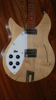
Jim, you're right. I meant to say "as far as I know, she has not refinished any Ricks".
'96 1997 LH MG
'98 360 LH MG
'00 360/12 Carl Wilson LH FG
'07 730S Shiloh LH
'98 360 LH MG
'00 360/12 Carl Wilson LH FG
'07 730S Shiloh LH
-
paologregorio

- Senior Member
- Posts: 6376
- Joined: Wed Aug 08, 2007 12:56 pm
- Contact:
Re: ANOTHER FENDER "TRIBUTE" STRAT...
My Telecaster uses a body made by Warmoth in `90. The neck was bought by a friend of mine about 7 years earlier from a bin of Fender bits. It was finished with the spaghetti logo on it, and the words "Special, J Page" on the back. I don't care so much if the body is Warmoth, but it would be cool to have a genuine Fender Spaghetti logo neck, with a "V" shape, birds eye maple, and a spaghetti logo. Here's that Tele again. I'm probably going to send the neck pickup back to Seymour Duncan to have the pickup wax potted and the chrome cover put on. If I had it to do over again I would have had old style Klusons put on, but it has the second issue Fender tuners without any screw holes on the back, which is kid of cool. The square buttons are held on by screws on the top are the only thing I really don't like about them. Does anyone else have these buttons, and has anyone replaced them with older style chrome "bean" buttons"? I know the Tele body is a bit over the top, but I like fancy looking guitars, which is why I like Rickenbackers-even the most basic Rick looks pretty fancy IMHO:jimk wrote:And you can get all the parts you need here. http://www.warmoth.com/jingle_jangle wrote:Why not build one yourse;l? It ain't rocket science. It's a screw-together geetar. And you get to learn some skills by doing.
Chances are, if you do your homework and take your time, you'll get better than a CS Strat anyway.
JimK
- Attachments
-
-
jingle_jangle
- RRF Moderator
- Posts: 22679
- Joined: Wed Dec 22, 2004 6:00 am
- Contact:
Re: ANOTHER FENDER "TRIBUTE" STRAT...
Well, there's many a trick between spray gun and Rick. Not meaning to toot my horn, or those of Dale or any one else who does it "the factory way", but there are specific materials and techniques that are used to refinish Ricks, as well as a steep learning curve, that keeps the vast majority of luthiers and refinish specialists out of the Rickenbacker game.
It's also tremendously hand-labor-intensive to do a RIC factory finish, and even with "professional shortcuts", it's far more difficult than spraying a Fender nitro finish. I am not meaning to comment on anything but this difficulty; the materials can be acquired and the techniques learned by anyone willing to put in the time. But few do. There are a couple of reasons, I believe. The first is that luthiers as a group (and what a mis-titled group--the majority are guitar repairmen and tinkerers who don't build) don't like finishing. If they did, they'd call themselves "finishers". Second is that, even for a luthier with a lot of nitro finishing under his/her belt, it's a real leap to do CV finishes, and if there's plenty of nitro work, why bother?
JH once told me that he considered that the number of luthiers able to properly finish a Rick to factory standards, he could count on the fingers on one hand.
Again, not tooting, but rather attempting to fill (with words and ideas and descriptions) the chasm between talking about finishing and the actual act of doing so.
Jim, if your tech can do a Rick finish to your own satisfaction, then your own desires have been satisfied, whether it's a nitro or "the real thing". It all depends, as always, on how important "factory specification" is to you.
It's also tremendously hand-labor-intensive to do a RIC factory finish, and even with "professional shortcuts", it's far more difficult than spraying a Fender nitro finish. I am not meaning to comment on anything but this difficulty; the materials can be acquired and the techniques learned by anyone willing to put in the time. But few do. There are a couple of reasons, I believe. The first is that luthiers as a group (and what a mis-titled group--the majority are guitar repairmen and tinkerers who don't build) don't like finishing. If they did, they'd call themselves "finishers". Second is that, even for a luthier with a lot of nitro finishing under his/her belt, it's a real leap to do CV finishes, and if there's plenty of nitro work, why bother?
JH once told me that he considered that the number of luthiers able to properly finish a Rick to factory standards, he could count on the fingers on one hand.
Again, not tooting, but rather attempting to fill (with words and ideas and descriptions) the chasm between talking about finishing and the actual act of doing so.
Jim, if your tech can do a Rick finish to your own satisfaction, then your own desires have been satisfied, whether it's a nitro or "the real thing". It all depends, as always, on how important "factory specification" is to you.

Re: ANOTHER FENDER "TRIBUTE" STRAT...
Paul,
I stand humbly before you with head hung low, and apologize for my ignorance and hubris. You see, I thought all electric guitars were finished like Ricks...some just not as well, that's all. I should've known.
JimK
I stand humbly before you with head hung low, and apologize for my ignorance and hubris. You see, I thought all electric guitars were finished like Ricks...some just not as well, that's all. I should've known.
JimK
-
jingle_jangle
- RRF Moderator
- Posts: 22679
- Joined: Wed Dec 22, 2004 6:00 am
- Contact:
Re: ANOTHER FENDER "TRIBUTE" STRAT...
Jim, I tried to be informative and "easy" in my post above. I worked hard on the wording and believe I expressed my own feelings accurately. I'm truly sorry if I hurt or compromised your feelings. 
On the other hand, if you're being sarcastic, well, then...
On the other hand, if you're being sarcastic, well, then...

Re: ANOTHER FENDER "TRIBUTE" STRAT...
Uh-oh, Paul's using smileys... 
On a serious note, that was a great reading. I didn't know either that the processes of finishing on Rics and some other brands are that different.
On a serious note, that was a great reading. I didn't know either that the processes of finishing on Rics and some other brands are that different.
Nothing will get you dead quicker than being deadly serious about yourself.
-
jingle_jangle
- RRF Moderator
- Posts: 22679
- Joined: Wed Dec 22, 2004 6:00 am
- Contact:
Re: ANOTHER FENDER "TRIBUTE" STRAT...
An exclamation point in a yellow circle and a "winky" are smilies now? I'm worried, too...
Re: ANOTHER FENDER "TRIBUTE" STRAT...
Okay, you may call them "exclamey" and "winkey". The others may be "sadey", "shockey", "confusey", "cooley", "madey", "razzey", "embarrassey", "cryey", "eviley", "twistedeviley", "rollingeyey", "questioney", "ideaey", "arrowey", "neutraley", and "mrgreeney". Actually, i cannot understand why emoticons like (_E=mC2_) or, say, %-/ are called smileys in today's net "world" (at least here where i live), but that's the case.
Um. Sorry for going that far off the topic.
Um. Sorry for going that far off the topic.
Nothing will get you dead quicker than being deadly serious about yourself.
-
jingle_jangle
- RRF Moderator
- Posts: 22679
- Joined: Wed Dec 22, 2004 6:00 am
- Contact:
Re: ANOTHER FENDER "TRIBUTE" STRAT...
I like your names for them better.
Re: ANOTHER FENDER "TRIBUTE" STRAT...
No, I took you at face value, Paul. And I wasn't being sarcastic. Actually, I was a little ...um...chagrinned, maybe? And yes, your post really was indeed quite informative. All's well.jingle_jangle wrote:Jim, I tried to be informative and "easy" in my post above. I worked hard on the wording and believe I expressed my own feelings accurately. I'm truly sorry if I hurt or compromised your feelings.
On the other hand, if you're being sarcastic, well, then...
JimK
-
paologregorio
- Senior Member
- Posts: 6376
- Joined: Wed Aug 08, 2007 12:56 pm
- Contact:
Re: ANOTHER FENDER "TRIBUTE" STRAT...
My local luthier, who does everything, including building his own custom guitars, is good with nitrcellulose, but had NEVER done anything in CV. He just said, "I've never used that, but I think nitro is the best".
I know my nitro necks are faster than my CV necks, but Rick finishes are pretty gorgeous. Is CV more durable than nitro?
Any words of wisdom for you luthier gents in the know?
I know my nitro necks are faster than my CV necks, but Rick finishes are pretty gorgeous. Is CV more durable than nitro?
Any words of wisdom for you luthier gents in the know?
-
jingle_jangle
- RRF Moderator
- Posts: 22679
- Joined: Wed Dec 22, 2004 6:00 am
- Contact:
Re: ANOTHER FENDER "TRIBUTE" STRAT...
Are CV finishes more durable than nitro?
The short answer is a loud, "YES!". The long answer is that there are many ways to qualify the short answer.
CV is a two-part polymer finish. It's self-catalyzing. It's much, much more forgiving that nitro, which is an air-drying finish.
Here's a statement from Ed Roman's website which I saved awhile ago because virtually everything said in it is either false on its face, or sadly misinformed. It's typical of a few of the myths and misconceptions about various guitar finishes that make it into print under the guise of "expert advice":
Polyester Paint jobs are easy and inexpensive to make look very good. Most every company uses it from Ibanez to PRS. Polyester finishes are easily identifiable by the thick glossy finish. Polyester as opposed to Polyurethane is resin based and therefore thicker and goopier. (Not great for tone). Polyurethane is much more expensive but it's thinner and sounds measurably better than Polyester.
Nitrocellulose is a lacquer and it is much harder to work with. Nitro is what all the companies from Fender to Gibson to D' Angelico used to use in the 50's & 60's. Nitro is a much thinner finish than Polyester and it doesn't clog the wood pores.
Today only a few companies offer a Nitrocellulose option, I know that I do. However there are other ways to extract good tone from wood even using Polyester or Polyurethane.
The real key of course is thickness. An easy way to measure thickness is to unscrew your strap lock or strap pin and look inside the hole. If you can see a layer of filler like on ESP, Jackson, Fender & Ibanez you will know what I am talking about.
This filler stifles your tone. It dampens the resonance so much that you get a very dead tone. Ok, that may be fine if you are playing metal but a jazz guitarist or blues guitarist will want more natural overtones than one of those guitars generates.
Part of Rickenbacker's distinctive tone is their beautifully finished nitrocellulose guitars.
First off, polyester is most often used by Asian and Third World guitar factories, as it is very, very labor-intensive, and labor is cheap in these countries. It also has a relatively high VOC (although there are suppressed polyester formulas which have recently become available in the USA, and other unsaturated polyesters which use modified diluents), lending itself to use in areas with lax or no controls on VOC emissions. Nitro is also a high-VOC paint, although once again, lower-VOC formulations are available. It's simply too environmentally nasty and not so durable; it was pretty much banned in Southern California in the early 1980s and has largely fallen into disuse in industrial applications (except some furniture finishing). Some guitar makers hype it as having "better tone" and offer it as an extra-cost option. I say, nonsense, except in cases of hollowbody electrics. Hollowbodies built using traditional construction methods. with bent sides and formed or carved thin tops and backs, will benefit most from thinner finishes; even so, a properly-sanded and buffed CV finish will only exhibit a final thickness of a few thousandths of an inch, and will show only small differences from a nitro-finished guitar that is otherwise identical. Ed, of course, would offer this as an option; it's a way to pack an invoice like a new car dealer.
Ibanez and PRS both use polyurethanes these days, although in the past Ibanez did use polyester finishes.
Polyester and polyurethane are both polymeric systems, Ed's use of the term "resin" is misleading, as it does not distinguish one system from the other. Ordinary air-dry enamel paint is an "alkyd resin", and latex water-based paint uses vinyl and acrylic resins; the term is nonsense in this context.
Nitrocellulose is a type of lacquer and is very, very easy and forgiving to work with (you can tell that Ed has never painted any guitars...). This ease of application is one thing that keeps companies like ReRanch in business.
"Nitro doesn't clog the wood pores". Of course it does! It fills 'em up solid, like any paint does. That's how we get glossy finishes without wood-grain "print through".
And, lastly, the last sentence that states that Rickenbacker's good tone is due to their nitrocellulose finishes.
Rick has not used nitro since sometime in 1959! Even my '60 Capri was originally finished with conversion varnish (a generic term for a catalyzing polyurethane finish formulated for use on wood).
Back to the facts: Rickenbackers are painted in three steps, once the sanding of the bare wood is complete. First step is sealer; many guitar companies use vinyl sealer because it's fast. However, it releases high VOCs in a production situation. RIC uses a catalyzing sealer.
Next step is color and RIC uses an evaporative automotive-type paint for the very thin and not-so-durable color coats, whether they be opaque paints or non-penetrating dyes (as are used in bursts like FG). Last is many coats of conversion varnish, which in spraying build up many coats and which is typically sanded and flatted to a thickness roughly one-half to one-third of the originally-sprayed thickness.
After spraying, flatting, and buffing, a catalyzed CV finish will continue to shrink over the surface of the guitar for several months, with the bulk of this shrinkage happening in the first 30 days or so.
Once nitro's solvents have fully evaporated, the paint remaining is fairly durable, but it not only will shrink over time, but also embrittle. This makes it very vulnerable to knocks and dings, not to mention splitting as the wood underneath it shifts. CV, on the other hand is literally and nominally a plastic coating which does a superior job of protecting the wood. Were you to finish two identical pieces of maple with nitro and CV, let them cure, buff each to a high gloss, and stress-test them both, the nitro would fail first in every category.
CV is expensive to buy, and difficult to apply and labor-intensive to get looking perfect, but requires very little maintenance in the long run.
The short answer is a loud, "YES!". The long answer is that there are many ways to qualify the short answer.
CV is a two-part polymer finish. It's self-catalyzing. It's much, much more forgiving that nitro, which is an air-drying finish.
Here's a statement from Ed Roman's website which I saved awhile ago because virtually everything said in it is either false on its face, or sadly misinformed. It's typical of a few of the myths and misconceptions about various guitar finishes that make it into print under the guise of "expert advice":
Polyester Paint jobs are easy and inexpensive to make look very good. Most every company uses it from Ibanez to PRS. Polyester finishes are easily identifiable by the thick glossy finish. Polyester as opposed to Polyurethane is resin based and therefore thicker and goopier. (Not great for tone). Polyurethane is much more expensive but it's thinner and sounds measurably better than Polyester.
Nitrocellulose is a lacquer and it is much harder to work with. Nitro is what all the companies from Fender to Gibson to D' Angelico used to use in the 50's & 60's. Nitro is a much thinner finish than Polyester and it doesn't clog the wood pores.
Today only a few companies offer a Nitrocellulose option, I know that I do. However there are other ways to extract good tone from wood even using Polyester or Polyurethane.
The real key of course is thickness. An easy way to measure thickness is to unscrew your strap lock or strap pin and look inside the hole. If you can see a layer of filler like on ESP, Jackson, Fender & Ibanez you will know what I am talking about.
This filler stifles your tone. It dampens the resonance so much that you get a very dead tone. Ok, that may be fine if you are playing metal but a jazz guitarist or blues guitarist will want more natural overtones than one of those guitars generates.
Part of Rickenbacker's distinctive tone is their beautifully finished nitrocellulose guitars.
First off, polyester is most often used by Asian and Third World guitar factories, as it is very, very labor-intensive, and labor is cheap in these countries. It also has a relatively high VOC (although there are suppressed polyester formulas which have recently become available in the USA, and other unsaturated polyesters which use modified diluents), lending itself to use in areas with lax or no controls on VOC emissions. Nitro is also a high-VOC paint, although once again, lower-VOC formulations are available. It's simply too environmentally nasty and not so durable; it was pretty much banned in Southern California in the early 1980s and has largely fallen into disuse in industrial applications (except some furniture finishing). Some guitar makers hype it as having "better tone" and offer it as an extra-cost option. I say, nonsense, except in cases of hollowbody electrics. Hollowbodies built using traditional construction methods. with bent sides and formed or carved thin tops and backs, will benefit most from thinner finishes; even so, a properly-sanded and buffed CV finish will only exhibit a final thickness of a few thousandths of an inch, and will show only small differences from a nitro-finished guitar that is otherwise identical. Ed, of course, would offer this as an option; it's a way to pack an invoice like a new car dealer.
Ibanez and PRS both use polyurethanes these days, although in the past Ibanez did use polyester finishes.
Polyester and polyurethane are both polymeric systems, Ed's use of the term "resin" is misleading, as it does not distinguish one system from the other. Ordinary air-dry enamel paint is an "alkyd resin", and latex water-based paint uses vinyl and acrylic resins; the term is nonsense in this context.
Nitrocellulose is a type of lacquer and is very, very easy and forgiving to work with (you can tell that Ed has never painted any guitars...). This ease of application is one thing that keeps companies like ReRanch in business.
"Nitro doesn't clog the wood pores". Of course it does! It fills 'em up solid, like any paint does. That's how we get glossy finishes without wood-grain "print through".
And, lastly, the last sentence that states that Rickenbacker's good tone is due to their nitrocellulose finishes.
Rick has not used nitro since sometime in 1959! Even my '60 Capri was originally finished with conversion varnish (a generic term for a catalyzing polyurethane finish formulated for use on wood).
Back to the facts: Rickenbackers are painted in three steps, once the sanding of the bare wood is complete. First step is sealer; many guitar companies use vinyl sealer because it's fast. However, it releases high VOCs in a production situation. RIC uses a catalyzing sealer.
Next step is color and RIC uses an evaporative automotive-type paint for the very thin and not-so-durable color coats, whether they be opaque paints or non-penetrating dyes (as are used in bursts like FG). Last is many coats of conversion varnish, which in spraying build up many coats and which is typically sanded and flatted to a thickness roughly one-half to one-third of the originally-sprayed thickness.
After spraying, flatting, and buffing, a catalyzed CV finish will continue to shrink over the surface of the guitar for several months, with the bulk of this shrinkage happening in the first 30 days or so.
Once nitro's solvents have fully evaporated, the paint remaining is fairly durable, but it not only will shrink over time, but also embrittle. This makes it very vulnerable to knocks and dings, not to mention splitting as the wood underneath it shifts. CV, on the other hand is literally and nominally a plastic coating which does a superior job of protecting the wood. Were you to finish two identical pieces of maple with nitro and CV, let them cure, buff each to a high gloss, and stress-test them both, the nitro would fail first in every category.
CV is expensive to buy, and difficult to apply and labor-intensive to get looking perfect, but requires very little maintenance in the long run.
-
paologregorio
- Senior Member
- Posts: 6376
- Joined: Wed Aug 08, 2007 12:56 pm
- Contact:
Re: ANOTHER FENDER "TRIBUTE" STRAT...
Thanks for the information Paul. It was a delightful read on top of being most informative!

Re: ANOTHER FENDER "TRIBUTE" STRAT...
Hey Paul, how DO we get wood grain "print through". I've seen it on cheap instruments at the usual guitar emporiums. Very informative missive BTW. As I read the ER quoting, I could tell myself it was off on almost all counts, thanks mostly to your previous postings.jingle_jangle wrote:That's how we get glossy finishes without wood-grain "print through".
-
jingle_jangle
- RRF Moderator
- Posts: 22679
- Joined: Wed Dec 22, 2004 6:00 am
- Contact:
Re: ANOTHER FENDER "TRIBUTE" STRAT...
So-called "photoflame" printing won't fool anyone who knows what REAL wood looks like close-up (it's iridescent, and flamed hardwood has a dimensional "flop" as the position of the light source shifts relative to the viewer).
It's done by "tampo" printing. Tampo uses a stretchy, highly compliant, shaped silicone pad to transfer a darker brown ink from a platen to the curved surface onto which the"grain" is applied. The actual wood pattern is photo-silk-screened onto a polished metal plate, where, before it dries, it's picked up by the tampo pad, which is then positioned over the guitar body, which has received a light tan colored base coat. The pad is lowered onto the body and pressed over it, where it will conform to the contours and deposit the photographically-duplicated grain pattern onto the surface. Then, after it dries, it's clear coated.
Photoflame guitars typically have shaded edges. This is done over the tampo printing to hide the ragged edge of the grain ending around the edge of the guitar body. Result: cheap guitar, "elegant" fake grain.
I had a Fender Jagmaster done this way. Didn't look half bad for a $200.00 guitar. Now, if only those pickups weren't so nasty...
BTW, this is a process seen most often in Asia, where low-end stuff rules.
It's done by "tampo" printing. Tampo uses a stretchy, highly compliant, shaped silicone pad to transfer a darker brown ink from a platen to the curved surface onto which the"grain" is applied. The actual wood pattern is photo-silk-screened onto a polished metal plate, where, before it dries, it's picked up by the tampo pad, which is then positioned over the guitar body, which has received a light tan colored base coat. The pad is lowered onto the body and pressed over it, where it will conform to the contours and deposit the photographically-duplicated grain pattern onto the surface. Then, after it dries, it's clear coated.
Photoflame guitars typically have shaded edges. This is done over the tampo printing to hide the ragged edge of the grain ending around the edge of the guitar body. Result: cheap guitar, "elegant" fake grain.
I had a Fender Jagmaster done this way. Didn't look half bad for a $200.00 guitar. Now, if only those pickups weren't so nasty...
BTW, this is a process seen most often in Asia, where low-end stuff rules.