
Too bad ...
Moderators: rickenbrother, ajish4

-
atomic_punk

- Senior Member
- Posts: 5093
- Joined: Wed Sep 17, 2003 5:00 am
- Contact:
-
dano
Here is an update on the whacked Cheyenne I bought several weeks ago. As you may recall the neck had a nasty bow and a delaminated fingerboard. At some point, someone removed the fingerboard (I can't even guess why) and did not put it back on correctly. It cracked in several places at the time and was sloppily glued back together. Just like any of you would do, I decided to remove the fingerboard!

The green thing is a PVC heating blanket that is used for bending PVC. Here it is softening the glue. The fingerboard pretty much just peeled off.

The green thing is a PVC heating blanket that is used for bending PVC. Here it is softening the glue. The fingerboard pretty much just peeled off.
The neck is DEAD straight without the fingerboard. As we removed the fingerboard billows of steam rose from the wood. Apparently the neck of this bass was very wet at some point. This could have caused the warp. The good news is that it is perfectly fixable. I am going to give it a new maple fingerbard and a new tung oil finish. More to come..........
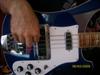
The fingerboard was sanded down to the point where the side dots were at the top edge of the board. Ouch! By my measurements, the wood was taken down about 1/8th of an inch from the original size. SInce much of the rigidity of the neck comes from the fingerboard, taking away a third of the material like that is a bad idea. It probably lead to the warping. It seems that the fingerboard was removed prior to reshaping. Removal was likely done using steam. Hence the water that boiled off during the heating process. I have a nice piece of lightly figured maple that matches the neck grain very well. Over the weekend I will cut a new fingerboard from it and try to bring this baby back to life.
-
philipharris

- Member
- Posts: 364
- Joined: Mon May 10, 2004 9:16 am
This is an interesting opportunity to see how the necks of the modern basses are made. As you can see in the above picture, little was changed from the old rod system to the new. The rod channels are slightly narrower than the ones with the old system. The most notable difference is the addition of thin maple strips on the back of the fingerboard. These give the newer rods something to push against as they are tightened. Here is bottom side of the fingerboard. Note the small holes at each end. These accept pins that hold the board in place as the glue sets.


