
Did Rics decline in the 70's....?
Moderators: rickenbrother, ajish4
-
beatlefreak

- Senior Member
- Posts: 6160
- Joined: Wed Jun 14, 2006 5:45 am
- Contact:
Re: Did Rics decline in the 70's....?
I'm happy with my 325Y59, also.

Re: Did Rics decline in the 70's....?
Oh, trust me. I am the same way. The v64 is an incredibly good guitar. I am by no means knocking it for any reason. If I hadn't had the oportunity to pick a real OS up for a decent price and measure them, I wouldn't have known at all. Truth be told, you can hold/watch/play both, and they won't seem that different, I'm just being an anorak, and on a tangent.jps wrote:I am quite happy with my 360V64. I guess I am not that fanatical about the details; it is still a fantastic guitar, to me, anyway. .

Cheers,
-Collin
Re: Did Rics decline in the 70's....?
Yep, I just found the quote I had in mind, concerning the vintage reissues. I am fairly certain it is the quote you expected.johnhall wrote:Show me where this was said.collin wrote:. . .they were miles apart, despite the fact that RIC mentioned using "original templates" to build them.
What certainly is true and what probably was said is that these were built on much of the same machinery using many of the same fixtures. The "C" Series was the first line where the intent was exceptional accuracy and because only then was there the interest in such detailed replicas.
Richard R. Smith book, pg. 166, 2nd paragraph:
" The Rickenbacker factory is quite similar in some respects to what it was in the 1960s. The company found nearly all the original tools, dies, and patterns when perparing to make the reissues. This is probably the only guitar company in the world making their re-issues with nearly original tooling."
What I got out of that was the implication that, by using original patterns, tools and dies, that items such as body outline, headstock shape, and neck thickness (which is the most understandable variation), would be very close if not identical to the original guitars that these tools/patters were used to create.
Once again, not that there is any issues whatsoever with the V series--they are fantastic. I was just surprised at slight differences when it comes down to measuring things etc.
Cheers,
-Collin

Re: Did Rics decline in the 70's....?
Ah, okay, so when you said "RIC mentioned", you used RIC to mean Richard Smith.
-
rickenbrother

- RRF Moderator
- Posts: 13240
- Joined: Sun May 26, 2002 5:00 am
Re: Did Rics decline in the 70's....?
I love my '70's 4001 basses!
JETGLO should officially be renamed JETGLO ROCKS! 
-
rickinroma

- RRF Consultant
- Posts: 1113
- Joined: Tue Oct 19, 2004 11:27 pm
- Contact:
Re: Did Rics decline in the 70's....?
RIChard Smith 
I can imagine that compared to the V series, the introduction of the C series was a step ahead towards the mania that have been increasing in the last 20 years of demanding vintage-look-a-like instruments .... people started reading and got much better informed about the details of the old 60s instruments, hence the need of a more detailed series that would meet the request
I can imagine that compared to the V series, the introduction of the C series was a step ahead towards the mania that have been increasing in the last 20 years of demanding vintage-look-a-like instruments .... people started reading and got much better informed about the details of the old 60s instruments, hence the need of a more detailed series that would meet the request
-
deaconblues

- RRF Consultant
- Posts: 2390
- Joined: Tue Feb 06, 2007 5:14 pm
Re: Did Rics decline in the 70's....?
The V-series guitars are great 'modern' reissues with the hot toasters. Every one I've played has been top quality.
I owned a 325v63 a few years back, and when I finally got a 325c64 the difference was night and day. The c64 is lighter and much more resonant, and the '60s style no-volute headstock and neck makes for a really fast playing guitar. The C-series guitars just feel different...it's probably the improved bracing.
I owned a 325v63 a few years back, and when I finally got a 325c64 the difference was night and day. The c64 is lighter and much more resonant, and the '60s style no-volute headstock and neck makes for a really fast playing guitar. The C-series guitars just feel different...it's probably the improved bracing.
Re: Did Rics decline in the 70's....?
Okay, okay. Then this is the official, "comment withdrawn" post. It was Smith who stated that information, and not RIC directly. My apologies.johnhall wrote:Ah, okay, so when you said "RIC mentioned", you used RIC to mean Richard Smith.
I would imagine that Smith wouldn't print information that wasn't true in a book endorsed (well, sold) by RIC themselves, so I perhaps took it as fact, and indirectly from RIC themselves.
Anyways............

Cheers,
-Collin
Re: Did Rics decline in the 70's....?
Smith's comments are actually quite accurate, even if other sections of the book are not. But what he didn't say is that while we had all the various tooling fixtures and templates (I still have the templates), many times there were many different ones, each of which was different from the other. For example, I have perhaps 20 of the plexi cutting templates for the 60's 300 series guitars and no two are alike.
The C Series zeroed in one some very specific guitars as the holy grail for reproduction, taking this kind of variation out of the loop.
The C Series zeroed in one some very specific guitars as the holy grail for reproduction, taking this kind of variation out of the loop.
Re: Did Rics decline in the 70's....?
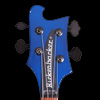
Does this mean the neck of my 4001c64 is just as wide as the very specific "guitar" after which it was modeled is?johnhall wrote:The C Series zeroed in one some very specific guitars as the holy grail for reproduction, taking this kind of variation out of the loop.

Re: Did Rics decline in the 70's....?
What I meant about the 58 Les Paul Historic Series guitar was that even owning a 1960s RM bass (as some guitarists own original 58 Les Pauls) would make it difficult to drag out on the road such a valuable collectors item to leave on a stand while you have a break in the dressing room or at rehearsal for fear of it being damaged or nicked...and thats assuming someone was willing to insure it on the road without breaking the bank.I ended up not taking my old RM to pubs and clubs because of that.
With the very accurate re-makes (and by this I mean original spec bridge castings on the bass for instance) you can get insurance for one thing and replacement parts if need be.
I buy Rickenbackers to play and thrash the hell out of onstage and I dont want to sound like some sad train spotting geek its just that its frustrating that the Ric company has the expertise and know how to make new vintage accurate parts etc. that could be useful on new guitars as well as copies of older originals but has never explored that option as far as producing the hardware.
(There is at the moment a thread all about such hardware issues)
I love my CS and V63 basses but if Rick came up with spot on copies of all the old designs I would have an RM on order and start changing the HS pick ups and bridges on those re-issues for the real thing as I think the original designs got it right first time around.They are idiosicratic and awkward to the uninitiated but we love that!
The quality of workmanship didnt decline in the 70s it was the gradual move away from the better bass bridge casting,headstock shape (design not build) and other aesthetic changes that were bad moves in design terms. The Eifel Tower could be improved with modern hardware etc. but why would you want to mess with it when its so right as it is?
With the very accurate re-makes (and by this I mean original spec bridge castings on the bass for instance) you can get insurance for one thing and replacement parts if need be.
I buy Rickenbackers to play and thrash the hell out of onstage and I dont want to sound like some sad train spotting geek its just that its frustrating that the Ric company has the expertise and know how to make new vintage accurate parts etc. that could be useful on new guitars as well as copies of older originals but has never explored that option as far as producing the hardware.
(There is at the moment a thread all about such hardware issues)
I love my CS and V63 basses but if Rick came up with spot on copies of all the old designs I would have an RM on order and start changing the HS pick ups and bridges on those re-issues for the real thing as I think the original designs got it right first time around.They are idiosicratic and awkward to the uninitiated but we love that!
The quality of workmanship didnt decline in the 70s it was the gradual move away from the better bass bridge casting,headstock shape (design not build) and other aesthetic changes that were bad moves in design terms. The Eifel Tower could be improved with modern hardware etc. but why would you want to mess with it when its so right as it is?
-
deaconblues
- RRF Consultant
- Posts: 2390
- Joined: Tue Feb 06, 2007 5:14 pm
Re: Did Rics decline in the 70's....?
It would be great, but introducing new models would only exacerbate the order backlog.

Re: Did Rics decline in the 70's....?
I have had sosoooooooooooooooooooo many 70's Ric basses that it seems like they are like everyone else....there were great ones and then there were not so great ones...
i pretty much steer clear of most 78 Rics now because most of the ones I have had were not great....
i pretty much steer clear of most 78 Rics now because most of the ones I have had were not great....
Re: Did Rics decline in the 70's....?
To add to that, it wasn't until 1980 when I think Rickenbacker guitars were revived...Tom Petty and Mike Campbell saved the day on that one!beatlefreak wrote:I don't know whether Rickenbacker was in a decline in the seventies, but I believe that their guitars were less popular - However the 4001 became more popular. This is probably due to the artists that used Rickenbacker guitars being less popular (The Beatles split up in 1970, CCR split in 1972, the Byrds and the Beach Boys weren't as popular in the seventies as they were in the sixties). Bassists in popular bands of the seventies played 4001s (Paul McCartney and Chris Squire, for example).
-
Ontario_RIC_fan

- Advanced Member
- Posts: 2797
- Joined: Sat Dec 20, 2008 8:39 pm
Re: Did Rics decline in the 70's....?
JakeK wrote:To add to that, it wasn't until 1980 when I think Rickenbacker guitars were revived...Tom Petty and Mike Campbell saved the day on that one!beatlefreak wrote:I don't know whether Rickenbacker was in a decline in the seventies, but I believe that their guitars were less popular - However the 4001 became more popular. This is probably due to the artists that used Rickenbacker guitars being less popular (The Beatles split up in 1970, CCR split in 1972, the Byrds and the Beach Boys weren't as popular in the seventies as they were in the sixties). Bassists in popular bands of the seventies played 4001s (Paul McCartney and Chris Squire, for example).
Well I started buying RIC's in the early 80's too.. 1982 to be precise.
I think much of it was a recognition by most of the new wave music of the era, that there was a classic "beat group/British invasion" vibe that started to be emulated by new groups with modern recording techniques. Blondie, the Jam, the Church, the Knack, XTC, (the Romantics even!) all played on that particular vibe, and surprise surprise, all them show up playing RICS though Vox amps.
1981 was also a year of a huge Beatles resurgence after the death of Lennon the previous December.
It was a look and a sound that I wanted that was distinctive from all the Strats and Les Paul's that all of my high school friends played. I was the only guy I knew that had a Rickenbacker guitar, although there were quite a few basses floating around with Geddy Lee of Rush being the bass player that everyone was trying to emulate... At least in my town in Canada.
I am convinced that if it were not for the 4001 bass being the industry standard bass in the 70's that the RIC company may not have survived the decade.. (Just speculation on my part of course, but of you look at the registry for the 70's/early 80's basses seem to be what predominates)...
I don't think that there is anything to be ashamed about this.. Great companies adapt to their circumstances to survive and remain profitable... The innovation shown even today with the computerized lathes and the like - allowing them to produce more instruments while maintaining such a high standard of quality - proves this.
Brian
Brian Morton
A Rickenbacker Fan
in Hamilton, Ontario, Canada
=========================
67 FG 625
74 JG 4000
76 JG 430
77 JG 620
77 JG 320
79 MG 450
79 JG 4001
80 FG 620/12
81 BG 480
91 JG 610
02 BG 620
78 TR7
83 TR25
A Rickenbacker Fan
in Hamilton, Ontario, Canada
=========================
67 FG 625
74 JG 4000
76 JG 430
77 JG 620
77 JG 320
79 MG 450
79 JG 4001
80 FG 620/12
81 BG 480
91 JG 610
02 BG 620
78 TR7
83 TR25