
Non-Rickenbacker Fretless Basses Sub-Forum
-
deblase4001
- Junior Member
- Posts: 128
- Joined: Sun Mar 04, 2007 8:13 pm
Re: Non-Rickenbacker Fretless Basses Sub-Forum
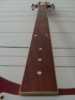
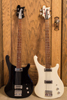
Wanted to try fretless so I picked up this Carvin on ebay. It has full koa body and neck with an ebony board. Though I haven't taken it to a gig yet, it is very easy to play and sounds fantastic.
-
rickenbrother

- RRF Moderator
- Posts: 13240
- Joined: Sun May 26, 2002 5:00 am
Re: Non-Rickenbacker Fretless Basses Sub-Forum
Congrats and enjoy it, Greg! It looks like your cat wants to give a try also! 
Let us know your thought about playing fretless and the different tones you'll get in comparion to a fretted bass.
Let us know your thought about playing fretless and the different tones you'll get in comparion to a fretted bass.
JETGLO should officially be renamed JETGLO ROCKS!
Re: Non-Rickenbacker Fretless Basses Sub-Forum
Would appear to smell good as well...deblase4001 wrote: Wanted to try fretless so I picked up this Carvin on ebay. It has full koa body and neck with an ebony board. Though I haven't taken it to a gig yet, it is very easy to play and sounds fantastic.
Re: Non-Rickenbacker Fretless Basses Sub-Forum
I'm more interested in the cat's opinion.rickenbrother wrote:Congrats and enjoy it, Greg! It looks like your cat wants to give a try also!
Let us know your thought about playing fretless and the different tones you'll get in comparion to a fretted bass.

Re: Non-Rickenbacker Fretless Basses Sub-Forum
Uh, I dunno about that. I've seen cats spend quite a bit of time sniffing stuff I don't want anywhere near my nose...wints wrote:Would appear to smell good as well...deblase4001 wrote: Wanted to try fretless so I picked up this Carvin on ebay. It has full koa body and neck with an ebony board. Though I haven't taken it to a gig yet, it is very easy to play and sounds fantastic.

I have NO idea what to do with those skinny stringed things... I'm just a bass player...

Re: Non-Rickenbacker Fretless Basses Sub-Forum
The ultimate non-Rickenbacker fretless: does anybody out there also play the double bass as well (aka upright bass, doghouse, bull fiddle, etc.)? My dance band plays mostly traditional literature, and even though I've played electric bass for over 35 years, and know how to moderate the tone, intonation, etc., to make it fit, believe it or not, there's still just too much push on an electric, Rick or otherwise, for this band. Also, living near Branson, MO, I've faked my way through more country/gospel/bluegrass gigs that I really shouldn't. So I'm considering adding a double bass to the arsenal to go with both of my electric basses including my 4002, and my tubas for concert band, indoors and out. Thanks.
-
FretlessOnly

- Advanced Member
- Posts: 1605
- Joined: Sat Feb 21, 2009 9:00 pm
Re: Non-Rickenbacker Fretless Basses Sub-Forum
Double bass is what brought me to the world of fretless electric. It's rather a different animal. Key things to consider are:
1. A "D" neck or an "Eb" neck. This refers to where the neck heel meets the back of the neck in reference to a note on the G string. As you slide your left thumb up to the heel it will stop against the heel. Then finger the note exactly opposite your thumb on the G string. If it's a D, it's a D neck, if Eb...well, you get it. I have a D neck which turns out to make more sense to me as I can use it in relation to the open strings for tuning/intonation check, etc. Some players prefer Eb necks, as it can help with jazz keys that typically have flats, but odds are it's probably just what one is used to. For starting out, I would recommend a D neck for the reasons I cited above.
2. Amplification. Having played in a local symphony orchestra for about four years, I have my action rather high, which increases volume considerably. But, for most applications, you'll need to amplify and thus you can lower your action. The type of pickups and amplifiers out there is a wide range; an amp designed for acoustic instruments is likely where you'd want to go, although I can get some good tone from my GK and/or Markbass.
You should be able to find a fairly nice instrument in the $2,000-$5,000 range. Among the main differences in this price range is the top and back construction; "better" instruments have carved top and back (i.e., the curves in the top and back are the result of carving, not bending), while the less expensive instruments are typicall laminated and shaped through clamping, etc. Of course, I've heard and/or played a few inexpensive laminated basses that sounded killer, so try out as many as you can. The differences from instrument to instrument can be huge. You've got 5/8, 3/4, 7/8 and 4/4 sizes, scale lengths, adjustable/non-adjustable bridges, and on and on. I'd recommend a 3/4 or 7/8 (if you can find one for under $5K) with an adjustable bridge.
1. A "D" neck or an "Eb" neck. This refers to where the neck heel meets the back of the neck in reference to a note on the G string. As you slide your left thumb up to the heel it will stop against the heel. Then finger the note exactly opposite your thumb on the G string. If it's a D, it's a D neck, if Eb...well, you get it. I have a D neck which turns out to make more sense to me as I can use it in relation to the open strings for tuning/intonation check, etc. Some players prefer Eb necks, as it can help with jazz keys that typically have flats, but odds are it's probably just what one is used to. For starting out, I would recommend a D neck for the reasons I cited above.
2. Amplification. Having played in a local symphony orchestra for about four years, I have my action rather high, which increases volume considerably. But, for most applications, you'll need to amplify and thus you can lower your action. The type of pickups and amplifiers out there is a wide range; an amp designed for acoustic instruments is likely where you'd want to go, although I can get some good tone from my GK and/or Markbass.
You should be able to find a fairly nice instrument in the $2,000-$5,000 range. Among the main differences in this price range is the top and back construction; "better" instruments have carved top and back (i.e., the curves in the top and back are the result of carving, not bending), while the less expensive instruments are typicall laminated and shaped through clamping, etc. Of course, I've heard and/or played a few inexpensive laminated basses that sounded killer, so try out as many as you can. The differences from instrument to instrument can be huge. You've got 5/8, 3/4, 7/8 and 4/4 sizes, scale lengths, adjustable/non-adjustable bridges, and on and on. I'd recommend a 3/4 or 7/8 (if you can find one for under $5K) with an adjustable bridge.
Can we have everything louder than everything else?
Re: Non-Rickenbacker Fretless Basses Sub-Forum
Thanks. I played a friend's Englehart Swingmaster. Great bass, one of the standard 3/4 basses out there at a reasonable price. But, the entire thing was just about one inch all the way around too large for me. So I have the measurements for his bass and I know what to look for and what to ask about, and most importantly, resisting the urge to purchase a $600 "bass shaped object" on ebay or elsewhere that will only take about $1000 more to "fix" once I get it, and still won't play. I shall be patient to make sure I get one that fits me and will support the band, and has been set up properly by a reputable luthier specializing in double bass. With the time to find the proper bass, getting used to it, learning arco for the last measures of the ballads, and sorting out our 300+ charts for those that will still need electric bass instead (like arrangements of Motown tunes, etc.), I'm planning on it taking about a year to really get things to performance level, with a target date of the first weekend in December, 2011, for the Christmas party gigs the band will be playing. I'll keep everyone posted as things progress, although by their nature, the posts will be very few and far between. Stay tuned....
Re: Non-Rickenbacker Fretless Basses Sub-Forum
Ask a lot of questions. If you're not satisfied, ask more. I saw a promising bass at a shop with a national reputation advertised as 5/8. Well, 3/4 has an average string length of 41-42 inches, and 1/2 is usually @ 38. So 5/8 shoud be @ 40 or so, maybe even 39-41. Something like that would fit my hand perfectly, although you have to be careful because anything less than a 40 inch scale length simply will not carry. And even though the primary use is pizz jazz, I do live near Branson, MO, so acoustic country/bluegrass/gospel gigs are going to happen. So I asked for the specs as the bass was squarely in the budget and looked great. No response. I had to ask again. Well, finally he came back with a scale of 38 and a fraction. Folks, that's 1/2 size student bass, not 5/8. The only thing arguably 5/8 about this bass was the width of the lower bout. Damn shame. I was ready to go for it. But that is just too small to support even a jazz piano trio.
I've asked a lot of questions to a lot of different shops. Almost all answer the first couple of questions or first email, although one only answered by inviting me to call. Hey, we're now in an internet world. If you don't put the basic technical info on the webpage, and are willing to follow up with an email, you're not going to get serious buyers. The proof of good customer service, however, is in the follow up. All the places I sent follow ups to either choked or ignored me, with one exception: Gollihur Music. They have a great candidate I'm considering. With its scale length, overall dimensions, price, and set up, it looks promising. Very promising. More than that, they have followed up with every question along the way with precise answers and suggested positive dialog to make sure I was headed the right direction.
Unlike for electric basses of whatever manufacture, very few of us live in a place with a shop a reasonably close (half-day's) drive with a good selection of inexpensive upright basses. Granted, if you're going to spend $5,000 to $20,000 or more on an instrument destined for orchestra, part of that budget will be travel to play it in person. But for thumping a plywood doghouse behind a jazz band on a budget, most of us have to rely on having one shipped in by a reputable dealer. So far, Gollihur Music has my vote of the best customer service and up front help to guide a prospective purchaser to a proper instrument fitting the purchaser's budget, playing ability, genre and room to grow. Now, let's see how budgeting goes here in the deep midwinter....
I've asked a lot of questions to a lot of different shops. Almost all answer the first couple of questions or first email, although one only answered by inviting me to call. Hey, we're now in an internet world. If you don't put the basic technical info on the webpage, and are willing to follow up with an email, you're not going to get serious buyers. The proof of good customer service, however, is in the follow up. All the places I sent follow ups to either choked or ignored me, with one exception: Gollihur Music. They have a great candidate I'm considering. With its scale length, overall dimensions, price, and set up, it looks promising. Very promising. More than that, they have followed up with every question along the way with precise answers and suggested positive dialog to make sure I was headed the right direction.
Unlike for electric basses of whatever manufacture, very few of us live in a place with a shop a reasonably close (half-day's) drive with a good selection of inexpensive upright basses. Granted, if you're going to spend $5,000 to $20,000 or more on an instrument destined for orchestra, part of that budget will be travel to play it in person. But for thumping a plywood doghouse behind a jazz band on a budget, most of us have to rely on having one shipped in by a reputable dealer. So far, Gollihur Music has my vote of the best customer service and up front help to guide a prospective purchaser to a proper instrument fitting the purchaser's budget, playing ability, genre and room to grow. Now, let's see how budgeting goes here in the deep midwinter....
-
FretlessOnly
- Advanced Member
- Posts: 1605
- Joined: Sat Feb 21, 2009 9:00 pm
Re: Non-Rickenbacker Fretless Basses Sub-Forum
Well, a 5/8 bass will project and cut through, as better 5/8s are what many solo players use. But the cut-through is more in the mids and particularly in the upper register, much like a 'cello. So yes, you do want a 3/4s at least (and probably at most considering budget). Keep in mind that the dimensions of what constitutes 1/2, 5/8, 3/4, 7/8, 4/4 will have plenty of overlap. For example, my bass is considered (by me) to be a slightly smallish 3/4, but check out the string length:
String length: 42"
Upper bout: 19.5"
Lower bout: 25"
Middle "C" cut-out: 15"
Thickness (edge to edge, not including "bulge" of face or back): 8"
What makes mine smallish for a 3/4 is the fairly small lower bout, but at a 42" scale, it's as long as most 3/4 or 7/8 out there. There's a picture of it in the ninth post of this thread on page one. Mine's Czech and has violin corners. Try to find one with a larger lower bout (and hence increased bass projection) and a non-violin-cornered instrument, which tend to be a bit less expensive.
Keep looking, Scott; you'll find the right one!
String length: 42"
Upper bout: 19.5"
Lower bout: 25"
Middle "C" cut-out: 15"
Thickness (edge to edge, not including "bulge" of face or back): 8"
What makes mine smallish for a 3/4 is the fairly small lower bout, but at a 42" scale, it's as long as most 3/4 or 7/8 out there. There's a picture of it in the ninth post of this thread on page one. Mine's Czech and has violin corners. Try to find one with a larger lower bout (and hence increased bass projection) and a non-violin-cornered instrument, which tend to be a bit less expensive.
Keep looking, Scott; you'll find the right one!
Can we have everything louder than everything else?
-
paologregorio

- Senior Member
- Posts: 6376
- Joined: Wed Aug 08, 2007 12:56 pm
- Contact:
Re: Non-Rickenbacker Fretless Basses Sub-Forum
What's the name of the fretless bass Mick Karn played? I like the way that one sounds.
Re: Non-Rickenbacker Fretless Basses Sub-Forum
I mostly recall a Wal fretless.
-
rickenbrother
- RRF Moderator
- Posts: 13240
- Joined: Sun May 26, 2002 5:00 am
Re: Non-Rickenbacker Fretless Basses Sub-Forum
One of these days, I'd like to get a double bass. Just seems like a lot of money that I might spend on something that I might never use for a gig and I figure a cheapo one might not be worth picking up.
Good luck finding the right one for yourself, Scott!
Good luck finding the right one for yourself, Scott!
JETGLO should officially be renamed JETGLO ROCKS!
Re: Non-Rickenbacker Fretless Basses Sub-Forum
John, thanks. That's one reason I'm looking at the Golllihur Estle Gamba: full 3/4 body, both bouts (20" and 25 3/4") and ribs (8" to 8 1/2"), but slightly smaller (41") small 3/4 to large 5/8 mensure. I've played, for example, an Englehart Swingmaster, which, of course, is the current incarnation of the old Kay. The body is full 3/4, and what I should get. But my index finger ever so slightly angles in instead of straight, and my pinky is not only shorter than average, but also angles slightly in. There is no way I can play half and first positions properly with the Englehart 42" scale, or even the 41+" of most modern 3/4 basses. 41" is going to be pushing it, and even then I might have to "false nut" down to 40 1/2" or even 40 1/4". No, it's not much, but there is a point the left hand simply will spread no further. It's one reason I got my 4002 to begin with: mid pickup placements for that flavor of growl, but 33 1/4 instead of 34 inch scale, which makes a significant difference when the spreads of the first four or five frets are added together.
Re: Non-Rickenbacker Fretless Basses Sub-Forum
Cash just hasn't come through for a fully set up bass. So I ordered one to set up myself with a 40 5/8 inch scale, 20 inch upper bout, 25 3/4 lower bout, ebony fingerboard, etc. It should be here in a few days. Since I already set up all my own instruments, I'm sure that with the appropriate questions to and answers from the local guys I'll be alright. Moreover, there is a great deal on the web now of explanation. Granted, it doesn't take the place of on-hands experience, but you gotta start somewhere, if for no other reason than, for example, if a soundpost falls in the middle of a gig, instead of being out of luck, I can switch to electric, finish the set, and redo the soundpost at break, and get right back up and running. Now, it shouldn't fall, if it's been set right, but of course being a physically larger instrument with more surface area to mass, it will be more sensitive to temperature and humidity differences, even being plywood. And don't knock plywood. If it's done correctly, it can be beneficial in certain circumstances. Remember that Epiphone Casinos are plywood. The tops of Gibson ES-175's are plywood. 4003's have two body wings and, depending on the year, a one- two- or (with the shedua stripe) three-piece neck. That technically makes them plywood, although I'd be hard pressed to conceptualize any finer plywood.