
Did Rics decline in the 70's....?
Moderators: rickenbrother, ajish4

Re: Did Rics decline in the 70's....?
Restating what I said earlier in this thread, the best Ricks I've ever had were the ones from the 70's... Well, with the possible exception of the 2008 4004Cii I just got. It's pretty sweet, but I still like my '76 4001 a bit better...
I have NO idea what to do with those skinny stringed things... I'm just a bass player...
-
paologregorio

- Senior Member
- Posts: 6376
- Joined: Wed Aug 08, 2007 12:56 pm
- Contact:
Re: Did Rics decline in the 70's....?
I had a fantastic `79 JG 4001! 
-
johnny_rick

- New member
- Posts: 20
- Joined: Thu Mar 26, 2009 9:09 am
Re: Did Rics decline in the 70's....?
I have a '75 4001 but have never played another Rick, and never felt the need to do so. No neck problems whatsoever. Having my bass for 30+ years creates a certain bond/affinity which I feel would be lost on any other. I've also read enough posts on 'Rick Resource' to know how many '70's Rick owners regretted selling theirs (all 70's 4001's, not just the first 3 years). If there IS a better bass than my Rick, I'm probably unworthy of having it anyway.
- Attachments
-

Re: Did Rics decline in the 70's....?
I have a burgundyglo 330/12 from 1977. Does anyone know how rare the 12-string models were in the 70's?
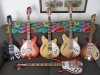
1964 FireGlo 330S (domestic 1997 w/trapeze)
1966 FireGlo 330/12 (Paul W. 360/12OS conversion)
1968 FireGlo 360F
1972 FireGlo 4001
1973 FireGlo 4001
1966 FireGlo 330/12 (Paul W. 360/12OS conversion)
1968 FireGlo 360F
1972 FireGlo 4001
1973 FireGlo 4001
Re: Did Rics decline in the 70's....?
Very difficult color to capture with my camera, but here's my 1977 330/12 in Burgundyglo. Just curious how rare this model is. Anyone know how many 12-strings were made that year?


1964 FireGlo 330S (domestic 1997 w/trapeze)
1966 FireGlo 330/12 (Paul W. 360/12OS conversion)
1968 FireGlo 360F
1972 FireGlo 4001
1973 FireGlo 4001
1966 FireGlo 330/12 (Paul W. 360/12OS conversion)
1968 FireGlo 360F
1972 FireGlo 4001
1973 FireGlo 4001
-
beatlefreak

- Senior Member
- Posts: 6160
- Joined: Wed Jun 14, 2006 5:45 am
- Contact:
Re: Did Rics decline in the 70's....?
Beautiful guitar, Rod - And great pictures. RIC doesn't give out production numbers to the public, so there's really no way of accurately knowing how many were made.
Ka is a wheel.
Re: Did Rics decline in the 70's....?
That '77 330/12 is fantastic- certainly one of the nicest looking 330/12s I have ever ever seen (and I have seen a few). Gorgeous.
At the risk of heresy, I think Rickenbacker's nadir in quality is more recent than most companies. I think they had a rough time between 1997 and 2003 or so. Things were rapidly changing in terms of finish methods, construction methods, and I think they did not roll with some of those changes very elegantly. There is a period in the late '90s and early 2000s where the finishes came out with significant orange peel, and we all of course know about the "clownglo" period. Some of the late '90s necks are like baseball bats.
But this is all relative. And I will say that I think their more recent instruments really look fantastic, though I have not owned any as of yet. The finishes, features, and fit look like they did in what I (again the heretic) consider to be the golden age of Rickenbacker from a quality, durability, and consistency standpoint - 1985 through 1995. Some features are even more welcome, like small headstocks and full inlays.
Going back for a second look at that guitar.
At the risk of heresy, I think Rickenbacker's nadir in quality is more recent than most companies. I think they had a rough time between 1997 and 2003 or so. Things were rapidly changing in terms of finish methods, construction methods, and I think they did not roll with some of those changes very elegantly. There is a period in the late '90s and early 2000s where the finishes came out with significant orange peel, and we all of course know about the "clownglo" period. Some of the late '90s necks are like baseball bats.
But this is all relative. And I will say that I think their more recent instruments really look fantastic, though I have not owned any as of yet. The finishes, features, and fit look like they did in what I (again the heretic) consider to be the golden age of Rickenbacker from a quality, durability, and consistency standpoint - 1985 through 1995. Some features are even more welcome, like small headstocks and full inlays.
Going back for a second look at that guitar.
Re: Did Rics decline in the 70's....?
My goodness man. That is awesome. I bet that is a thick-top, weighs a ton, and plays like a chorus of singing angels. I've owned hundreds of RICs and that's one of the top 5 I have ever seen in terms of just being sooo pretty.
Rod, I bought a 1964 1997 from you many years back, am I correct? Or, did I sell it to you? It's one or the other.
Rod, I bought a 1964 1997 from you many years back, am I correct? Or, did I sell it to you? It's one or the other.
Re: Did Rics decline in the 70's....?
Agreed...that's a beauty.
Re: Did Rics decline in the 70's....?
The title of this subject is a bit misleading. Did Rics decline in the 70's... in terms of what? Numbers? Quality? Features? Quantity? ... of Basses? Guitars? 12-strings?
After owning numerous Rickenbacker guitars and basses from various eras (from 1958 through the mid-90's, and having recently tried out a C63), my viewpoint is that the 60's Rics had the most deluxe/nicest features and the highest perceived quality. Quality didn't necessarily decline that much over the years, but they certainly cheapened out certain features over time (getting rid of X-bracing, replacing Toaster pickups, cheapening the bridge by removing nuts, getting rid of crushed pearl inlays in favor of some kind of plasticky swirly stuff. Certainly nobody will doubt that Rickenbacker guitars declined in terms of numbers during the 70's.
I own a 64 330S (an American 1997) and the devil is in the details. And yes, Bob, I sold you that 64 1997 for $900 and have regretted it ever since! Beautiful finish on that guitar! At any rate, the bridge is much nicer on the 60's rather than later models, with the rubber grommets and black screws, and the nuts are precision looking. The nickel tuners really add to the aged look of the guitar over time, whereas chrome just stays a bit too shiny for my taste. The guitar is a work of art, and very, very delicate. I can see why Pete Townsend said what he said and why his broke. The headstock on mine is amazingly thin, as is the neck. Simply a work of art!
My 77 still retained the body quality of the 60's guitars(with x-bracing intact), but the bridge is somewhat cheapened, with cheaper nuts, and a rougher look to it. As far as hi-gains go, I think it's a matter of personal taste. I like the hi-gains for some things, and the toasters for others. There are certain sounds (R.E.M. and Smiths come to mind) that are impossible to get on a toaster-equipped Ric. I tried swapping out the hi-gains for reissue toasters and didn't care for the sound. I tried hi-gain toasters, in both bridge and neck positions, and didn't like the sound. The hi-gains sounded good on the 330/12, because the height of the fretboard from the body is about twice as high, allowing some breathing space between the hi-gains and the strings. It can still jangle with the best of them, but the pickups have a bit of an edge to them over the toasters. The x-bracing in the body combined with the hi-gain pickups make for a very nice sound indeed! The reason why this guitar is so pristine, is the bridge was and nut were cut incorrectly. The spacing of two pairs of strings were so close as to be visibly distracting and impossible to play. After I recut the bridge and moved one pair over a couple mm, it was fine. The nut also wasn't cut deep enough, making it very hard to play chords. I've since cut the slots down somewhat to make it easier to play, and have considered putting a new nut on it as well, but that would be a lot of work.
I just sold my 1989 jetglo 360/12v64 with toasters last week, which was an amazing guitar. I had to choose between selling it, or the 1977 330/12 with hi-gains. It really came down to the body cavity! I played them both through several amps. I tried swapping pickups around (hi-gains vs. 11k toasters vs. 7.4k toasters). I had someone else play them both through various amps. The v64 had a dull, almost solid body sound to it. Then I played a C63 at a local guitar store, and realized what the v64 was lacking - x-bracing. I chose to keep the 77 because 1) the x-bracing gives the guitar better acoustics, even unplugged! It sustains much longer than the v64, and the body really resonates 2) the tuners are nickel and just have a nicer aged look to them, and had nickle bushings whereas the v64 had white plastic washers and chrome nuts 3) the finish is much nicer on the 77 and has almost a 3D quality to it. 4) the 77 is likely a pretty rare guitar, and I'd be lucky to find another in this condition, let alone this color. 5) The TRC is the only TRC I've seen on a 12-string that doesn't have that ugly warped cut into the side to keep the strings from scraping against it. I could never stand that about most 12-strings I've seen. 6) The heel on the v64 was square - which to me is ugly and not authentic to the 64 model. As you can see in the photo above, the rounded heel on the 77 is a work of art, and when playing high notes your hand just naturally wraps around it.
Thanks for the input on the photos. I really love this guitar and am glad others appreciate it as well!
After owning numerous Rickenbacker guitars and basses from various eras (from 1958 through the mid-90's, and having recently tried out a C63), my viewpoint is that the 60's Rics had the most deluxe/nicest features and the highest perceived quality. Quality didn't necessarily decline that much over the years, but they certainly cheapened out certain features over time (getting rid of X-bracing, replacing Toaster pickups, cheapening the bridge by removing nuts, getting rid of crushed pearl inlays in favor of some kind of plasticky swirly stuff. Certainly nobody will doubt that Rickenbacker guitars declined in terms of numbers during the 70's.
I own a 64 330S (an American 1997) and the devil is in the details. And yes, Bob, I sold you that 64 1997 for $900 and have regretted it ever since! Beautiful finish on that guitar! At any rate, the bridge is much nicer on the 60's rather than later models, with the rubber grommets and black screws, and the nuts are precision looking. The nickel tuners really add to the aged look of the guitar over time, whereas chrome just stays a bit too shiny for my taste. The guitar is a work of art, and very, very delicate. I can see why Pete Townsend said what he said and why his broke. The headstock on mine is amazingly thin, as is the neck. Simply a work of art!
My 77 still retained the body quality of the 60's guitars(with x-bracing intact), but the bridge is somewhat cheapened, with cheaper nuts, and a rougher look to it. As far as hi-gains go, I think it's a matter of personal taste. I like the hi-gains for some things, and the toasters for others. There are certain sounds (R.E.M. and Smiths come to mind) that are impossible to get on a toaster-equipped Ric. I tried swapping out the hi-gains for reissue toasters and didn't care for the sound. I tried hi-gain toasters, in both bridge and neck positions, and didn't like the sound. The hi-gains sounded good on the 330/12, because the height of the fretboard from the body is about twice as high, allowing some breathing space between the hi-gains and the strings. It can still jangle with the best of them, but the pickups have a bit of an edge to them over the toasters. The x-bracing in the body combined with the hi-gain pickups make for a very nice sound indeed! The reason why this guitar is so pristine, is the bridge was and nut were cut incorrectly. The spacing of two pairs of strings were so close as to be visibly distracting and impossible to play. After I recut the bridge and moved one pair over a couple mm, it was fine. The nut also wasn't cut deep enough, making it very hard to play chords. I've since cut the slots down somewhat to make it easier to play, and have considered putting a new nut on it as well, but that would be a lot of work.
I just sold my 1989 jetglo 360/12v64 with toasters last week, which was an amazing guitar. I had to choose between selling it, or the 1977 330/12 with hi-gains. It really came down to the body cavity! I played them both through several amps. I tried swapping pickups around (hi-gains vs. 11k toasters vs. 7.4k toasters). I had someone else play them both through various amps. The v64 had a dull, almost solid body sound to it. Then I played a C63 at a local guitar store, and realized what the v64 was lacking - x-bracing. I chose to keep the 77 because 1) the x-bracing gives the guitar better acoustics, even unplugged! It sustains much longer than the v64, and the body really resonates 2) the tuners are nickel and just have a nicer aged look to them, and had nickle bushings whereas the v64 had white plastic washers and chrome nuts 3) the finish is much nicer on the 77 and has almost a 3D quality to it. 4) the 77 is likely a pretty rare guitar, and I'd be lucky to find another in this condition, let alone this color. 5) The TRC is the only TRC I've seen on a 12-string that doesn't have that ugly warped cut into the side to keep the strings from scraping against it. I could never stand that about most 12-strings I've seen. 6) The heel on the v64 was square - which to me is ugly and not authentic to the 64 model. As you can see in the photo above, the rounded heel on the 77 is a work of art, and when playing high notes your hand just naturally wraps around it.
Thanks for the input on the photos. I really love this guitar and am glad others appreciate it as well!
Last edited by sys700 on Thu Jul 30, 2009 2:52 pm, edited 2 times in total.
1964 FireGlo 330S (domestic 1997 w/trapeze)
1966 FireGlo 330/12 (Paul W. 360/12OS conversion)
1968 FireGlo 360F
1972 FireGlo 4001
1973 FireGlo 4001
1966 FireGlo 330/12 (Paul W. 360/12OS conversion)
1968 FireGlo 360F
1972 FireGlo 4001
1973 FireGlo 4001
Re: Did Rics decline in the 70's....?
As to the quality of the new models I've seen, the C63 I tried out last week at the local guitar store was $3000. The slash hole was a bit irregular, with black paint that wasn't put on carefully and actually went over the edge onto the fireglo finish. There were some brown sap? spots in the wood used for the face of the guitar, in places you wouldn't expect. And not nice looking spots either. Due to the spots, I wouldn't pay $3000 for that guitar. It seems that Rickenbacker is not as picky as they used to be about what kind of wood they use for see-through finishes. The overall quality of the guitar was very nice, with a nice fireglo finish (I think the finishes have improved in the last several years over the clown-glo's of the late 90's). Overall, I really liked the guitar but I thought it still needed crushed pearl inlays to make it authentic. I also think the bridge could have been more authentic to the 60's as well, and the tuners should be nickle plated, not chrome.
There were a couple budget Rickenbacker guitars hanging up in the store that at first glance at only a few feet away appeared to be Rickenbacker knockoffs, but after close inspection I realized they were the real deal. The TRC's still have the flashing around the edges instead of being cut to fit. The Schaller tuners look cheaper. And the paint...there's something about the newer jetglo finish that just isn't right to my eyes, although it did look alright on the C63 fireglo. Not sure what it is, but the new jetglo has more of a bluish/gray licorice look and plasticky feel to it. The 360v64 I just sold had almost an ebony piano look and feel. Did Ric change their conversion varnish formula due to California restrictions?
There were a couple budget Rickenbacker guitars hanging up in the store that at first glance at only a few feet away appeared to be Rickenbacker knockoffs, but after close inspection I realized they were the real deal. The TRC's still have the flashing around the edges instead of being cut to fit. The Schaller tuners look cheaper. And the paint...there's something about the newer jetglo finish that just isn't right to my eyes, although it did look alright on the C63 fireglo. Not sure what it is, but the new jetglo has more of a bluish/gray licorice look and plasticky feel to it. The 360v64 I just sold had almost an ebony piano look and feel. Did Ric change their conversion varnish formula due to California restrictions?
1964 FireGlo 330S (domestic 1997 w/trapeze)
1966 FireGlo 330/12 (Paul W. 360/12OS conversion)
1968 FireGlo 360F
1972 FireGlo 4001
1973 FireGlo 4001
1966 FireGlo 330/12 (Paul W. 360/12OS conversion)
1968 FireGlo 360F
1972 FireGlo 4001
1973 FireGlo 4001

Re: Did Rics decline in the 70's....?
Exactly.sys700 wrote: Then I played a C63 at a local guitar store, and realized what the v64 was lacking - x-bracing. I chose to keep the 77 because 1) the x-bracing gives the guitar better acoustics, even unplugged!
That is justification enough for going vintage, IMO. Aside from the nice necks and the other small details the X-bracing is major component of the sound. I've always heard, and experienced, that the better a guitar sounds unplugged---the better it will sound plugged in (especially on Hollow or semi-hollow guitars). It's basic acoustics---the pickups don't do all the work!
Don't get me wrong, I have owned and played some very very nice sounding modern Rics, and I do understand how the modern bracing improves the structural integrity of the guitars (notice how fewer necks pull up on modern Rics? ), but I will still go vintage every time I can.
Re: Did Rics decline in the 70's....?
After buying a number of vintage Rickenbacker guitars that wouldn't stay in tune or had major issues, I was always hesitant to buy vintage unless I could play it in person. A big problem since I don't live in a large city with a cool selection of vintage guitars.
Unfortunately for Rickenbacker, and fortunately for those of us who buy vintage, many cool vintage guitars (and amps) without major issues have come up for sale as people are unloading closet gems in order to survive in very tough economic times. IMO, there has never been a better time to buy vintage, which unfortunately likely hurts new Rickenbacker sales.
Two years ago I picked up the 63 AC-15 Twin for a very good price when the economy began tanking in Detroit. It's about as rare as they come. A few months ago I picked up a mint 65 Fender Super Reverb from the local Craigslist after nobody would buy it after it was listed for over a month. And a month ago I picked up this 1959 Jazzmaster with anodized pickguard for $3500, which to me was a steal! It's the only guitar that rivals my 64 Rick, and I have to say (dodging bullets), right now it's my favorite guitar, especially through the VOX.


Unfortunately for Rickenbacker, and fortunately for those of us who buy vintage, many cool vintage guitars (and amps) without major issues have come up for sale as people are unloading closet gems in order to survive in very tough economic times. IMO, there has never been a better time to buy vintage, which unfortunately likely hurts new Rickenbacker sales.
Two years ago I picked up the 63 AC-15 Twin for a very good price when the economy began tanking in Detroit. It's about as rare as they come. A few months ago I picked up a mint 65 Fender Super Reverb from the local Craigslist after nobody would buy it after it was listed for over a month. And a month ago I picked up this 1959 Jazzmaster with anodized pickguard for $3500, which to me was a steal! It's the only guitar that rivals my 64 Rick, and I have to say (dodging bullets), right now it's my favorite guitar, especially through the VOX.
1964 FireGlo 330S (domestic 1997 w/trapeze)
1966 FireGlo 330/12 (Paul W. 360/12OS conversion)
1968 FireGlo 360F
1972 FireGlo 4001
1973 FireGlo 4001
1966 FireGlo 330/12 (Paul W. 360/12OS conversion)
1968 FireGlo 360F
1972 FireGlo 4001
1973 FireGlo 4001
Re: Did Rics decline in the 70's....?
Very interesting topic overall.
I always thought the fit and hardware on late '80s RICs was great. The finishes were an issue due to some CARB regs they had to roll with, but always great colors. By 1990 or so the finishes looked great again. I did not consider the bridge change to be cheapening in any way, and as a matter of fact thought it was a step up, though certainly getting rid of the compensated saddles on 12s was a step backward. I do love the X-braced guitars but the body caving in is less than ideal so I do not consider the change to carved out cavities to be a drop in quality either. The late '70s and early '80s guitars, which had X bracing and a really thick top to provide more stability, are awesome. My first 12 was a 1982 360/12 WB, really thick heavy top and those very hot, gorgeous coated-button High-Gains. *sigh*
In all, there are reasons to get excited about all the different eras of RICs.
I always thought the fit and hardware on late '80s RICs was great. The finishes were an issue due to some CARB regs they had to roll with, but always great colors. By 1990 or so the finishes looked great again. I did not consider the bridge change to be cheapening in any way, and as a matter of fact thought it was a step up, though certainly getting rid of the compensated saddles on 12s was a step backward. I do love the X-braced guitars but the body caving in is less than ideal so I do not consider the change to carved out cavities to be a drop in quality either. The late '70s and early '80s guitars, which had X bracing and a really thick top to provide more stability, are awesome. My first 12 was a 1982 360/12 WB, really thick heavy top and those very hot, gorgeous coated-button High-Gains. *sigh*
In all, there are reasons to get excited about all the different eras of RICs.
Re: Did Rics decline in the 70's....?
Yep, that's more like the truth. I think there are cool points about almost all the years of production, though I (like most people) will always root for the "home team" or what they own or play the most. Totally natural tendency too...belloff wrote:
In all, there are reasons to get excited about all the different eras of RICs.