Well, you know, that only worked because the bass player wasn't using a Rick...
Yep...you just can't solo on a Rick!!!
Moderators: rickenbrother, ajish4
Re: Yep...you just can't solo on a Rick!!!
I have NO idea what to do with those skinny stringed things... I'm just a bass player...
-
Rickissippi
- Junior Member
- Posts: 143
- Joined: Wed Nov 23, 2011 2:05 pm
- Contact:
Re: Yep...you just can't solo on a Rick!!!
I posted this earlier today in another forum (excuse the re-post if you saw it there), but I thought I'd share it here, too, since it was on-point to this thread:
I'd heard all the talk for years about the narrow necks, and how they're bad for lead, etc. Nonsense in my experience - the hi-gains (very high output) sing for leads. And the neck width at the nut is hardly noticeable - it's just a mm or so. (However, Rick's strings don't widen and span out toward the bridge as much as other guitars - that's really the bigger difference.) In any case, a little time on the instrument will allow you to adapt easily. If it weren't possible to play leads on narrow necks, how do all those blazing bluegrass mando pickers do it?
If you don't mind my posting this (purely for providing an example to back up my words), I did the solos (as well as my rhythm parts) on my Rick 360 on each of these tracks:
http://thechurchkeys.bandcamp.com/track/blown-up (solo is at 2:41 - overdubbed through a Sears Silvertone Model 1482 with only a JHS-modded TS-9)
http://thechurchkeys.bandcamp.com/track/nsfw (solo's at 2:26 - overdubbed through a cranked BF Super Reverb, no pedals)
http://thechurchkeys.bandcamp.com/track/day-night (solo's at 3:08 - same as first track, except I did this one live)
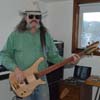
I'd heard all the talk for years about the narrow necks, and how they're bad for lead, etc. Nonsense in my experience - the hi-gains (very high output) sing for leads. And the neck width at the nut is hardly noticeable - it's just a mm or so. (However, Rick's strings don't widen and span out toward the bridge as much as other guitars - that's really the bigger difference.) In any case, a little time on the instrument will allow you to adapt easily. If it weren't possible to play leads on narrow necks, how do all those blazing bluegrass mando pickers do it?
If you don't mind my posting this (purely for providing an example to back up my words), I did the solos (as well as my rhythm parts) on my Rick 360 on each of these tracks:
http://thechurchkeys.bandcamp.com/track/blown-up (solo is at 2:41 - overdubbed through a Sears Silvertone Model 1482 with only a JHS-modded TS-9)
http://thechurchkeys.bandcamp.com/track/nsfw (solo's at 2:26 - overdubbed through a cranked BF Super Reverb, no pedals)
http://thechurchkeys.bandcamp.com/track/day-night (solo's at 3:08 - same as first track, except I did this one live)
Re: Yep...you just can't solo on a Rick!!!
Mike Campbell of the Heartbreakers uses his RICs all the time and plays great solos on them.
- sasquatchgeoff
- New member
- Posts: 55
- Joined: Thu Dec 30, 2010 11:32 pm
Re: Yep...you just can't solo on a Rick!!!
After 20 some-odd years upon re-listening, my solo work on my Ric 6-string 360 will always shine for me. The action, the fast neck, maybe the combination of both and my huge hands, I dunno, I always hear something new each listen. Each note is pack with sonic richness - like the guitar has its own voice, whatever I play or how. I'm not sure why that is -
360/12C63 FG and several other guitars & basses not as nice
Do not worry about your difficulties in Mathematics. I can assure you mine are still greater.
- Albert Einstein
Do not worry about your difficulties in Mathematics. I can assure you mine are still greater.
- Albert Einstein
Re: Yep...you just can't solo on a Rick!!!
Why would a narrow neck be bad for lead? Less movement would seem to be good for speed.Rickissippi wrote:I'd heard all the talk for years about the narrow necks, and how they're bad for lead, etc.
The two things that stick out for me on my 360 vs other guitars are the finished fretboard and the height of the frets. The finished fretboard makes things a little "sticky". So, vibrato bends require a bit of deft touch. However, a held bend winds up easier. The finish on the fretboard also seems to decrease the differential between the top of the fret and the fretboard. Consequently, fast hammer-ons and pull-offs can be a bit of a bear. However, since the height differential is lower, I don't have as much tendency to shift the pitch of a hammer-on or pull-off.
It's pretty much just that "Every guitar is unique. Learn to work with it rather than against it."