
4005 Project
Moderators: rickenbrother, ajish4

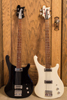

I am going to order more of the MOP and try again. You guys have confirmed exactly what I was thinking. I don't have a good example of crushed MOP on hand to use as a guide. I would appreciate it very much if any of you would email me very clear closeups of your MOP markers. Just focus on one marker (3rd fret preferably). Send me what ever your camera produces. The bigger the better.

I laid off of it for a bit because of the holidays. Wives like you to be envolved. I will never understand that.  I just got some better inlay material that I think is extremely close to the original stuff. It is lighter in color than the last MOP and has all of that complex color (pinks, blues, greens) that is present in the vintage inlays. I am going to do a test casting as soon as I can work out the optimal casting pan shape. The stuff is expensive and I want to minimize waste. I will post pics as soon as I have some. The other issue is the fingerboard material. The in the vintage fingerboards is different from the modern ones. I have been told that some of the early boards were brazilian rosewood which is still available but is very expensive because it is not legal to forest it anymore. Other options are bloodwood which is very close in color to my vintage board (but different in grain) and asian rosewood which is more like the wood on some the current basses. One person suggested monkeypod but I have not been able to find a piece that looks like the board on my '63. I think the reddish color is necessary to complete the look.
I just got some better inlay material that I think is extremely close to the original stuff. It is lighter in color than the last MOP and has all of that complex color (pinks, blues, greens) that is present in the vintage inlays. I am going to do a test casting as soon as I can work out the optimal casting pan shape. The stuff is expensive and I want to minimize waste. I will post pics as soon as I have some. The other issue is the fingerboard material. The in the vintage fingerboards is different from the modern ones. I have been told that some of the early boards were brazilian rosewood which is still available but is very expensive because it is not legal to forest it anymore. Other options are bloodwood which is very close in color to my vintage board (but different in grain) and asian rosewood which is more like the wood on some the current basses. One person suggested monkeypod but I have not been able to find a piece that looks like the board on my '63. I think the reddish color is necessary to complete the look.You are right Jeff, it does look like bubinga. I saw some old Rickenbacker liturature that called the fingerboard wood hong kong rosewood. That may have been a trade name like korina was for limba. I found a one reference for hong kong rosewood that said it was another name for bubinga. Odd because bubinga is an african wood by all accounts. I wonder if there were multiple woods used? Perhaps there was a main wood and then some acceptable backups? The fingerboard on my '63 is apparently some kind of rosewood that is very red. Bubinga is my backup if the others don't pan out.
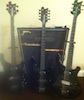
Does anyone have an late 60's bass and also a late 60's guitar that they can compare?
I would not have thought that the bass would have a different wood than the guitar. All my guitars seem to have the same wood on the fretboard, a '61, '64, '65, '66, '68 and '69 among them... Brown like a new Ric, not red.... Ted sent me a picture of his '63 and it sure does look red, not brown.
I'm confused...
Ted, is the 4005 a '67? I can't recall.
I would not have thought that the bass would have a different wood than the guitar. All my guitars seem to have the same wood on the fretboard, a '61, '64, '65, '66, '68 and '69 among them... Brown like a new Ric, not red.... Ted sent me a picture of his '63 and it sure does look red, not brown.
I'm confused...
Ted, is the 4005 a '67? I can't recall.
The only old one I have access to is the one I own. Maybe the color is not representative. I got to see a '67 370 about a month ago that had a really dark fingerboard - almost like chocolate. I could not tell if it was dark from the finish or if it was really that color. The inlays were very yellowed. Some old FG instruments get very close to black near the edges. I could use something with a nice brown color if that seems to be the consensus.