Page 1 of 1
Pot Puzzle
Posted: Wed May 07, 2003 3:10 am
by admin
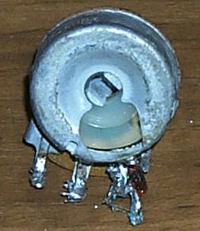
Don: I was replacing a capacitor on my 1966 Rickenbacker 450/12 and noticed the following pot trouble. I have, naturally, replaced the pot but wanted to know what may have caused this deterioration? Too many sing songs by the sea, perhaps?
Posted: Wed May 07, 2003 8:10 am
by toneman
Certainly looks like corrosion was the root of the problem. I've noticed on not just Ric's but alot of guitars from the late fifties thru the sixties that the metal used for the housing has a real tendency to corrode. Gretsches suffer from this as well. Fender's and Gibson's aren't as prone to it for some reason but do get it to some degree. I know Gibson used Central Labs pots in the fifties and sixties. what's the pot code on that one?
Boy.. it just ate right thru where the one lug was soldered to the casing..
Posted: Wed May 07, 2003 8:53 am
by admin
Don: The pot code under high magnification reveals the number 140.
Posted: Wed May 07, 2003 2:03 pm
by dave4004
140 = Clarostat
Posted: Wed May 07, 2003 4:01 pm
by admin
Thanks Dave. I just want to add that this pot was part of an aftermarket modification and not one of the Rickenbacker pots. All of the Rickenbacker pots appear to be original and are in great shape 37 years later.
Posted: Wed May 07, 2003 7:00 pm
by bigbajo60
Could this corrosion have anything to do with a different formulation of solder (i.e. more acid content) that might have existed back in the day?
Posted: Thu May 08, 2003 7:19 am
by toneman
Alvaro; don't think it's solder related. Most likely it's a factor in the formula used for the metal for the casing. Some are more prone than others. Most likely that when Clarostat built it they weren't thinking it would go in something like a guitar that gets exposed to alot of different climates. They most likely thought that it would go in a piece of electronic equipment that stayed in a stationary place with a stable climate.
I don't think solder formula's have changed that much. I know I've been buying Kester's rosin core #44 for the last 30+ years. doesn't seem any different now than it did then(unless the lead fumes have gone to my brain...LOL!)
Posted: Mon May 12, 2003 6:17 am
by toneman
Flux is in the core section of the rosin core solder and helps the solder itself to move/flow across the sections or pieces one is soldering and adhere to those pieces. It's usually a brown-ish colour. I prefer the rosin flux solder over other types.
Posted: Mon May 12, 2003 2:34 pm
by rick12dr
Maybe this is not the case here, but What If... one were to use "acid core" metal mender solder??
A possible culprit here? Used by an unenlightened soldering iron wielder?? Just a thought..
Posted: Tue May 13, 2003 5:57 am
by toneman
Good point Don!! Maybe that acid core ate thru the pot case...