
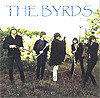
Yet another wonderful gem from Harold Eugene; this features a very strange, alomost a series of "Low rumbling trills" from Leon Russell on I THINK a Fender Rhodes electric piano. (Buddy?)
If you turn off one speaker, get rid of the 12 string, you can really hear it. There is also a vocal less version (Finished instrumental track) over at Sugarmegs, as well.
Like The Beatles "Baby's In Black", this is somewhat rare for a "Pop" song being in the time signature of 6/8.
I've always heard it as an early "Nights in white satin"; as the chords are almost all the same, and always wondered if Justin Hayward was influenced by it, since his song was written two years later.
Actually, there are ALOT of songs that do that "Em to D thing".
Ones that come to mind are "Play with fire"-Rolling Stones, "The One I love", REM, and for that matter, "Gilligans Island" by The Welligtons (Mosquitos)-Sherwood Schwartz (Gilligan, Brady Bunch,etc)actually wrote the Gilligan theme, BTW.
ANYWAY back to The Byrds!
What I like to do, is during the verses, is add a little chord between the Em and D, which kind of "Grabs" just a little of what Leon's piano, and the Bass is suggesting here. Another nice little trick, especially if your playing the song solo.
Ok, it's going: "I'd like to Love you, if you want me too", Right?
Right on the first word, "I'd", try this voicing in tab: 024000.
So, it's just like an Em, but the D string is fretted at the 4th fret instead. You would do this all through the intro, too.
So it goes like this: Em/new chord/D------Em/new chord/D. It rolls very well with the time signature of the song as well.
Pretty much first got to this chord years ago when I was working on Love's "Alone Again, Or" (Later covered by UFO), and also during the 12 string intro of "Sweet Maddame Blue", by STYX.
Another marvelous feature of this song, is the fact that it ends on a "Major" in the same key as what the song is in. Meaning, the song is in Em, but ENDS on an E Major.
This is yet another fine twist from Gene Clark, and the same thing is done at the end of The Beatles "And I Love Her"; modulating the entire song which is minor, into major at the very end. This stems from classical music, and produces an uplifting, promising, and hopeful end to a song.
Try that little chord twist out, I think you'll like it! :0)
Christian
"The Boxart Den"-World's largest display & collection of FULLY RESTORED rare & collectable model kit box art
http://theboxartden.com
http://groups.yahoo.com/group/Box-Art
http://www.myspace.com/craviola990
http://www.youtube.com/craviola990
A little trick for "I Knew I'd Want You"
Those who flock to The Byrds
Return to “Byrds' Forum: by James Krause”
Jump to
- RRF Rickenbacker Forums 2000-2026
- ↳ Rickenbacker Amplifiers
- ↳ Rickenbacker Artists
- ↳ Rickenbacker Basses: by Joey Vasco & Tony Cabibe
- ↳ Rickenbacker Conferences and Confluences
- ↳ Rickenbacker General: by Howard Bishop
- ↳ Rickenbacker Guitars: by John Simmons
- ↳ Rickenbacker Guitars: Vintage Years - Before 1973
- ↳ Rickenbacker Guitars: Transition Years - 1973 to 1983
- ↳ Rickenbacker Guitars: Modern Years - After 1983
- ↳ Rickenbacker Register
- ↳ RIC Outlet One Offs: by Peter McCormack
- ↳ Rickenbacker Steels: by Richard Shatz
- ↳ Rickenbacker Vintage 325 Models: by Glen Lambert
- ↳ Rickenbacker Worldwide Chapter Forums
- ↳ Australian Chapter: by Greg Rahilly
- ↳ Canadian Chapter: by Dean Steglia
- ↳ Chinese Chapter: by Paul Yan
- ↳ German Chapter: by Markus Horn
- ↳ Israeli Chapter: by Ilan Lukatch
- ↳ Italian Chapter: by Francesco Fai
- ↳ Japanese Chapter: by Tuck Hersey
- ↳ Netherlands Chapter: by Bert Heitling
- ↳ Norwegian Chapter: by Lars Nygaard
- ↳ Russian Federation Chapter: by Sheena Colvin
- ↳ Saudi Arabian Chapter: by Wayne Hall
- ↳ Spanish Chapter: by Miguel Valpuesta
- ↳ Swedish Chapter: by Bjorn Eriksson
- ↳ United Kingdom Chapter
- ↳ "Vibrola" Rickenbacker Technical Forum: By Paul Wilczynski
- RRF Gear Technical Forums
- ↳ Forum 51 - The Quest For Tone: by Mike Snow
- ↳ Going Gretsch Forum:
- ↳ Greg's Amplifier and Tube Tech Forum: by Greg Simon
- ↳ Reflections of a Curmudgeon: by Paul Wilczynski
- ↳ The Low End
- ↳ Winding Up With The Best: by Sergio Silva
- RRF Multimedia Forums
- ↳ Photography By RRF Members: by Jeffrey Scott
- ↳ Recordings By RRF Members
- ↳ Reviews of RickResource Compilation CDs
- ↳ Videos by RRF Members
- RRF Band Forums
- ↳ Beatles' Forum
- ↳ Byrds' Forum: by James Krause
- ↳ Chris Squire and Yes Forum
- ↳ My Gig Forum
- ↳ Searchers' Forum: by Roy Clough
- ↳ Shadows' Forum: by Goran
- ↳ Tom Petty Forum: by Jake Kety
- RRF Music History, Interpretation & Pop Culture Forums
- ↳ 2 Car Garage: by Admin
- ↳ Being For The Benefit Of Musicianship
- ↳ Clough's Classics: by Roy Clough
- ↳ Groove Yard: by Admin
- ↳ Instrumental As Anything: by Admin
- ↳ Iron Door Club Forum: by Geoff Hogarth
- ↳ Light My Garage, Torch My Fire!: by Sheena Colvin
- ↳ Liverpool Project: by Admin
- RRF Instructional Forums
- ↳ Flamenco Forum On Paco De Lucia’s Style: by Ruben Diaz
- ↳ Paul McCartney's Bass Style: by Francesco Fai
- RRF Miscellaneous Forums
- ↳ The Others: by CJ Johansson
- ↳ Creatures
- ↳ Landmarks
- ↳ News At 11
- ↳ On Stage
- ↳ Trivia
- Questions About RickResource Forum Admin and Support
- ↳ Rules and Questions for Admin ONLY