A 360F WITH A SHADY PAST
Posted: Tue Apr 22, 2008 2:13 am
Here we have a '67 360F that a Forumite purchased through the mail from a certain, ahem, large Music Exchange in Chicago. When he received it, it didn't seem to be as represented ("mint, original"). He showed it to me. There were signs of extensive work, done very shabbily. There was something rattling around inside. We shook it and out fell a Bondo "worm"--some Bondo had been squeezed through a drilled hole, had hardened and broken off. Bondo "worm". Uh-oh.
Most of us know that Jetglo on an old Rick is a good sign of a bad repair job. This was no exception...the back had cracked in several places, and the pickup selector switch had been punched in. These problem areas had been filled with Bondo, slathered on, and not sealed before a cheap enamel paint job was applied very thickly--you could see and feel the "step" between the black areas and the binding.
Once I had the guitar stripped, a nicely-grained guitar was exposed, and evidence showed that the 360 was originally Fireglo. Must've been gorgeous, but there was very little FG left, and refinishing it in FG was out of the question because of deep staining and some repairs that had been done with epoxy filler, including a substantial gash in the headstock volute on one side.
These later Fs are different animals from the early. The earlies are billet-type guitars, routed out of a chunk of maple with a back added; the later Fs are built like a Gibson or Gretsch and are true hollow-bodies with bent sides and glued-up front and back. More Gretsch-y in tone, too.
The back showed its cracks after the black enamel and Bondo were removed:

You can see traces of the original FG in the crack here:

Below you can see evidence of someone using a "jitterbug" (autobody vibrating power sander) to sand the Bondo and wood--those corkscrew tracks are a dead giveaway:

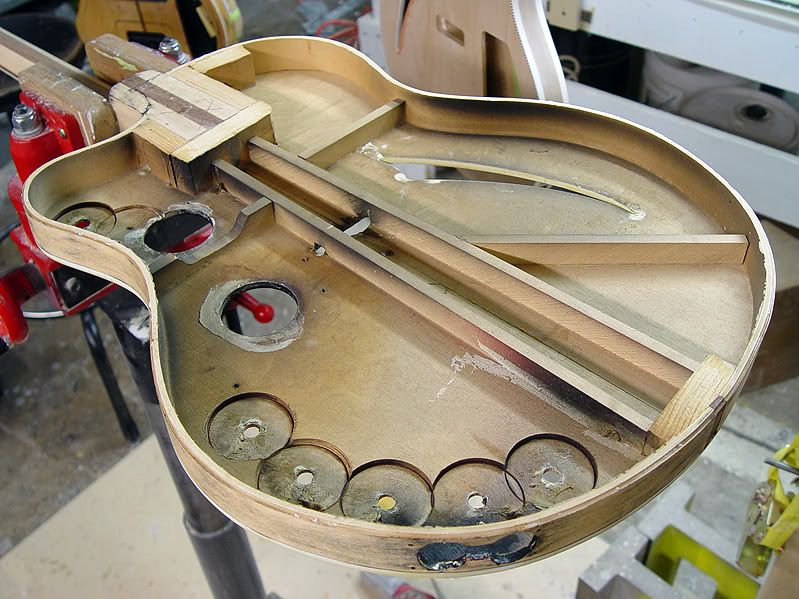
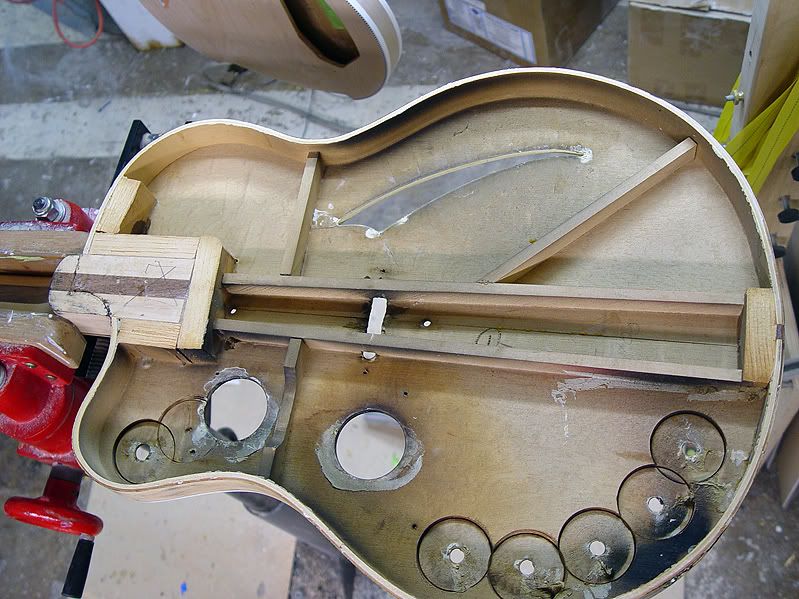
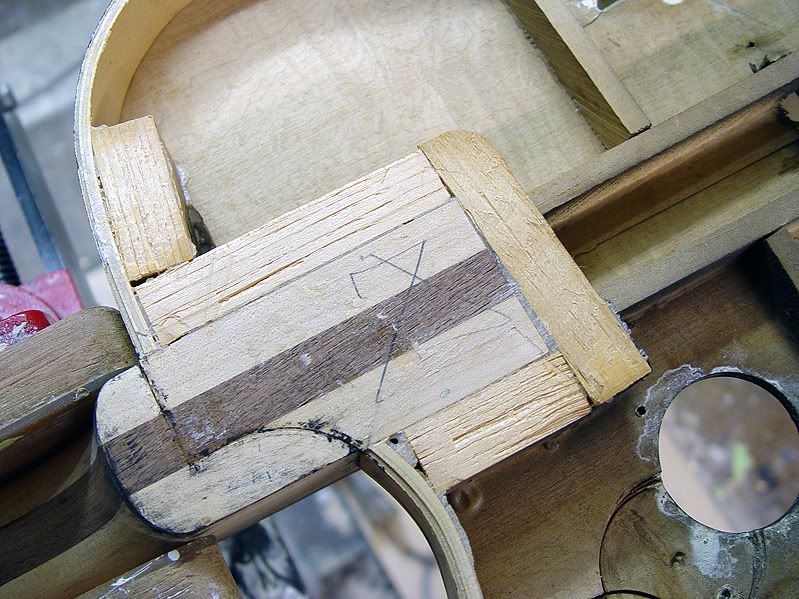
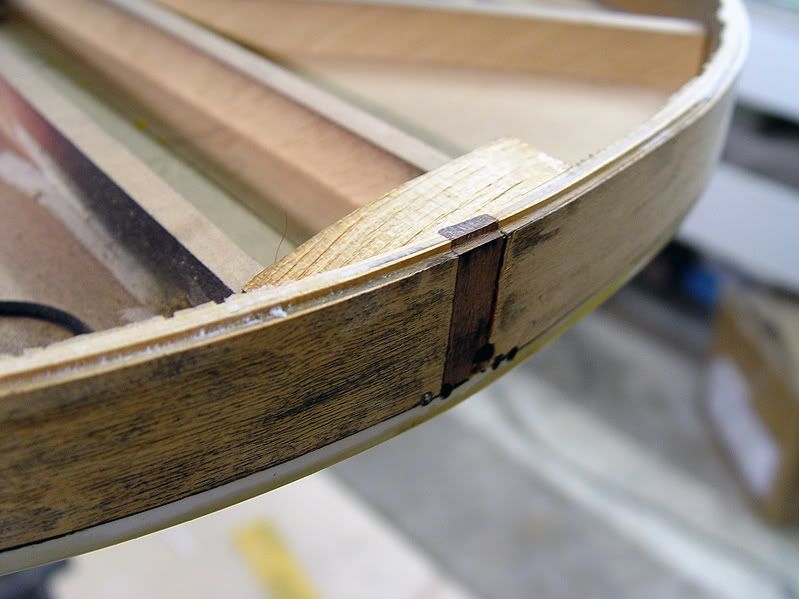
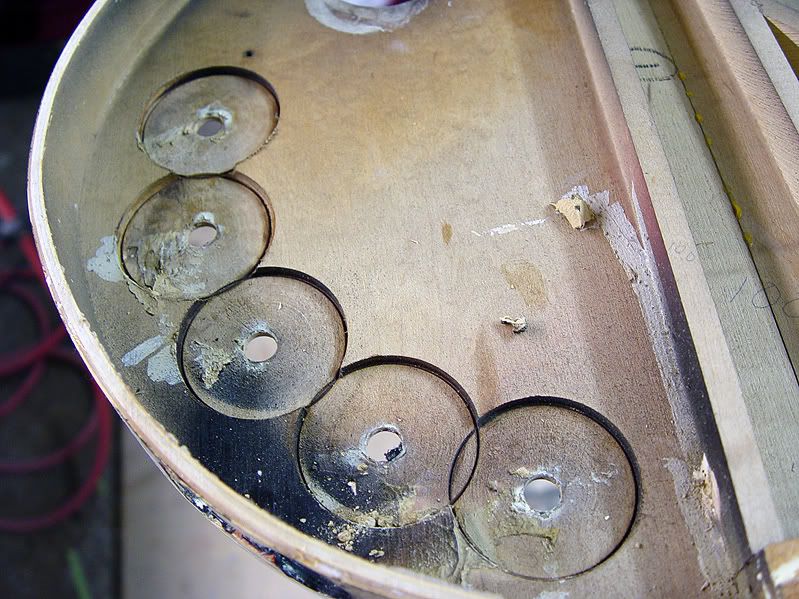
Here are a series of shots with the back removed. The tailblock was rebuilt prior to gluing the new back on:




The new back was rough sawn and then the area at the heel was cut back to the correct profile before the back was glued in place:


The back was then trimmed to fit exactly, once the glue had dried, using a flush-trimming router bit on a table router, and then, using a 1/16" rabbeting bit, had the first binding step cut on the same table router:


Next, the second step was cut by hand with a Dremel tool to which is fitted a special collar:


Finally, things are beginning to come together; the first layer of binding (checkerboard) is fitted and glued up, with a joint in the corner of the heel and another at the bottom, center:

Small brads are used to hold the checkerboard in place; their holes will be covered by the white binding which is the next layer.


...And now it's time for a rest. I don't have any of the celluloid binding in this width in stock, so it's been ordered and when it arrives, we'll continue. This guitar will receive a new, proper, glass-smooth JG paint job. It also has a badly-worn fretboard, so I'll be making a new one, sparkle inlays and all, while we wait for the binding to arrive (it can't be shipped via air, as it's hazardous, so it'll be a week or so before it gets here.) But I've got lots of other stuff to work on...
Most of us know that Jetglo on an old Rick is a good sign of a bad repair job. This was no exception...the back had cracked in several places, and the pickup selector switch had been punched in. These problem areas had been filled with Bondo, slathered on, and not sealed before a cheap enamel paint job was applied very thickly--you could see and feel the "step" between the black areas and the binding.
Once I had the guitar stripped, a nicely-grained guitar was exposed, and evidence showed that the 360 was originally Fireglo. Must've been gorgeous, but there was very little FG left, and refinishing it in FG was out of the question because of deep staining and some repairs that had been done with epoxy filler, including a substantial gash in the headstock volute on one side.
These later Fs are different animals from the early. The earlies are billet-type guitars, routed out of a chunk of maple with a back added; the later Fs are built like a Gibson or Gretsch and are true hollow-bodies with bent sides and glued-up front and back. More Gretsch-y in tone, too.
The back showed its cracks after the black enamel and Bondo were removed:
You can see traces of the original FG in the crack here:
Below you can see evidence of someone using a "jitterbug" (autobody vibrating power sander) to sand the Bondo and wood--those corkscrew tracks are a dead giveaway:
Here are a series of shots with the back removed. The tailblock was rebuilt prior to gluing the new back on:
The new back was rough sawn and then the area at the heel was cut back to the correct profile before the back was glued in place:
The back was then trimmed to fit exactly, once the glue had dried, using a flush-trimming router bit on a table router, and then, using a 1/16" rabbeting bit, had the first binding step cut on the same table router:
Next, the second step was cut by hand with a Dremel tool to which is fitted a special collar:
Finally, things are beginning to come together; the first layer of binding (checkerboard) is fitted and glued up, with a joint in the corner of the heel and another at the bottom, center:
Small brads are used to hold the checkerboard in place; their holes will be covered by the white binding which is the next layer.
...And now it's time for a rest. I don't have any of the celluloid binding in this width in stock, so it's been ordered and when it arrives, we'll continue. This guitar will receive a new, proper, glass-smooth JG paint job. It also has a badly-worn fretboard, so I'll be making a new one, sparkle inlays and all, while we wait for the binding to arrive (it can't be shipped via air, as it's hazardous, so it'll be a week or so before it gets here.) But I've got lots of other stuff to work on...


