Page 1 of 2

The 'Beast' is being Changed

Posted: Thu Apr 02, 2009 8:43 am
by falconfixer
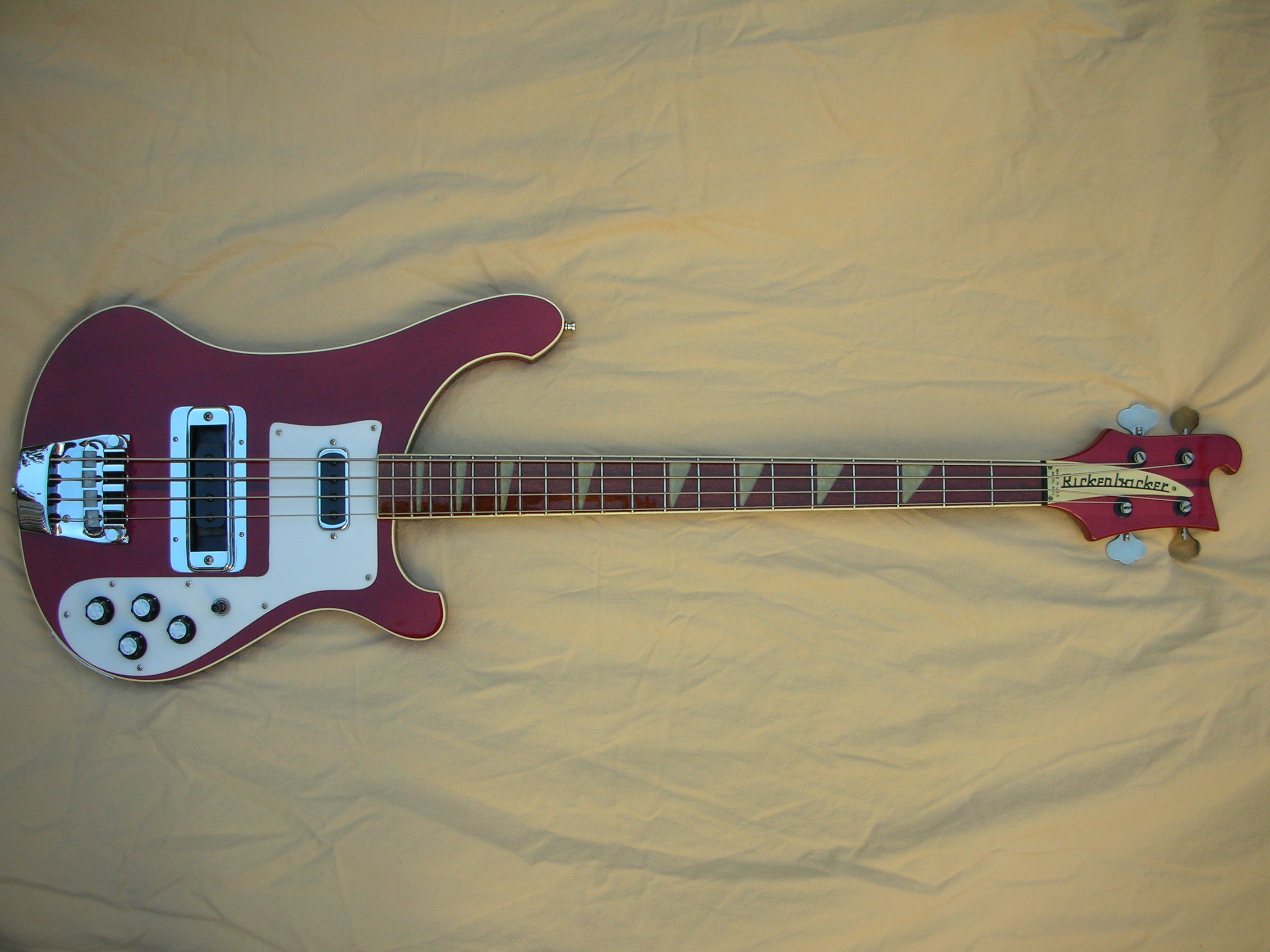
The 'beast' is my affectionate term for the ol' 4003.

I played hooky Tuesday and started the project to ressurect the old girl. i plan to refinish it jetglo and refurbish the electronics to fix the missing sound from one of the pickups. I decided to keep the bridge stock and internals stock.

What i have discovered:
- Handwriting inside the neck pick up and control cavities. About four years ago I researched the serial number (2272) and 'thought' she was a 1982. The date on the inside said '81-07-09' (IIRC).

- One of the truss nuts (in the body) was really loose. It was not snug up to the body but away from it. (My lovely bride had the camera - so stand by for pix) So is this normal? It currently has no strings/stress on the neck. I read the prevoius posts on the neck adjustment procedure.

- The finish of the whole guitar was worse off than i thought. Upon closer inspection fine cracks in the clear varnish were everywhere.

- A deep well socket worked real well for removing the round black plastic trim from the machine heads through the head. I merely pushed them through.

- The nut is too worn and needs replacement. I 'assume' i can find parts online. The frets are okay.

- i plan to replace the trim screws throughout (kinda' rusty/shabby). I figure a trip to the hardware store for some same diameter but slighlty longer should do it. Everthing else is cleaning up nicely. i used auto polishing compound for the pick guards and chrome polish for the bright bits... Much accumulated crud (not suprised) to be cleaned out.

- I see three capacitors. I want to 'eliminate the 47 uF ' one. Is there a how-to on the site? Do i jump it or simply cut it out of the circuit? I have not done the troubleshooting of the circuit yet. i will do that first before 'fixing' the cap.

- The masking of the binding was pretty time consuming. i used 1/2 inch masking tape and used an exacto knife to make small slits so the tape could follow the curve of the body. Masking the sides was a breeze.

- i sanded the whole thing except for the fretboard and the binding with 600 grit. Fixed some dents and marks. Glued the headstock where it is seperating (from previous water damage). I then sprayed black enamel and have been sanding between coats. i 'assume' i can't wet sand because that would destroy the masking (see above). So i go through a lot of sandpaper.... I plan one or two more coats and then clearcoat. It looks 'good' so far. I feared the worst but am seeing pretty good results...

I truly can't wait until i fire it up again! WooHoo! [fistpump] :mrgreen:

Re: The 'Beast' is being Changed

Posted: Thu Apr 02, 2009 9:23 am
by dog
Your project sounds like a lot of fun! I am one who also likes working on things, especially my basses. I will be especially interested in how your finish turns out. I have never finished a guitar, but even working on furniture I find that, without a dust free spray booth, the final coat always has at least a few tiny specks in it. If you have come up with a solution for the do-at-home finisher, I will really be interested to know how you did it. Maybe a few photos when it is completed?

Re: The 'Beast' is being Changed

Posted: Thu Apr 02, 2009 5:19 pm
by jps
Re: the .0047 µf capacitor. All you need to do is solder a piece of wire across the two leads of that cap to bypass it, this way you can easily restore the cap.

Re: The 'Beast' is being Changed

Posted: Thu Apr 02, 2009 7:07 pm
by bails
It is also possible to bypass the cap by simply wrapping it in tin foil to save the hassle of soldering.

Re: The 'Beast' is being Changed

Posted: Thu Apr 02, 2009 8:23 pm
by jps
bails wrote:It is also possible to bypass the cap by simply wrapping it in tin foil to save the hassle of soldering.
Should it be basted before wrapping the foil around it?

Re: The 'Beast' is being Changed

Posted: Thu Apr 02, 2009 10:30 pm
by jingle_jangle
falconfixer wrote:- The masking of the binding was pretty time consuming. i used 1/2 inch masking tape and used an exacto knife to make small slits so the tape could follow the curve of the body. Masking the sides was a breeze.

- i sanded the whole thing except for the fretboard and the binding with 600 grit. Fixed some dents and marks. Glued the headstock where it is seperating (from previous water damage). I then sprayed black enamel and have been sanding between coats. i 'assume' i can't wet sand because that would destroy the masking (see above). So i go through a lot of sandpaper.... I plan one or two more coats and then clearcoat. It looks 'good' so far. I feared the worst but am seeing pretty good results...

I truly can't wait until i fire it up again! WooHoo! [fistpump] :mrgreen:
You don't have to mask off the front of the binding. You only need to mask off the 1/4"-wide sides using Thinline tape. Here everything on this FG bass (tape and top of binding) has been painted with the FG tint:

Image

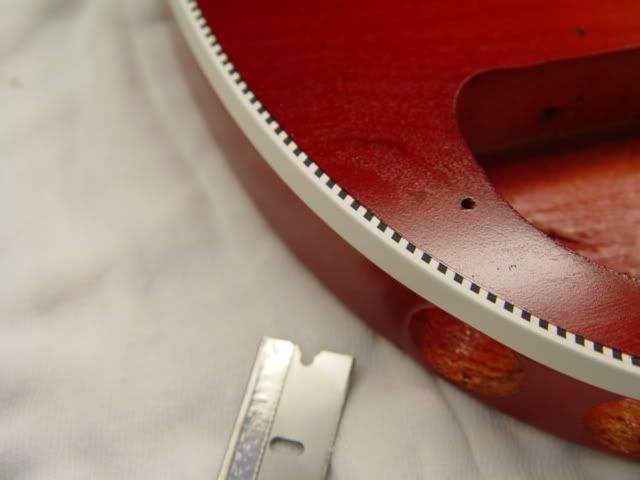
Here's a shot of the same FG refinish post-color coats, as the tape is removed from the sides. Note the white binding and the painted-over top binding and checkerboard purfling:

Image

The top and edge are scraped with a single-edged razor blade (or microscope slide) after the paint is dry, but before tinting and clearcoating:

Image

Note that if you're truly using enamel, it should be polyurethane enamel, not alkyd, as most clearcoats will attack alkyd and cause it to wrinkle. The only clearcoat which will not attack alkyd enamel undercoats is alkyd clear coat (varnish), which is absolutely useless on anything except boats and woodie wagons. You don't have to sand between coats, as the clear coat will smooth everything out. In any case, sanding enamel with #600 dry has to be the ultimate exercise in frustration, as the paper loads up with enamel pigment and immediately gums up.

The schedule is something like this:

Sand bare maple to #220 grit dry, going with the grain on the last passes to remove cross-grain scratches.

Seal with either two coats of conversion varnish or vinyl sealer, body, neck, binding, fretboard.

Sand with #220, dry, to flatten raised grain. Mask binding and fretboard, spray with black, four thin coats, waiting about 5 minutes between coats.

Remove masking, scrape binding, tack cloth/blow off, spray with 6-8 double coats of conversion varnish.

Let cure overnight, flatten with #220 dry and a block. Do not sand through color into bare maple!

Tack and blow off again, spray 2 double wet coats of conversion varnish.

Let cure minimum 3 days; a week or two is better to prevent shrink-back.

Sand wet with #1000 wet or dry, using Windex as lubricant (spray bottle). Buff on muslin wheel with Menzerna compounds, first medium, then extra fine.

Detail by hand, Scratch-X, Zymol.

Re: The 'Beast' is being Changed

Posted: Fri Apr 03, 2009 5:12 am
by heinpete
Nice work and excellent detail pics. Wonder if this bass could be mine? :)

Re: The 'Beast' is being Changed

Posted: Fri Apr 03, 2009 8:18 am
by falconfixer
All excellent info - thanks for the replies.

i did match the paints enamel paint/enamel clearcoat. I had scuff sanded the varnish. I need to read the label (too late - lesson for future DITYs) to ensure the alkylids [sp?} are not an issue.

What convinced me to go the ghetto/homejob vs a pro refinsh was that i plan to never sell her (resale de-value not an issue) and if i wait until i could 'jusitfy' the cost of a pro (still preffered! Do not attempt this at home :wink: ) i mught never get her 'fired up again' and she would just languish...

Time is on my side. i can keep 'trying' until i am satisfied with the finish. Good enough (is well, good enough :| ) I care the most about the neck/feel of the guitar.

Now. I completed my troubleshooting of the electronics (only a treble bass signal) and found... nothing wrong (AFAIK). The pickups each have 8K ohms. The pots test okay. Ground loop is good... How do i 'test' the caps? Just replace as that is the last unknown? Should i jumper them to test continuity from pick up to output jack? Except for some corrosion i have cleaned up with alcohol, i see nothing wrong...

i will re-read the post on boosting the magnets.

What this project has done is resurrected my love for the big ol' rickenbacker.

Re: The 'Beast' is being Changed

Posted: Fri Apr 03, 2009 12:49 pm
by jingle_jangle
falconfixer wrote:All excellent info - thanks for the replies.

i did match the paints enamel paint/enamel clearcoat. I had scuff sanded the varnish. I need to read the label (too late - lesson for future DITYs) to ensure the alkylids [sp?} are not an issue.

What convinced me to go the ghetto/homejob vs a pro refinsh was that i plan to never sell her (resale de-value not an issue) and if i wait until i could 'jusitfy' the cost of a pro (still preffered! Do not attempt this at home :wink: ) i mught never get her 'fired up again' and she would just languish...
Karl, nobody's knocking amateur work. But a bit of the right info circulated on a widely-read Forum on Rickenbackers has a couple of immediate benefits--you can check your own materials and techniques, so you're not working blind and possibly wasting time and money, and others can know in advance what to do and what not to do.

Enamel clearcoat (of the alkyd type) will not stand up to the rigors of musical instrument use. It will turn gummy or cloudy eventually. That's why I mention this now. When I read your original post, a red flag went up.

Re: The 'Beast' is being Changed

Posted: Fri Apr 03, 2009 3:24 pm
by falconfixer
^That is the way i took it!

I do appreciate the good advice!

Re: The 'Beast' is being Changed

Posted: Fri Apr 03, 2009 10:37 pm
by johnallg
Karl, sounds like you have verified most of the electronics. I do NOT suspect the caps. The neck pickup has no cap between the pickup and the jack - the tone cap/pot are in parallel with the pup. If you are sure the blades on the switch are clean and making contact when in the middle or towards the appropriate end, and no contact when the opposite pair is switched to, then the STANDARD output jack is the suspect. It has a built-in switch to mono the pickups when you plug into it - make sure the wood around the holes it sits in the body are not keeping it from working properly or that they are bent and not making the needed contact to pass the neck pickup. My bet is it is the jack.

http://www.rickenbacker.com/pdfs/19507.pdf

Image

Your 4003 will have 250k volume pots and I believe either 500k or if a newer model 250k tone pots.

Re: The 'Beast' is being Changed

Posted: Mon Apr 06, 2009 12:01 pm
by falconfixer
Makes sense to me...

Thanks!

Re: The 'Beast' is being Changed

Posted: Mon Apr 06, 2009 1:43 pm
by jingle_jangle
heinpete wrote:Nice work and excellent detail pics. Wonder if this bass could be mine? :)
Peter: These pics were taken in early '06. Yours is the second bass in line right now; I'm finish-sanding two more as I write this with the other hand...

Re: The 'Beast' is being Changed

Posted: Mon Apr 06, 2009 1:59 pm
by rickaddict
falconfixer wrote: - Handwriting inside the neck pick up and control cavities. About four years ago I researched the serial number (2272) and 'thought' she was a 1982. The date on the inside said '81-07-09' (IIRC).
2272? I thought I recognized that serial number! But mine is from April of '79:

http://www.rickresource.com/register/us ... llsize.jpg

http://www.rickresource.com/register/vi ... ine%3Dtrue

8)

Re: The 'Beast' is being Changed

Posted: Mon Apr 06, 2009 3:39 pm
by aceonbass
Older single coil Ricks have 500K volume pots and 250K tone pots. A 500K tone pot will work if you want a brighter tone.