
Cap mod... again
Moderators: rickenbrother, ajish4
-
loendmaestro
- Intermediate Member
- Posts: 1495
- Joined: Mon Dec 22, 2003 12:53 pm
- Contact:
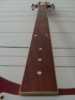
Bob, the white bass is a 1964 RM1999 bass that used to belong to Maurice Gibb in the 60's. He had it refinished in late 67 and it's been the same ever since.
I bought it in Essex in 1981 as my first real bass...
The pics are by luck more than anything else. I downsize them and they come out at roughly 480 x 360 and around 30KB, which is just under what they have to be (under 36KB) to be posted.
I bought it in Essex in 1981 as my first real bass...
The pics are by luck more than anything else. I downsize them and they come out at roughly 480 x 360 and around 30KB, which is just under what they have to be (under 36KB) to be posted.
-
david_schwab
- Member
- Posts: 392
- Joined: Fri Jul 15, 2005 3:44 am
- Contact:
It seemed to me, however, that the uncapped bridge PU is very similar in tone to the neck PU. It probably would be a situation that I would notice the difference more if I lived with it, but I kind of like my capped 4001...
That was my feeling as well. I figured they put the cap on because the two pickups sounded so much alike, since the toaster doesn't have all that much low mids... just that very deep bass.
I did like the uncapped treble pickup soloed... it made the Rick a bit more "traditional" (i.e. Fender) sounding. I remember the first time I did it, and was at an audition and played through a Kustom amp that was there (this was in the 70's... so we are talking about a "real" Kustom amp...), and it was such a thick bassy sound, it surprised me. But it wasn't *that* Ricky sound. So I added a switch.
Ideally, it would be great if when both pickups were switched on, that the cap would engage, but soloed it would be bypassed.
I've actually considered doing something like this on my other basses, as an option, because I think that the normal way pickups are combined tends to dilute the sound of the individual pickups, due to impedance interactions and phase cancelation. From my experiments I find that if you limit the frequency response so that the pickups' range doesn't overlap much, you get a fuller sound... but different that what we have come to expect.
-
jwr2
I prefer no cap and I turn the neck pickup down to 7-9 range this lets the bridge pickup growl a little more ... the only Ric bass that I had that sounded better with the cap was my 1968 4001 ... with the weak 60's pickups it needed the cap ... but that same bass with modern 4003 pickups and no cap screamed and still had tons of treble bite ...

"... it would be great if when both pickups were switched on, that the cap would engage, but soloed it would be bypassed."
Surely this can be done!
"... So I added a switch"
Look at the Model 3000/3001 wiring diagram, it has three pots - volume, passive tone (treble cut), and bass cut - that's like having the cap, only variable, if I'm not mistaken. And if I am, please someone more knowledgeable correct me.
Surely this can be done!
"... So I added a switch"
Look at the Model 3000/3001 wiring diagram, it has three pots - volume, passive tone (treble cut), and bass cut - that's like having the cap, only variable, if I'm not mistaken. And if I am, please someone more knowledgeable correct me.
"A Noble Instrument Must Be Nobly Regarded"
-
david_schwab
- Member
- Posts: 392
- Joined: Fri Jul 15, 2005 3:44 am
- Contact:
Yes Ilan, that's exactly what the passive bass cut is. I have also wired one of the tone controls to vary the amount of lows the cap cuts on the treble pickup, which was quite interesting. You can also change the value of the cap, larger values will give more low end.
Jeff, I guess that's why they stopped using the cap, since the newer pickups sound different.
On my '73, the toaster was actually a guitar toaster (6 long magnets), and really didn't have much bottom, in the way you expect a bass pickup to have. The uncapped treble pickup actually had more low end than the toaster, so I think the cap was to make the treble pickup more in line with the neck pickup, low end wise, and not really to increase the highs... since the cap doesn't effect the high end.
Jeff, I guess that's why they stopped using the cap, since the newer pickups sound different.
On my '73, the toaster was actually a guitar toaster (6 long magnets), and really didn't have much bottom, in the way you expect a bass pickup to have. The uncapped treble pickup actually had more low end than the toaster, so I think the cap was to make the treble pickup more in line with the neck pickup, low end wise, and not really to increase the highs... since the cap doesn't effect the high end.
-
david_schwab
- Member
- Posts: 392
- Joined: Fri Jul 15, 2005 3:44 am
- Contact:
Someone on Talkbass is telling the following:
"The 4001 and 4003 are pretty much the same instruments. The primary difference between them is the truss rods.
The rods in the 4001 were designed to accomodate flat wound strings. During the mid to late 70's round wound strings became very popular. The additional tension that they put on the rods (when using heavy gauge strings) would sometimes force the fretboard to pop off the neck. Seeing that Rickenbacker did not recommend heavy gauge round wound strings be put on their 4001, they would not repair the fretboard under warranty. The owner would have to cover the cost of the repair. I've used medium-lite gauge round wound strings on my 73 4001 for years and never had a problem.
A redesign of the rods and material quickly solved this problem.
In order not to confuse anyone, Rickenbacker desided to rename the bass. It became the 4003.
If you look at a number of 4001 and 4003 basses together that span twenty to thirty years in age, you will see a number of minor differences in them. The differences are slight, but they are there. If you played these same basses, you will find that the 4001 basses made throughout the 70's have a faster slimmer profile neck compared to the neck on todays 4003 which are a bit chunky and wider.
As for sound, the pickups of today are much hotter than those made 30 plus years ago. They look the same because of the outside pickup cover, but underneath they are quite different. That in turn effects the sound of the instrument.
One very important reason for the sound difference between a 4001 and 4003 is that the 4001 has one additional capacitor in it. It is the .0047 cap that is wired to the bridge pick-up. It effectively removes 50% of the output of the pickup. The result is the creation of that thin growling sound that can be heard on most Yes and Rush recordings.
The 4003 has a shunt installed where the .0047 cap originally was. The shunt permits the bridge pickup to output to its maximum thus creating a fuller fatter sound compared to the 4001.
A simple bypass wire placed to eliminate the .0047 cap in the 4001 doubles the bridge pickups output. The result is amazing.
Some 4001 owners install a push/pull pot in one of the tone knobs to permit the bypassing of the cap with the pull of the knob.
For the most part, that is pretty much it. Except for todays modern vintage re-issue basses. They have the features of the 60's basses but utilize the new 4003 truss rods. You can put what ever type of strings on them that you want.
Cheers,
TD"
I did the cap mod. on my '77 4001. Im really after that Geddy growl, so should i undo that cap mod on mine?
"The 4001 and 4003 are pretty much the same instruments. The primary difference between them is the truss rods.
The rods in the 4001 were designed to accomodate flat wound strings. During the mid to late 70's round wound strings became very popular. The additional tension that they put on the rods (when using heavy gauge strings) would sometimes force the fretboard to pop off the neck. Seeing that Rickenbacker did not recommend heavy gauge round wound strings be put on their 4001, they would not repair the fretboard under warranty. The owner would have to cover the cost of the repair. I've used medium-lite gauge round wound strings on my 73 4001 for years and never had a problem.
A redesign of the rods and material quickly solved this problem.
In order not to confuse anyone, Rickenbacker desided to rename the bass. It became the 4003.
If you look at a number of 4001 and 4003 basses together that span twenty to thirty years in age, you will see a number of minor differences in them. The differences are slight, but they are there. If you played these same basses, you will find that the 4001 basses made throughout the 70's have a faster slimmer profile neck compared to the neck on todays 4003 which are a bit chunky and wider.
As for sound, the pickups of today are much hotter than those made 30 plus years ago. They look the same because of the outside pickup cover, but underneath they are quite different. That in turn effects the sound of the instrument.
One very important reason for the sound difference between a 4001 and 4003 is that the 4001 has one additional capacitor in it. It is the .0047 cap that is wired to the bridge pick-up. It effectively removes 50% of the output of the pickup. The result is the creation of that thin growling sound that can be heard on most Yes and Rush recordings.
The 4003 has a shunt installed where the .0047 cap originally was. The shunt permits the bridge pickup to output to its maximum thus creating a fuller fatter sound compared to the 4001.
A simple bypass wire placed to eliminate the .0047 cap in the 4001 doubles the bridge pickups output. The result is amazing.
Some 4001 owners install a push/pull pot in one of the tone knobs to permit the bypassing of the cap with the pull of the knob.
For the most part, that is pretty much it. Except for todays modern vintage re-issue basses. They have the features of the 60's basses but utilize the new 4003 truss rods. You can put what ever type of strings on them that you want.
Cheers,
TD"
I did the cap mod. on my '77 4001. Im really after that Geddy growl, so should i undo that cap mod on mine?
-
shinynewtoy
- Intermediate Member
- Posts: 1347
- Joined: Fri May 27, 2005 7:46 pm
You can still get that growl... you just have more bottom-end to go with it...
Since the cap just halves the output, in theory rolling off the bridge p/u volume should accomplish the same effect. I haven't tried this... my treble pickup, which is on 75% of the time, is always full-on... if anything I back off the neck pickup.
Since the cap just halves the output, in theory rolling off the bridge p/u volume should accomplish the same effect. I haven't tried this... my treble pickup, which is on 75% of the time, is always full-on... if anything I back off the neck pickup.
What do you mean the Bass is too loud???

-
bob_atherton

- Intermediate Member
- Posts: 1441
- Joined: Thu Jan 06, 2005 4:47 am
I wasn't sure about the cap mod so I did it on my 77'. I'm still not sure about it.
The reason that I chose the 77' was that of all my 5 RICs this was the thinnest sounding. It now sounds very different, but I'm not sure better. It now does a very good impression of a Gibson Thunderbird, not really what I was lookig for....
I think I may well replace the cap.
The reason that I chose the 77' was that of all my 5 RICs this was the thinnest sounding. It now sounds very different, but I'm not sure better. It now does a very good impression of a Gibson Thunderbird, not really what I was lookig for....
I think I may well replace the cap.
-
chefothefuture

- Advanced Member
- Posts: 1886
- Joined: Sun Oct 30, 2005 6:00 am
One thing to remember about rolling off volume-
When you short a pickups output to ground, you loose trebles. That's why you see a cap across the center and sweep tangs on older Tele's (You need to use a 1 meg pot...). I've thought about using a treble pass control
for that 5th knob on the guitars.....
When you short a pickups output to ground, you loose trebles. That's why you see a cap across the center and sweep tangs on older Tele's (You need to use a 1 meg pot...). I've thought about using a treble pass control
for that 5th knob on the guitars.....
'68 4001MG, '70 4001 21Fret, '71 4001S MG, '71 4001FG, '72 4001AZ, '73 4001FG, '73 4001resto, '59 365FG, '96 381/12v69FG, '71 4001 21Fret FG
-
shinynewtoy
- Intermediate Member
- Posts: 1347
- Joined: Fri May 27, 2005 7:46 pm
"Keep your eyes open on this one."
Is this meant to subtly suggest that a box of .0047's made their way to Rickland?
Or am I reading way too much into it?
Two Bobs, two '77's two very different impressions! Aside from Chromes, pulling the cap IMO made the biggest positive difference in mine. I think it gave it a bigger Rick sound... but if every bassist fell in love with the same tone music would get a little boring!
Is this meant to subtly suggest that a box of .0047's made their way to Rickland?
Or am I reading way too much into it?
Two Bobs, two '77's two very different impressions! Aside from Chromes, pulling the cap IMO made the biggest positive difference in mine. I think it gave it a bigger Rick sound... but if every bassist fell in love with the same tone music would get a little boring!
What do you mean the Bass is too loud???