I'm pretty new here, so please be gentle.
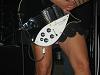
I have a pretty distressed Jetglo '86 4003 that I'm contemplating stripping and leaving natural. My question is, I am considering a satin finish on the maple and was wondering what I should use for this.
Any other tips on doing a Mapleglo refin would sure be appreciated.
Thanks
4003 refinish
Moderator: jingle_jangle
-
jingle_jangle
- RRF Moderator
- Posts: 22679
- Joined: Wed Dec 22, 2004 6:00 am
- Contact:
Welcome, Rob!
Have you ever refinished a guitar?
It is a good deal more complex than companies like ReRanch or StewMac would lead you to believe.
You can do a reasonably good job with spray cans, but it will not be as durable, protective, or long-lasting as a factory finish.
If you wish a pro job, then it's a good stripping followed by a special catalyzing conversion varnish. These are made by several manufacturers, in epoxy, urethane, and polyester chemistries. Rickenbacker uses or has used both of the last two. These must be sprayed from a gun and carefully color (wet) sanded and buffed out for max gloss.
There are satin conversion varnishes made as well as satin lacquer clears.
Under no circumstances should you listen to a paint clerk about how to finish wood. They will try to sell you Flecto, or Minwax, or any one of a number of "crooked bookshelf" DIY finishes which are ill-suited for doing your precious bass.
Bare maple, even with a good waxing, will dirty up really fast, so that's out.
Stick to professional materials if at all possible.
Have you ever refinished a guitar?
It is a good deal more complex than companies like ReRanch or StewMac would lead you to believe.
You can do a reasonably good job with spray cans, but it will not be as durable, protective, or long-lasting as a factory finish.
If you wish a pro job, then it's a good stripping followed by a special catalyzing conversion varnish. These are made by several manufacturers, in epoxy, urethane, and polyester chemistries. Rickenbacker uses or has used both of the last two. These must be sprayed from a gun and carefully color (wet) sanded and buffed out for max gloss.
There are satin conversion varnishes made as well as satin lacquer clears.
Under no circumstances should you listen to a paint clerk about how to finish wood. They will try to sell you Flecto, or Minwax, or any one of a number of "crooked bookshelf" DIY finishes which are ill-suited for doing your precious bass.
Bare maple, even with a good waxing, will dirty up really fast, so that's out.
Stick to professional materials if at all possible.
“I say in speeches that a plausible mission of artists is to make people appreciate being alive at least a little bit. I am then asked if I know of any artists who pulled that off. I reply, 'The Beatles did.”
― Kurt Vonnegut
― Kurt Vonnegut
Thanks Paul,
I do have experience with stripping and a using a paint gun via my car resto days. This would be my first guitar though other than some touch up stuff. My interest in the satin was to get something close to the 4001C64S finish I've heard about plus I've always liked the look of satin finishes when they were natural. Does Rickenbacker only use a satin sealer on the 4001C64S or is there any tint involved?
Thanks
I do have experience with stripping and a using a paint gun via my car resto days. This would be my first guitar though other than some touch up stuff. My interest in the satin was to get something close to the 4001C64S finish I've heard about plus I've always liked the look of satin finishes when they were natural. Does Rickenbacker only use a satin sealer on the 4001C64S or is there any tint involved?
Thanks
-
jingle_jangle
- RRF Moderator
- Posts: 22679
- Joined: Wed Dec 22, 2004 6:00 am
- Contact:
There may be some confusion of terminology here, Rob.
The "sealer" is used to coat and seal the wood before the dye coat and conversion varnish are applied, in that order. The sealer's natural state is glossy, but gloss is not its purpose.
The sealer has no color to it; it's described in the manufacturer's literature as "water-clear". I can't speak for RIC's new conversion varnish, but the old versions (up till July of this year) were also non-tinted.
Following the sealer coat, which sets and deepens the natural color of the woods, the finish is scuffed slightly and the dye coat or paint color is applied. A Mapleglo guitar will skip this step and go directly to conversion varnish. The varnish may be glossy or satin, depending upon its use and formulation.
The "sealer" is used to coat and seal the wood before the dye coat and conversion varnish are applied, in that order. The sealer's natural state is glossy, but gloss is not its purpose.
The sealer has no color to it; it's described in the manufacturer's literature as "water-clear". I can't speak for RIC's new conversion varnish, but the old versions (up till July of this year) were also non-tinted.
Following the sealer coat, which sets and deepens the natural color of the woods, the finish is scuffed slightly and the dye coat or paint color is applied. A Mapleglo guitar will skip this step and go directly to conversion varnish. The varnish may be glossy or satin, depending upon its use and formulation.
“I say in speeches that a plausible mission of artists is to make people appreciate being alive at least a little bit. I am then asked if I know of any artists who pulled that off. I reply, 'The Beatles did.”
― Kurt Vonnegut
― Kurt Vonnegut

Thanks for setting me straight on the sealer/tint question. My comment on the satin sealer was in reference to Rickenbacker's description of the C63S
on their website "A satin sealer-only finish helps protect The natural Maple body and neck, as well as the Rosewood fingerboard"
I do understand what you're saying though.
on their website "A satin sealer-only finish helps protect The natural Maple body and neck, as well as the Rosewood fingerboard"
I do understand what you're saying though.
Good point.
I think I read somewhere that the bodies destined for the transparent colors or MG were the best grains?
The finish on the bass is pretty sad though; quite a bit down to the bare wood on the back of the body and between the second and fifth frets on the neck. I can always decide once I get it stripped how to proceed.
I think I read somewhere that the bodies destined for the transparent colors or MG were the best grains?
The finish on the bass is pretty sad though; quite a bit down to the bare wood on the back of the body and between the second and fifth frets on the neck. I can always decide once I get it stripped how to proceed.
-
david_schwab
- Member
- Posts: 392
- Joined: Fri Jul 15, 2005 3:44 am
- Contact:
If I might ask a question here... I have a MG '73 4001 that I had refinished a metallic burgundy some years back. I want to restore this bass to pretty much stock condition (it had been modded quite a bit over the years). I always wanted a JG, and the wood on this one is nothing special, so I'm thinking about refinishing it black.
What's a good finish to use? I do have some experience with refinishing guitars...
Thanks
What's a good finish to use? I do have some experience with refinishing guitars...
Thanks
-
jingle_jangle
- RRF Moderator
- Posts: 22679
- Joined: Wed Dec 22, 2004 6:00 am
- Contact:
David, there are two routes to go (short of sending the guitar out for a professional refinish) and I wish that I could say that these two options were equally effective, but I really can't.
Both of these methods are DIY, and since you've had "some experience" but aren't exactly crowing about your success in this, and are asking for advice, I'll assume that you want to improve your skills.
First: Refinish it yourself, using spray cans from the likes of StewMac or ReRanch. As I've mentioned before, these guys are good at marketing their stuff to amateurs (and pros, too--I buy some of my tools from StewMac) and a good portion of their DIY paint marketing scheme consists of making painting with spray cans user-friendly.
Many of our Forum members have a good deal of experience in spray can finishing, mostly in nitrocellulose lacquers. I've seen some beautiful finishes done with spray cans, too.
So what am I getting at here? Do I have a "problem" with spray cans?
Well, yeah, I do. Nitro is not the most durable of finishes. Nitro goes on well and dries quickly, but it--especially nitro clear--is notoriously brittle and unstable, and it is a high-upkeep type of finish. It is also very, very thin and delicate. Any kind of lacquer clearcoat provides minimal levels of protection, and if applied thick enough to really protect (at least until they get brittle from UV and ozone), will inevitable check.
Nitro applied from spray cans has the additional problem of the sprayer not being to adjust pressure, coverage pattern, or volume of paint being applied. You've got one shot, and no adjustability.
Second: Use pro materials, and apply them with a good spray gun, not an "airbrush". There's no substitute for a spray gun. There are a number of guns available on the Web in the $100.00 range, which are quite well-suited for guitar refinishing. I use a Binks MG-1 for clearcoats and sealers and a SATA Mini-Jet for bursts and touch-up work.
Now, on to materials, which is where I think your question was heading, David:
If you want a good-looking finish with a minimum of fuss, do the spray gun/nitro thing.
If you want it to last and stand up to daily use (like a factory finish), use a spray gun and professional paints.
Guitar finishing technology began to parallel automotive finishing technology right after WWII, and Leo Fender sealed the deal when his Custom Colors used the same formulas as many of the special automotive finishes of the '50s.
So now, I'm using PPG automotive urethanes for both solids and tints. I'm using a PPG two-part urethane clearcoat for max protection--it's a similar finish to RIC's conversion varnish, with gloss, buffability, durability, and protection far superior to anything in a spray can. It's like putting a plastic shell around your precious instrument.
Manufacturers get a lot of mileage out of offering so-called "premium" nitro finishes, and they charge premium prices for them, so maybe that's what they mean by "premium". It's hype, plain and simple. There are no detectable sonic rewards to finishing a solid body or semi-solid body instrument with nitro over urethane. In the case of a genuinely worthy instrument, like a prewar Martin, I'd never use a urethane, as this would be inauthentic and probably hurt the sound of a very thin tuned spruce top, but with contemporary electric instruments at the thicknesses of wood of which they're made, no problem.
Use DuPont 480S for sealer, or vinyl sealer from StewMac or ReRanch. PPG DBU for color or tints. PPG 2021 or 2042 for clearcoats. Follow manufacturer's directions for reduction and curing times. Spray as cleanly as possible, carefully flatten the clearcoat after it's cured, and buff, buff, buff.
Both of these methods are DIY, and since you've had "some experience" but aren't exactly crowing about your success in this, and are asking for advice, I'll assume that you want to improve your skills.
First: Refinish it yourself, using spray cans from the likes of StewMac or ReRanch. As I've mentioned before, these guys are good at marketing their stuff to amateurs (and pros, too--I buy some of my tools from StewMac) and a good portion of their DIY paint marketing scheme consists of making painting with spray cans user-friendly.
Many of our Forum members have a good deal of experience in spray can finishing, mostly in nitrocellulose lacquers. I've seen some beautiful finishes done with spray cans, too.
So what am I getting at here? Do I have a "problem" with spray cans?
Well, yeah, I do. Nitro is not the most durable of finishes. Nitro goes on well and dries quickly, but it--especially nitro clear--is notoriously brittle and unstable, and it is a high-upkeep type of finish. It is also very, very thin and delicate. Any kind of lacquer clearcoat provides minimal levels of protection, and if applied thick enough to really protect (at least until they get brittle from UV and ozone), will inevitable check.
Nitro applied from spray cans has the additional problem of the sprayer not being to adjust pressure, coverage pattern, or volume of paint being applied. You've got one shot, and no adjustability.
Second: Use pro materials, and apply them with a good spray gun, not an "airbrush". There's no substitute for a spray gun. There are a number of guns available on the Web in the $100.00 range, which are quite well-suited for guitar refinishing. I use a Binks MG-1 for clearcoats and sealers and a SATA Mini-Jet for bursts and touch-up work.
Now, on to materials, which is where I think your question was heading, David:
If you want a good-looking finish with a minimum of fuss, do the spray gun/nitro thing.
If you want it to last and stand up to daily use (like a factory finish), use a spray gun and professional paints.
Guitar finishing technology began to parallel automotive finishing technology right after WWII, and Leo Fender sealed the deal when his Custom Colors used the same formulas as many of the special automotive finishes of the '50s.
So now, I'm using PPG automotive urethanes for both solids and tints. I'm using a PPG two-part urethane clearcoat for max protection--it's a similar finish to RIC's conversion varnish, with gloss, buffability, durability, and protection far superior to anything in a spray can. It's like putting a plastic shell around your precious instrument.
Manufacturers get a lot of mileage out of offering so-called "premium" nitro finishes, and they charge premium prices for them, so maybe that's what they mean by "premium". It's hype, plain and simple. There are no detectable sonic rewards to finishing a solid body or semi-solid body instrument with nitro over urethane. In the case of a genuinely worthy instrument, like a prewar Martin, I'd never use a urethane, as this would be inauthentic and probably hurt the sound of a very thin tuned spruce top, but with contemporary electric instruments at the thicknesses of wood of which they're made, no problem.
Use DuPont 480S for sealer, or vinyl sealer from StewMac or ReRanch. PPG DBU for color or tints. PPG 2021 or 2042 for clearcoats. Follow manufacturer's directions for reduction and curing times. Spray as cleanly as possible, carefully flatten the clearcoat after it's cured, and buff, buff, buff.
“I say in speeches that a plausible mission of artists is to make people appreciate being alive at least a little bit. I am then asked if I know of any artists who pulled that off. I reply, 'The Beatles did.”
― Kurt Vonnegut
― Kurt Vonnegut

Paul: You have a very interesting job. It sounds as if you are in the buff a lot.
Life, as with music, often requires one to let go of the melody and listen to the rhythm
Please join the Official RickResource Forum Facebook Page https://www.facebook.com/groups/379271585440277
Please join the Official RickResource Forum Facebook Page https://www.facebook.com/groups/379271585440277
-
jingle_jangle
- RRF Moderator
- Posts: 22679
- Joined: Wed Dec 22, 2004 6:00 am
- Contact: