You can't just apply one rule for all here. Ted's forward tilt assumption is correct, and with headstock angle probably, along with years of Roto's is why Squire's action was/is high.
They were all hand crafted, leading to varying angles. All my 60's basses have a different neck profile too.
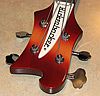
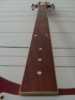
Here's a visual...
My white 64RM, with a it's practically straight headstock...

Wore Roto's for over 20 years, low action and never had a problem. Now, wearing 40-95,s with far less tension and an even lower action.
The other 64RM...

More of a headstock forward tilt and as a result far more problems with the higher action and usual neck problems. The figured birds eye maple neck on this didn't help either, so I'm told.
The compromise...

A 68 neck that is straighter, with maybe just a hint of back tilt and at the headstock\neck area much thicker wood, leading to no issues with this bass. Actually, the neck on this 68 is thinner than both 64's...
Most of the 60's basses had problems with the headstock angle when combined with a heavy tension string, which was the norm in the 70's after Squire. The necks are painfully thin and there just isn't enough there to keep it all stable.
That's basically why it's so hard today to find an original that has never had a problem...





 if you look on the Spock's Beard website Dave Meros uses Lo Riders on his Rick too (and he's got the Chris Squire-like tone going for him) He also put two extra pickups on it where Jazz pickups would normally be... interesting.