
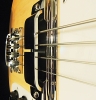
I don't know what to make of it. I conduct periodic searches for 4001's that are being sold, and ran across this one:
http://cgi.ebay.com/ws/eBayISAPI.dll?ViewItem&item=923060906
The thing is, something's not right. It may just be in my head, but visually I'm picking up on something that I just can't put my finger on. Anybody know what it is? Is this a real Rick?
Is this the real deal?
Moderators: rickenbrother, ajish4
Is this the real deal?
My first bass was a Rickenbacker...
My best bass is a Rickenbacker...
My last bass may very well be a Rickenbacker
My best bass is a Rickenbacker...
My last bass may very well be a Rickenbacker
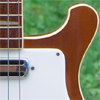
I agree, something isn't right. The pictures aren't very good but it appears that there is no toggle switch for the pickups, the tuners seem incorrect, the fretboard looks too dark.
Before putting in any bids, I would recommend asking some questions like; what is the serial number and where is it located?, does the jackplate say Rick-o-sound or stereo-sound?, is it a through-body neck?, are there any better photos.
Before putting in any bids, I would recommend asking some questions like; what is the serial number and where is it located?, does the jackplate say Rick-o-sound or stereo-sound?, is it a through-body neck?, are there any better photos.

Yeah... I had seen that the string posts on the tuners looked "F****r"-sized... but my brain did not pick up on the missing toggle! Also, the more I look at the nameplate/trussrod cover, the more it seems "hand-copied"... or is this just the bad focus tricking my eyes? I mean, if the serial # is valid?!?!?
My first bass was a Rickenbacker...
My best bass is a Rickenbacker...
My last bass may very well be a Rickenbacker
My best bass is a Rickenbacker...
My last bass may very well be a Rickenbacker
Guys, you are good. I don't know whether you read my post of yesterday in 'Is This a Rickenfaker', but you sure noticed many things are wrong with item 923060906. And by disclosing the serial number the seller has proven beyond any doubt that he is selling a Rick copy - it's obvious that this bass copies an early/mid '70s Model 4001 bass, whereas the serial number is from the late '70s. See if you can spot a couple of further details that definitely give the bass away as a copy. The winner gets a pick axe to make short work of every copy cropping up on Ebay from now on!
A Rickenbacker bass is much like the Jaguar E car - perennially ultra-fashionable.
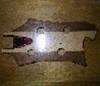
That's one, Eden. On most, if not all Rick copies, the distance between the two fixing screws on the rear, narrow flange of the treble pickup surround is the same as that between those on the front, wide flange, which is why the surround can be installed backwards, unlike on genuine Rick basses. What else you can you spot?
A Rickenbacker bass is much like the Jaguar E car - perennially ultra-fashionable.
The Fire Glow looks strange as if it were painted wrong. The 'red' burst does not extend/feather far enough to the center of the body, it is very tight around the outer edge, like a thick red ring with a yellow center. As opposed to the typical RIC style.
The paint on the headstock looks wrong too..
The nut is the wrong colour. It looks poorly cut & the wrong material (to me anyway).This could have been a replacement, Probably after the bogus nameplate was added
The nameplate's plastic looks too thick & the wrong material. It is much more similar in appearence to my Univox copy then my actual RIC. The top screw is in the wrong place at least from the perspective in the photo.The screwheads look to big also.
Suspiciously,the nameplate looks like the same material & thickness as the pickguard/scratchplate. We can conclude that the pickguard/scratchplate was not original.
Eddied, I agree with you about the lettering. If you look at the last photo in the left column.The lettering on the headstock was probably done by the same person who drew the picture hanging on the wall to the right
The body wood doesn't look like maple either.
Just my 2 cents.
The paint on the headstock looks wrong too..
The nut is the wrong colour. It looks poorly cut & the wrong material (to me anyway).This could have been a replacement, Probably after the bogus nameplate was added
The nameplate's plastic looks too thick & the wrong material. It is much more similar in appearence to my Univox copy then my actual RIC. The top screw is in the wrong place at least from the perspective in the photo.The screwheads look to big also.
Suspiciously,the nameplate looks like the same material & thickness as the pickguard/scratchplate. We can conclude that the pickguard/scratchplate was not original.
Eddied, I agree with you about the lettering. If you look at the last photo in the left column.The lettering on the headstock was probably done by the same person who drew the picture hanging on the wall to the right
The body wood doesn't look like maple either.
Just my 2 cents.
He walked out to face his arch-enemies with his arch-supporters.

I e-mailed the seller and asked them for a pic of the headstock with the truss rod cover removed. Their response was that they didn't know wht a truss rod cover was! The real kicker was the response I got when I requested a pic of the back. The neck was attatched with four bolts but the neck plate was missing! I let them know that it was not the real deal. Let's see if their add changes. Ya right!

Rickcrazy: It is always a challenge to venture into the sphere of Rickenbacker Forensics, especially in situations like this where the photos are tiny, out of focus, and show only limited features of the model being investigated. The red flag goes to the top of the pole when something like this is posted. Does this person care about selling this instrument? I am no expert, but this has not stopped me from expressing an opinion before and "it's too late to turn back now", "I believe I believe..." OK enough. I will give you my 2 cents worth.
My very first impression was that this bass does not have the spray pattern that I have come to associate with RIC basses. The photos may be partially responsible, but the image just doesn't jump out at you like most Rickenbacker basses have a want to do. Impression - not factory sprayed.
Looking further, I expect to see a headstock with wings. I do not see this and will speculate that this headstock is one solid piece, a finding that would be unusual for the period. Also the fireglo finish on the headstock is poorly done and I suspect would not pass the quality control from the factory. Others who have worked there will be able to judge this far better than I. A final comment about the headstock reveals that the keywind holes are closer to the "knobby" edge of the headstock than is usually seen. The "knobby" or round protuberance extending from the most distal end of the headstock typically is formed by a rather dramatic circular cut routed out of the headstock. The routing that produces the "knobby" on the bass headstock in this model for sale is less pronounced than expected and I consider to be inconsistent with the authentic issue. Impression - not factory constructed.
Focusing on the pickguard, I notice 9 screw holes compared to the traditional 8 of the day. Note what I consider to be the extra screw slightly above and to the right of the treble pickup. I suspect that the 8 hole screw pattern was initially by RIC adopted to accommodate the finger-rest mounted a short distance from the treble pickup. Whoever built this guard did not have this history in mind and the other instruments that I have examined of this period have the 8 traditional screw holes. Impression - pickguard not factory installed.
The pickup cover on the model for sale on has rounded edges near where it is attached to the pickup mount. Period Rickenbacker basses seem to have had pickup covers with more squared edges. Impression - not a stock pickup cover.
The white nut (OK so Macca had one too) is not the most telling aspect but the majority of other instruments were equipped with the black nut. I will rely on RIC employees past and present to set me straight on this one. Impression - Unsure of factory installation.
Research from others has revealed a serial number of RE 2447 which would lead us to believe it was crafted, or at the very lease the jackplate was stamped, in May 1978. But why not mention this in the ad in the first place? Impression - Possibility of no jackplate, jackplate from another instrument or homemade jackplate.
The neck is attached with four bolts.. ouch! Do we need to continue? A prototype perhaps? LOL. Now we know why there are no photos of the back of the instrument. Impression - Not crafted at the factory or modified after accident!
The fretboard is of a completely different colour that I would expect and is almost a traditional rosewood board. Impression - Not made at the factory with traditional finish.
There is no toggle switch which in itself is most unusual for a Model 4001. Impression - Not wired in the factory or modified.
In the end, I have concerns about the finish, the hardware, the construction and assembly of this instrument. If it is a genuine Rickenbacker as the serial number might confirm, it is an aberration in my view and not one that exudes the magic to which I am accustomed. I lean toward a Rickenfaker or an instrument that has been modified in many respects. My question is, should it not be genuine, why then has it not been yanked from Ebay by RIC. I remain suspicious of its authenticity. So when is a Rickenbacker not a Rickenbacker? Answer: When its modifications out number its original features. Whatever the outcome, this exercise has been fun.
So its back to you Rickcrazy. What else should we add to the list?
My very first impression was that this bass does not have the spray pattern that I have come to associate with RIC basses. The photos may be partially responsible, but the image just doesn't jump out at you like most Rickenbacker basses have a want to do. Impression - not factory sprayed.
Looking further, I expect to see a headstock with wings. I do not see this and will speculate that this headstock is one solid piece, a finding that would be unusual for the period. Also the fireglo finish on the headstock is poorly done and I suspect would not pass the quality control from the factory. Others who have worked there will be able to judge this far better than I. A final comment about the headstock reveals that the keywind holes are closer to the "knobby" edge of the headstock than is usually seen. The "knobby" or round protuberance extending from the most distal end of the headstock typically is formed by a rather dramatic circular cut routed out of the headstock. The routing that produces the "knobby" on the bass headstock in this model for sale is less pronounced than expected and I consider to be inconsistent with the authentic issue. Impression - not factory constructed.
Focusing on the pickguard, I notice 9 screw holes compared to the traditional 8 of the day. Note what I consider to be the extra screw slightly above and to the right of the treble pickup. I suspect that the 8 hole screw pattern was initially by RIC adopted to accommodate the finger-rest mounted a short distance from the treble pickup. Whoever built this guard did not have this history in mind and the other instruments that I have examined of this period have the 8 traditional screw holes. Impression - pickguard not factory installed.
The pickup cover on the model for sale on has rounded edges near where it is attached to the pickup mount. Period Rickenbacker basses seem to have had pickup covers with more squared edges. Impression - not a stock pickup cover.
The white nut (OK so Macca had one too) is not the most telling aspect but the majority of other instruments were equipped with the black nut. I will rely on RIC employees past and present to set me straight on this one. Impression - Unsure of factory installation.
Research from others has revealed a serial number of RE 2447 which would lead us to believe it was crafted, or at the very lease the jackplate was stamped, in May 1978. But why not mention this in the ad in the first place? Impression - Possibility of no jackplate, jackplate from another instrument or homemade jackplate.
The neck is attached with four bolts.. ouch! Do we need to continue? A prototype perhaps? LOL. Now we know why there are no photos of the back of the instrument. Impression - Not crafted at the factory or modified after accident!
The fretboard is of a completely different colour that I would expect and is almost a traditional rosewood board. Impression - Not made at the factory with traditional finish.
There is no toggle switch which in itself is most unusual for a Model 4001. Impression - Not wired in the factory or modified.
In the end, I have concerns about the finish, the hardware, the construction and assembly of this instrument. If it is a genuine Rickenbacker as the serial number might confirm, it is an aberration in my view and not one that exudes the magic to which I am accustomed. I lean toward a Rickenfaker or an instrument that has been modified in many respects. My question is, should it not be genuine, why then has it not been yanked from Ebay by RIC. I remain suspicious of its authenticity. So when is a Rickenbacker not a Rickenbacker? Answer: When its modifications out number its original features. Whatever the outcome, this exercise has been fun.
So its back to you Rickcrazy. What else should we add to the list?
Life, as with music, often requires one to let go of the melody and listen to the rhythm
Please join the Official RickResource Forum Facebook Page https://www.facebook.com/groups/379271585440277
Please join the Official RickResource Forum Facebook Page https://www.facebook.com/groups/379271585440277