

I have, today, installed Glen Lambert's Loom in my Model 350. It came with two pages of instructions and because of their detail was an easy install which took roughly and hour from start to finish.
It allows for seven different pickup settings including: bridge, neck, middle, bridge/neck, bridge/middle, middle/neck, and all three pickups.
The wiring harness (loom) is a thing of beauty with top quality parts arranged like a work of art. When installed, it is a work of art in a work of art.
In addition to the fine quality components, it is put together based on Lambert's research of what he considers the late 1950s looms looked like. While I understand from previous readings that the precise nature of the early looms may not be completely known, one has to be taken with the effort that went into this project.
What I like best about this loom is the ease with which three popular settings can be selected quickly on the basis of the switch position. The toggle switch in the middle position is the bridge pickup alone. The toggle in the down position is the bridge and neck combination which certainly jangles on my 350. The toggle in the up position allows for bridge and middle pickup combination.
Two addition pickup combinations are the middle pickup alone (toggle up, treble volume off) and the neck pickup alone (toggle down, treble volume off).
The final two settings are achieved by using a rotary knob in the fifth knob position to access all three pickups or the neck and middle position.
This is a very versatile arrangement and I am very pleased with the result. For those with a three pickup model, this may be something worth considering. I especially like moving from bridge, to bridge and neck, to bridge and middle with just a flick of the toggle switch.
Lambert's Loom
Moderators: rickenbrother, ajish4
Lambert's Loom
Life, as with music, often requires one to let go of the melody and listen to the rhythm
Please join the Official RickResource Forum Facebook Page https://www.facebook.com/groups/379271585440277
Please join the Official RickResource Forum Facebook Page https://www.facebook.com/groups/379271585440277

Peter,
In the event that I consider a similar modification, may I ask where did you get the loom and how much did it cost?
In the event that I consider a similar modification, may I ask where did you get the loom and how much did it cost?
“We can't solve problems by using the same kind of thinking we used when we created them.” - Albert Einstein
"You do not really understand something unless you can explain it to your grandmother" - Albert Einstein
"You do not really understand something unless you can explain it to your grandmother" - Albert Einstein
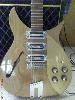
I'm glad things have worked out so well with the loom and your 350 Peter. I'm always keen to hear how it's received and I couldnt have asked for a better report back
Brian, you can read more about the looms here
http://www.geocities.com/vintage325/58wiring.html
and please feel free to contact me regarding pricing
regards,
glen
Brian, you can read more about the looms here
http://www.geocities.com/vintage325/58wiring.html
and please feel free to contact me regarding pricing
regards,
glen
Thanks Glen,
Obviously, I had no idea that it was a forum member who put the loom together. Please forgive my ignorance.
I will take a look at the link and will contact you directly.
Obviously, I had no idea that it was a forum member who put the loom together. Please forgive my ignorance.
I will take a look at the link and will contact you directly.
“We can't solve problems by using the same kind of thinking we used when we created them.” - Albert Einstein
"You do not really understand something unless you can explain it to your grandmother" - Albert Einstein
"You do not really understand something unless you can explain it to your grandmother" - Albert Einstein
-
tony_carey

- Advanced Member
- Posts: 2055
- Joined: Thu Oct 28, 2004 6:00 am
- Contact:
I shall check this later, but on first reading, it sounds like the fifth knob has changed function. I know that you can't have everything, but to lose my master tone control would be a difficult compromise. Sounds interesting though & I will have a good think on this.....
'Rickenbacker'...what a name! After all these years, it still thrills me.
You're right about the 5th knob changing function Anthony, but that was a customised feature specifically for Peter's loom. Normally the 5th control would retain it's original function.
The requirement was to be able to connect the neck and middle pickups back together if desired (as in the common production loom). This wasn't even an option on the original '58 325 looms, so I changed the 5th control to a 2 position rotary switch to allow shorting of the neck and middle pickups. It did work out very nicely and added 2 extra settings.
I like the original 5th control mixer function myself.
The requirement was to be able to connect the neck and middle pickups back together if desired (as in the common production loom). This wasn't even an option on the original '58 325 looms, so I changed the 5th control to a 2 position rotary switch to allow shorting of the neck and middle pickups. It did work out very nicely and added 2 extra settings.
I like the original 5th control mixer function myself.
I have not had the fifth knob function on my Model 350 for years now. My master volume function is my volume pedal and my master tone control is my amplifier which I find works well enough that I have not missed the fifth knob.
My previous wiring allowed for all pickups and for the middle and neck configuration, both of which I find useful tonalities.
I did not want to go without these functions, hence the decision to lose the fifth knob and to use it to allow these additional two options.
What is so very nice about Glen's loom, however, is that the tonalities achieved by using the neck and bridge and the middle and bridge are possible and enabled at the flick of the toggle switch on a three pickup model.
My previous wiring allowed for all pickups and for the middle and neck configuration, both of which I find useful tonalities.
I did not want to go without these functions, hence the decision to lose the fifth knob and to use it to allow these additional two options.
What is so very nice about Glen's loom, however, is that the tonalities achieved by using the neck and bridge and the middle and bridge are possible and enabled at the flick of the toggle switch on a three pickup model.
Life, as with music, often requires one to let go of the melody and listen to the rhythm
Please join the Official RickResource Forum Facebook Page https://www.facebook.com/groups/379271585440277
Please join the Official RickResource Forum Facebook Page https://www.facebook.com/groups/379271585440277
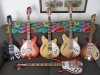
I have Glen's 2-knob loom in my 325C58, and I can't praise it enough.
I figure that I'll never be lucky enough to own a non-altered original '58 325, so I went to Glen for his 2-control harness and did the mods to my guitar. Sounds incredible and looks really cool.
For those who are wondering, Glen's 2-knob looms are 100% accurate in function to an original 2-knob guitar.
I figure that I'll never be lucky enough to own a non-altered original '58 325, so I went to Glen for his 2-control harness and did the mods to my guitar. Sounds incredible and looks really cool.
For those who are wondering, Glen's 2-knob looms are 100% accurate in function to an original 2-knob guitar.
-
tony_carey
- Advanced Member
- Posts: 2055
- Joined: Thu Oct 28, 2004 6:00 am
- Contact:
The biggest advantage to using the fifth knob as a master tone, is that it is a very quick & effective method of balancing the individual tones of different gtrs used during the same performance, when resetting your amp is not desirable or possible. During a gig, I will use three or four different gtrs & this master tone function is a Godsend!
I very much like the idea of the pickup switching options though...perhaps a 5 way toggle switch would allow similar options, but retain the master tone fifth knob?
I very much like the idea of the pickup switching options though...perhaps a 5 way toggle switch would allow similar options, but retain the master tone fifth knob?
'Rickenbacker'...what a name! After all these years, it still thrills me.
Tony: Yes a switch with more functions would allow one to retain the fifth knob blending function.
The good news for me is that I am only likely to take one instrument to a gig.
Having three great sounds, bridge, bridge/neck and bridge/middle quickly accessible using the toggle switch is a big plus though.
As you point out, however, the playing professional has other needs that may make the fifth knob essential.
The good news for me is that I am only likely to take one instrument to a gig.
Having three great sounds, bridge, bridge/neck and bridge/middle quickly accessible using the toggle switch is a big plus though.
As you point out, however, the playing professional has other needs that may make the fifth knob essential.
Life, as with music, often requires one to let go of the melody and listen to the rhythm
Please join the Official RickResource Forum Facebook Page https://www.facebook.com/groups/379271585440277
Please join the Official RickResource Forum Facebook Page https://www.facebook.com/groups/379271585440277
-
jingle_jangle

- RRF Moderator
- Posts: 22679
- Joined: Wed Dec 22, 2004 6:00 am
- Contact:
I respect Glen's devotion to this task. I wonder, though, if there's a potential trademark violation in offering these for sale, as I believe Rickenbacker owns the configuration and also the name and label design of the Astron caps?
The harness I made for my own 320 when I converted it to a 325 with two knobs, is far from a work of art, in the sense that it uses an abbreviated and reattached factory harness.
Since I do my tone settings using the amplifier like many of us, my two knobs are for volume controls. The front knob is hooked to the stock three-way switch, so bridge, neck, or a combination of both can be selected. My rear volume knob selects the volume level of the middle pickup only. This gives me the opportunity to use the mid pickup by itself, or to use it as coloration for the other pickup(s) selected.
The tone variations that are possible with this simple solution are pretty amazing. The guitar looks like a toy to most people, but it is a tone monster! (It has hi-gains in all three positions.)
The harness I made for my own 320 when I converted it to a 325 with two knobs, is far from a work of art, in the sense that it uses an abbreviated and reattached factory harness.
Since I do my tone settings using the amplifier like many of us, my two knobs are for volume controls. The front knob is hooked to the stock three-way switch, so bridge, neck, or a combination of both can be selected. My rear volume knob selects the volume level of the middle pickup only. This gives me the opportunity to use the mid pickup by itself, or to use it as coloration for the other pickup(s) selected.
The tone variations that are possible with this simple solution are pretty amazing. The guitar looks like a toy to most people, but it is a tone monster! (It has hi-gains in all three positions.)
“I say in speeches that a plausible mission of artists is to make people appreciate being alive at least a little bit. I am then asked if I know of any artists who pulled that off. I reply, 'The Beatles did.”
― Kurt Vonnegut
― Kurt Vonnegut

Glen much like Anthony I use my fifth knob to alter my sound when I play my 350. So I will continue to use my stock set up. Thanks for providing the link with more information on your wiring harness. I found it to be quite an interesting read.
“We can't solve problems by using the same kind of thinking we used when we created them.” - Albert Einstein
"You do not really understand something unless you can explain it to your grandmother" - Albert Einstein
"You do not really understand something unless you can explain it to your grandmother" - Albert Einstein
just to answer a few questions.
Aside from this one for Peter, the looms I've made with 5 controls have both retained the normal mixer function on the 5th knob (yes I believe I've only made 2 of them). I agree that the mixer is a useful function and I use it myself.
Regarding the accuracy of the 2-knob looms I've made. To my knowledge none of the manufacturers are still making the components used in the original '58 325 loom. Some of them no longer exist as companies. Mallory is no longer making the particular type of pots they supplied back then, nor is Astron making those capacitors. Switchcraft do not produce that particular configuration switch unless you place a special order. However, I've used contemporary suppliers of the identical specification potentiometers. I've hand converted toggle switches to the correct configuration. And I've hand made reproductions of the Astron caps in the correct size. Mine aren't based on the ones produced for the C series, they are based on an Astron 0.05/200v cap that originally was in a '58 Rickenbacker.
Yes, I put a lot of personal time and effort into determining the wiring of the 2-knob 325 circuit, and the components and wiring are absolutely correct, and verified against four original '58 325 2-knob guitars. The other point to note - you need to get the circuit from a '58 325. There was no other production model that had anything close to this circuit in it. There is only one concession. The Bridge pickup on the '58 325s had two audio coax's running from its terminals to the loom. Probably for some reason that didn't work out in practice. Rather than expect people to lift the pickups and add a superfluous coax, a short link was used on the loom in it's place. Aside from this one point, my looms have been wired exactly as the original 2 knob 325's were.
One final thought. Some might have gotten the idea that this is big business because a price has been asked to supply. So I should clarify. I can count the looms I've made this year on one hand. In fact if I had to guess I'd say I've made between 10 and 15 looms all up, and a number of them have been supplied gratus or traded for parts or services rather than payment.
I've made them because I'm interested in the guitars, and I like the idea of recreating a bit of the past. There are no large sums of money in it for me. I've asked an amount to cover the cost of purchasing components and/or my time reproducing things by hand. I probably should have been charging more for the amount of time I've ended up spending getting things just right. I'm just fussy that way with details. There hasn't been enough of it to really worry me. If it's decided that I'm not allowed or required to make them anymore, it doesn't matter to me. It may be a shame for those who wanted an accurate loom but I don't want to give the impression that I'm in it for the money, and I'm happy to not make them anymore if that's the preference.
kind regards
glen
Aside from this one for Peter, the looms I've made with 5 controls have both retained the normal mixer function on the 5th knob (yes I believe I've only made 2 of them). I agree that the mixer is a useful function and I use it myself.
Regarding the accuracy of the 2-knob looms I've made. To my knowledge none of the manufacturers are still making the components used in the original '58 325 loom. Some of them no longer exist as companies. Mallory is no longer making the particular type of pots they supplied back then, nor is Astron making those capacitors. Switchcraft do not produce that particular configuration switch unless you place a special order. However, I've used contemporary suppliers of the identical specification potentiometers. I've hand converted toggle switches to the correct configuration. And I've hand made reproductions of the Astron caps in the correct size. Mine aren't based on the ones produced for the C series, they are based on an Astron 0.05/200v cap that originally was in a '58 Rickenbacker.
Yes, I put a lot of personal time and effort into determining the wiring of the 2-knob 325 circuit, and the components and wiring are absolutely correct, and verified against four original '58 325 2-knob guitars. The other point to note - you need to get the circuit from a '58 325. There was no other production model that had anything close to this circuit in it. There is only one concession. The Bridge pickup on the '58 325s had two audio coax's running from its terminals to the loom. Probably for some reason that didn't work out in practice. Rather than expect people to lift the pickups and add a superfluous coax, a short link was used on the loom in it's place. Aside from this one point, my looms have been wired exactly as the original 2 knob 325's were.
One final thought. Some might have gotten the idea that this is big business because a price has been asked to supply. So I should clarify. I can count the looms I've made this year on one hand. In fact if I had to guess I'd say I've made between 10 and 15 looms all up, and a number of them have been supplied gratus or traded for parts or services rather than payment.
I've made them because I'm interested in the guitars, and I like the idea of recreating a bit of the past. There are no large sums of money in it for me. I've asked an amount to cover the cost of purchasing components and/or my time reproducing things by hand. I probably should have been charging more for the amount of time I've ended up spending getting things just right. I'm just fussy that way with details. There hasn't been enough of it to really worry me. If it's decided that I'm not allowed or required to make them anymore, it doesn't matter to me. It may be a shame for those who wanted an accurate loom but I don't want to give the impression that I'm in it for the money, and I'm happy to not make them anymore if that's the preference.
kind regards
glen