Brian, Thanks that is my feeling too. The guitar is no longer a compromise to me because of its color and this finish highly compliments the natural grain and flame much more so than the purple allowed.
Paul you got the name of my band correct We'll be passing through the midwest and up and down the east coast. If anyone is interested in checking out the guitar in person its coming with me on tour- For the tour schedule go to:
I had to bring this thread back.
Refinishing/restoring a vintage instrument is fine if you can find someone as talented as Paul or Dale to do it. Personally, I would pay big bucks to have a '50s Capri, 60's 360/12, etc...if it was by these guys. They know what they're doing.
(Of course, only if the instrument needed the work done in the first place.)
My take is, it's only original once. Were it my instrument, I'd only refin if it were rotting or had been badly refinished already. That said, it's your guitar -- do what makes you happy.
Again, there's that "originality" thing that the dealers have brainwashed us with.
Once it's bad enough to be "rotting", you've lost the case--nobody can resurrect it, unless it's remanufactured with a new body, neck, etc...
"Badly refinished already" is where the majority of refins fit in.
StewMac and ReRanch can sell all the materials and paint they wish; they cannot sell talent and experience. So that's one place where the bad (owner-done) refins come from, and that's what gives dealers nightmares, and keeps the "keep it original" nonsense buzzing.
A pro restoration is something to be reckoned with, but most dealers don't want the bother. It's much easier to sell guitars with "mojo". Mojo in this case being rusty hardware, cigarette burns, tobacco juice, sticky wine stains, dried vomit, etc., etc.
My house was only original once, so were all of my former antique cars. Entropy can't be prevented, but reversing it is a labor of joy.
Celebrity (historic) guitars should not be touched, but that's for historical reasons, not monetary ones. Lennon's '58 is worth no less monetarily since DiMarino exercised his own ego on it, but it has suffered from an historical standpoint.
Bottom line is exactly what Scott's last sentence says.
“I say in speeches that a plausible mission of artists is to make people appreciate being alive at least a little bit. I am then asked if I know of any artists who pulled that off. I reply, 'The Beatles did.”
― Kurt Vonnegut
Just to be clear, I'm not talking about collectibility or money value -- that stuff makes me sick. I do think it's neat when a guitar shows its age, that it's had a life before me. Some folks want their guitars to be new again, and I fully respect that too. There's an *** for every seat, right?
Collectibility or money value is a fact of life and partially what keeps great guitars (and cars, airplanes, wooden boats, etc.) shouldering on far beyond their normal lifespans. Best to not "get sick" over it.
Emphasis upon "collectibility and monetary value" to the exclusion or discounting of everything else, puts the focus in the wrong place. For me, beauty, quality of construction, and sound are primary and user-friendliness a very close second.
The best designs often have a timeless and quite characteristic sound, too. Funny, isn't it?
If you think there's an *** for every seat, you've never been to a Captain Beefheart concert.
“I say in speeches that a plausible mission of artists is to make people appreciate being alive at least a little bit. I am then asked if I know of any artists who pulled that off. I reply, 'The Beatles did.”
― Kurt Vonnegut
Here what I think causes the greatest fear over having a guitar refinished. Wondering if the refinish will be as good you wished for and that it lasts!
I had the misfortune of spending a lot of money to have an old Fender Strat done. When I picked it up the colour wasn't as good as I'd hoped for, but more importantly within two years it developed the worst cause of finish cracking I'd ever seen.
Having said that, it wouldn't deter me from having a guitar refinished. I'd just make sure I did a lot more homework, and not rely on other peoples initial observations of someone's work.
I'd spend more time talking to long term customers, to gauge their satisfaction, and determine who would do the work, the processes that would be done and the see if they were prepared to guarantee the work done.
After all, you have a guitar refinished to a specific colour, shade etc, to make the guitar unique or more desirable to yourself.
I'm not a purist, a guitar in a beat up case that is 50 years old, the finish all cracked and feels terrible to play, is not something I'd look on as a thing of beauty. However, take the same guitar to a reputable craftsman, have it refinished to that particular colour you've always liked and treat the guitar to a new case and that guitar now has far greater value to me.
When I do a refinish, unless my customer sends me a usable color sample from which paint can be mixed, I mix to their verbal description and provide a sample and additional samples of a minimum of (3) variations, in order for the customer to choose. Then I match to the one that they physically initial. That way, no questions about color.
Quality:
The best way to assure quality is to ask to see samples of the finisher's work, or to go by reputation. Ask around! Then communicate clearly to the finisher what you expect.
Longevity:
It is occasionally possible for a well-refinished old guitar to exhibit finish problems within a few years. The finisher is doing his best to provide a beautiful, long-lasting finish on your instrument, but once it leaves his shop, it's a piece of wood with a history before and after he ever laid hands on it. Wood is an organic, ever-changing material, and on rare occasion it may exceed its limitations for stress (temperature and humidity). This may cause finish problems to repeat themselves.
This has not happened to any of my own refinish jobs (that I'm aware of), since I began refinishing guitars in the mid-'70s. But were it to happen, I would certainly discuss it with the customer and re-refinish it for a price which would be acceptable to us both.
“I say in speeches that a plausible mission of artists is to make people appreciate being alive at least a little bit. I am then asked if I know of any artists who pulled that off. I reply, 'The Beatles did.”
― Kurt Vonnegut
I based my personal decision on seeing what kind of work that Paul & Dale do. I've had a couple of Ricks refinned and I wasn't happy with either. The guy used nitro and did a **** poor job of it. They were both sticky/soft to the touch when they arrived. Seeing Paul's work on David's '68 335 and his own 320 sold me. Dale's work also speaks for itself. Face it, we Rick-heads didn't have much choice before these guys showed up! I'm happy they're here and that they do such great work. I have about 3-4 guitars that need attention. Now i feel that I don't have to bother John Hall anymore...ha ha.
I am going to have my fireglo '67 4005/WB refinished in ..... AMBER fireglo....of course, it had already been refinished.
This is a high-dollar instrument, but it is rare and I don't believe a professional refinish by Paul or Dale will take away from the value of it at all.
This is the kind of thinking that we need in order to counteract the self-serving dealer propaganda that "beat is best".
I commend Chris and John for their original viewpoints.
“I say in speeches that a plausible mission of artists is to make people appreciate being alive at least a little bit. I am then asked if I know of any artists who pulled that off. I reply, 'The Beatles did.”
― Kurt Vonnegut
The funny thing has been.....you restore a car or a house and its worth more. You restore or refin (well) a guitar and its value is "supposedly" cut in half. BS.
John, that's exactly the thrust of most of my rants on this topic.
Look at wooden boats, for instance. Unrestored is worth 1/4 what restored is. Who would ever prefer an unrestored one?
Dealers have controlled this market in guitars for a couple of decades, and have folks brainwashed and fearful of the value of their guitars if they allow them to be restored.
Again, we need to draw a firm distinction between pro restos and amateur. "Pro" being properly done, using factory materials and methods, by experienced technicians.
"Amateur" could be anything from worst hack work with a toothbrush, to near pro in quality, and that's the problem with amateur--there is no definition that we can make stick, and verbal descritions depend upon the expertise of a writer, and are vague and subject to interpretation. You'll often get eleven opinions from seven people.
“I say in speeches that a plausible mission of artists is to make people appreciate being alive at least a little bit. I am then asked if I know of any artists who pulled that off. I reply, 'The Beatles did.”
― Kurt Vonnegut
Hmm... I seem to have trouble getting myself across, so this will be my last post on the subject. I happen to dig the look of guitars that have aged -- nothing to do with dealer "brainwashing", "keeping vintage resale value", or "mojo" legends or anything like that, just my preference. I'm not trying to change anyone else's mind here, Paul -- in fact, I wish you the best with your business. Your refretting and refinishing work looks very attentive and professional.

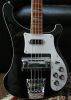
 We'll be passing through the midwest and up and down the east coast. If anyone is interested in checking out the guitar in person its coming with me on tour- For the tour schedule go to: