
Ink a dink a dink
Moderator: jingle_jangle
Well hey, you have a paper preservation expert here on line-as you may recall, before going into teaching this last year, I was a professional archivist for the previous ten years, working mostly for the government of Ontario archives.
There is little you can do to "restore" any deterioration, that is unless you want to spend mega bucks. Paul is right, the most dangerous things for it are UV and especially the acid and/or lignin that is resident in the paper itself. Unfortunately, a grocery slip is likely to be highly acidic and not very stable. Neutralizing the acid can be an extremely expensive proposal and should only be attempted by a trained conservator. If you tell me where you are located, I may be able to refer you to someone. To preserve the item itself, the best thing you can do immediately is to get some buffered acid free file folders. You should also get a small Hollinger box to store the folder and item in. You need to find a dark place that holds as constant a temperature and relative humidity as possible, preferably 18 degrees C and 45% relative humidity. Constancy in temp and RH values is more important than getting optimal levels. The hollinger box is important in this regard to shield UV and also to mitigate against environmental fluctuations (i.e., creating a more stable "micro-climate"). For supplies, visit the Carr-MacLean site (http://www.carrmclean.com/). Again, make sure you look for buffered file folders as these will "draw out" some of the paper's resident acid.
If you are unwilling to spend the cash to have the item deacidified, you will not be able to prevent the deterioration of the item but you can significantly slow it down by following the steps above. For a couple of online resources about acid deterioration (and anything else about paper conservations), visit Conservation Online, the definitive preservation site for professional conservators hosted out of Stanford U (http://palimpsest.stanford.edu/). I would also recommend, before storing this item, that you reformat the item to at least preserve the information on the item (i.e., the signature itself). A photocopy and/or digital scan can do the trick but again, make sure you print off any copies on acid free paper. Make one copy and the make copies from that copy. By all means, keep the original item in its housing as much as possible-if anybody wants to see the signature, use these copies to show them. I said earlier that UV and acid were the greatest threats. This is not entirely true - handling and use of archival items is by far the greatest stressor and will significantly shorten a piece of paper's lifespan.
If you need more guidance or would like to contact a conservator to get some more specialized help re deacidification or restoration, contact me offline and I would be more than happy to help you. Who knows, perhaps you might get lucky and be able to piggyback on some mass deacidification projects happening at at a local institution.
There is little you can do to "restore" any deterioration, that is unless you want to spend mega bucks. Paul is right, the most dangerous things for it are UV and especially the acid and/or lignin that is resident in the paper itself. Unfortunately, a grocery slip is likely to be highly acidic and not very stable. Neutralizing the acid can be an extremely expensive proposal and should only be attempted by a trained conservator. If you tell me where you are located, I may be able to refer you to someone. To preserve the item itself, the best thing you can do immediately is to get some buffered acid free file folders. You should also get a small Hollinger box to store the folder and item in. You need to find a dark place that holds as constant a temperature and relative humidity as possible, preferably 18 degrees C and 45% relative humidity. Constancy in temp and RH values is more important than getting optimal levels. The hollinger box is important in this regard to shield UV and also to mitigate against environmental fluctuations (i.e., creating a more stable "micro-climate"). For supplies, visit the Carr-MacLean site (http://www.carrmclean.com/). Again, make sure you look for buffered file folders as these will "draw out" some of the paper's resident acid.
If you are unwilling to spend the cash to have the item deacidified, you will not be able to prevent the deterioration of the item but you can significantly slow it down by following the steps above. For a couple of online resources about acid deterioration (and anything else about paper conservations), visit Conservation Online, the definitive preservation site for professional conservators hosted out of Stanford U (http://palimpsest.stanford.edu/). I would also recommend, before storing this item, that you reformat the item to at least preserve the information on the item (i.e., the signature itself). A photocopy and/or digital scan can do the trick but again, make sure you print off any copies on acid free paper. Make one copy and the make copies from that copy. By all means, keep the original item in its housing as much as possible-if anybody wants to see the signature, use these copies to show them. I said earlier that UV and acid were the greatest threats. This is not entirely true - handling and use of archival items is by far the greatest stressor and will significantly shorten a piece of paper's lifespan.
If you need more guidance or would like to contact a conservator to get some more specialized help re deacidification or restoration, contact me offline and I would be more than happy to help you. Who knows, perhaps you might get lucky and be able to piggyback on some mass deacidification projects happening at at a local institution.
As for a sleeve, the issue is not so much whether it is inert or not. Sealing a piece of paper that is highly acidic,as a grocery slip is almost sure to be, will hasten its destruction. Inert sleeves are preferable housing for more inherently stable materials.
There is a very good video on this by the way, if you're interested. It might be available at your local library. It is called Slow Fires and talks about the destruction of - mostly the American documentary record - through acid decay. Ironically, paper produced before about 1950 is far more stable and will well outlast the bulk of records produced from the 1950s to the 1990s. Couple this with the transient nature of digital records (and the lack of effort/knowledge in creating and preserving archival digital records with the advent of the computer) and subsequent generations/researchers will be faced with a serious dearth of records for the last half of the 20th century. It is highly ironic (and sad) that the most documented period in human history will probably be one of the least so for posterity.
There is a very good video on this by the way, if you're interested. It might be available at your local library. It is called Slow Fires and talks about the destruction of - mostly the American documentary record - through acid decay. Ironically, paper produced before about 1950 is far more stable and will well outlast the bulk of records produced from the 1950s to the 1990s. Couple this with the transient nature of digital records (and the lack of effort/knowledge in creating and preserving archival digital records with the advent of the computer) and subsequent generations/researchers will be faced with a serious dearth of records for the last half of the 20th century. It is highly ironic (and sad) that the most documented period in human history will probably be one of the least so for posterity.
-
shamustwin
- Senior Member
- Posts: 5287
- Joined: Tue Apr 29, 2003 5:00 am
Thanks, Bill.
I will check into the methods you've stated.
I'm in the L.A. area, so most likely there would be conservator nearby. Any clues would be appreciated. If you want to recommend someone offline, please do.
Are we Americans behind the rest of the civilized world in preserving our important records and documents?
The autograph hasn't seen daylight for maybe 7 years. I've had it in a small picture frame in a drawer (I had a feeling light was it's enemy). Now even that doesn't sound so good!
My other option is to buy a 360/12C63 and tape it to the pick guard and have a very real George Harrison signature model . Temporarily.
I will check into the methods you've stated.
I'm in the L.A. area, so most likely there would be conservator nearby. Any clues would be appreciated. If you want to recommend someone offline, please do.
Are we Americans behind the rest of the civilized world in preserving our important records and documents?
The autograph hasn't seen daylight for maybe 7 years. I've had it in a small picture frame in a drawer (I had a feeling light was it's enemy). Now even that doesn't sound so good!
My other option is to buy a 360/12C63 and tape it to the pick guard and have a very real George Harrison signature model
. Temporarily.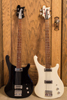
"subsequent generations/researchers will be faced with a serious dearth of records for the last half of the 20th century"
That is why I am a strong supporter of traditional photography. I run a custom black & white photo lab www.labwork-bw.com that specializes in hand processing and printing of film on real photographic paper including fiberbase paper which is truly archival. Digital is going to create a huge hole in the history of our planet, assuming there will be a planet in the future and poeple that care.
That is why I am a strong supporter of traditional photography. I run a custom black & white photo lab www.labwork-bw.com that specializes in hand processing and printing of film on real photographic paper including fiberbase paper which is truly archival. Digital is going to create a huge hole in the history of our planet, assuming there will be a planet in the future and poeple that care.
Black and white photos are indeed the most stable form for photographic records, especially when print is taken with the care you are taking Jeffrey. I've worked with 100 year old black and white prints that are a 1000% times better than colour prints taken only 20 years ago. Digital has created a huge hole in the history of our planet for sure though this is less a concern than it was even 10 years ago. The last decade has witnessed huge strides in people thinking of, and planning for, digital preservation. Still so many issues and problems to resolve.
"Are we Americans behind the rest of the civilized world in preserving our important records and documents?"
No, I wouldn't say this is so-although American spending on heritage activities of any kind is, IMHO, abyssmal (compared say, to its defence budget), you are served by an excellent national archival system and have so much more to commit, in gross terms, to these activities than the vast majority of countries on this planets (fairly typical of most of your fields of activity-again IMHO). For the last decade or so, the Australians have taken the leadership role in discussing how we best go about preserving our collective documentary heritage and I think the world would be wise to pay better attention to what they have to say.
"Are we Americans behind the rest of the civilized world in preserving our important records and documents?"
No, I wouldn't say this is so-although American spending on heritage activities of any kind is, IMHO, abyssmal (compared say, to its defence budget), you are served by an excellent national archival system and have so much more to commit, in gross terms, to these activities than the vast majority of countries on this planets (fairly typical of most of your fields of activity-again IMHO). For the last decade or so, the Australians have taken the leadership role in discussing how we best go about preserving our collective documentary heritage and I think the world would be wise to pay better attention to what they have to say.
-
studiotwosession

- Advanced Member
- Posts: 2215
- Joined: Fri Jul 29, 2005 1:36 pm
Funny, Jerry's story. Around the very same time he saw George, my brother was working in a very nothing of a neighborhood (mid-Wilshire) in Los Angeles. One day, one of his colleagues went across the street to have lunch in a Thai restaurant. While there, she noticed a small group of people eating and one of them looked familiar, soon after she realized it was G. H. She said when she was leaving she asked him, "is your name George," to which he replied, "it used to be." She didn't get an autograph but it was a great story and she told me it when requested.
This is off the record

"...assuming there will be a planet in the future and poeple that care."
I've thought about that alot and have concluded Mother Earth always wins. Humankind may not survive, but the earth would. 10,000 years after man dies out the concrete and steel would decay and you'd probably never know we were here... Almost poetic justice.
Of course there'd still be cockroaches!
I've thought about that alot and have concluded Mother Earth always wins. Humankind may not survive, but the earth would. 10,000 years after man dies out the concrete and steel would decay and you'd probably never know we were here... Almost poetic justice.
Of course there'd still be cockroaches!