
Dear Curmudgeon;
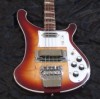
While applying your special wax recipe today on my 1975 White 4080, I noticed something odd.
Under the pick guards, I can see that the white paint has turned to the banana yellow that is normal to see for that finish.
All the exposed areas are white as snow.
How is this possible, since the cause of the yellowing (I thought), was to be UV light and air contaminants?
All the pencil marks in the cavities are marked “white”, on top of the bare maple. No question in my mind that the guitar left the factory as a white finish. I first thought that maybe it was a refinish. Perhaps someone shot a new white finish and masked around the pick guards, perhaps to save the cavity graffiti. But there are no raised paint lines.
What say you??????????
The white banana
Moderator: jingle_jangle
-
jingle_jangle

- RRF Moderator
- Posts: 22679
- Joined: Wed Dec 22, 2004 6:00 am
- Contact:
Pretty strange and I would certainly like to inspect that in person someday...
Offhand guess: Yellowed from degassing of the conversion varnish over a couple of decades plus?
I don't know how long you've had the white one, Dave, but another thought would be that possibly it all was a bit yellow, and the exposed parts were treated to a hand-rubbing with some polishing compound sometime in the past, which could have removed a yellowed surface layer.
Offhand guess: Yellowed from degassing of the conversion varnish over a couple of decades plus?
I don't know how long you've had the white one, Dave, but another thought would be that possibly it all was a bit yellow, and the exposed parts were treated to a hand-rubbing with some polishing compound sometime in the past, which could have removed a yellowed surface layer.
“I say in speeches that a plausible mission of artists is to make people appreciate being alive at least a little bit. I am then asked if I know of any artists who pulled that off. I reply, 'The Beatles did.”
― Kurt Vonnegut
― Kurt Vonnegut
My 4001 also has yellowed more under the guard. It's also a little less even than the exposed finish. It's not quite the color of a CS, but it's getting there. The masked parts are quite close.
There are definite wear spots on the back of the neck where the CV has worn through & the color coat is a nearly new looking white.
There are definite wear spots on the back of the neck where the CV has worn through & the color coat is a nearly new looking white.
Plus five minus five!
-
jingle_jangle
- RRF Moderator
- Posts: 22679
- Joined: Wed Dec 22, 2004 6:00 am
- Contact:
That's my understanding too, Dave. Hence my puzzlement.
My suggestion about the polishing was a shot in the dark, based upon the surface yellowing from contaminants which I've seen in some guitars over the years.
Third suggestion: the pH of wood. Wood is an acid material, and the acid in it (acetic acid, like vinegar) remains reactive for many years. It is a bit less acid than citrus fruit in some cases, with a pH of somewhere between 4 and 8. A reaction with the conversion varnish is possible. A concentration of acidity would occur wherever air circulation is inhibited, as in the area under the guard.
My suggestion about the polishing was a shot in the dark, based upon the surface yellowing from contaminants which I've seen in some guitars over the years.
Third suggestion: the pH of wood. Wood is an acid material, and the acid in it (acetic acid, like vinegar) remains reactive for many years. It is a bit less acid than citrus fruit in some cases, with a pH of somewhere between 4 and 8. A reaction with the conversion varnish is possible. A concentration of acidity would occur wherever air circulation is inhibited, as in the area under the guard.
“I say in speeches that a plausible mission of artists is to make people appreciate being alive at least a little bit. I am then asked if I know of any artists who pulled that off. I reply, 'The Beatles did.”
― Kurt Vonnegut
― Kurt Vonnegut

-
jingle_jangle
- RRF Moderator
- Posts: 22679
- Joined: Wed Dec 22, 2004 6:00 am
- Contact:
Andy, we never established if it was yellowed under the guard.
I do remember talking about it possibly being finished in acrylic lacquer? Did that maybe jog some memory cells?
Beyond that, I think there was more than one CV formula at the time, there's the issue of whether it may have been refinished, whether it was stored for a long time, etc.
An in-hand inspection might put an end to this speculation, in any case.
I do remember talking about it possibly being finished in acrylic lacquer? Did that maybe jog some memory cells?
Beyond that, I think there was more than one CV formula at the time, there's the issue of whether it may have been refinished, whether it was stored for a long time, etc.
An in-hand inspection might put an end to this speculation, in any case.
“I say in speeches that a plausible mission of artists is to make people appreciate being alive at least a little bit. I am then asked if I know of any artists who pulled that off. I reply, 'The Beatles did.”
― Kurt Vonnegut
― Kurt Vonnegut

My 1975 4001S WHT is uniformly yellowed, i.e., there is no difference in the finish under the pickguard:

This one has spent most of its life in the case, so it has not had much exposure to sunlight or atmospheric pollutants. It is definitely yellow when compared to my 1998 4003 WHT WT:

This one has spent most of its life in the case, so it has not had much exposure to sunlight or atmospheric pollutants. It is definitely yellow when compared to my 1998 4003 WHT WT:
It is better, of course, to know useless things than to know nothing. - Seneca
-
jingle_jangle
- RRF Moderator
- Posts: 22679
- Joined: Wed Dec 22, 2004 6:00 am
- Contact:
Or compared with its acrylic guard, which has not yellowed (nor will it).
The more I think about this, the more I am convinced of the complexity of the contributory factors and their combinations.
There must be at least one, possibly more, different paint/clearcoat formulations involved in this. There's the type of sealer used on the wood. There's the varying acidity of the wood itself, and lastly there's the infinite range of atmospheric and climatic factors.
The more I think about this, the more I am convinced of the complexity of the contributory factors and their combinations.
There must be at least one, possibly more, different paint/clearcoat formulations involved in this. There's the type of sealer used on the wood. There's the varying acidity of the wood itself, and lastly there's the infinite range of atmospheric and climatic factors.
“I say in speeches that a plausible mission of artists is to make people appreciate being alive at least a little bit. I am then asked if I know of any artists who pulled that off. I reply, 'The Beatles did.”
― Kurt Vonnegut
― Kurt Vonnegut


My entire 1976 4001 bass has yellowed. It has the original white factory finish on it. The yellow effect is darker under the pick guard and TRC though.
Does that information help or just confuse things even further?
Does that information help or just confuse things even further?
“We can't solve problems by using the same kind of thinking we used when we created them.” - Albert Einstein
"You do not really understand something unless you can explain it to your grandmother" - Albert Einstein
"You do not really understand something unless you can explain it to your grandmother" - Albert Einstein
-
jingle_jangle
- RRF Moderator
- Posts: 22679
- Joined: Wed Dec 22, 2004 6:00 am
- Contact:
I'm willing to bet that both atmosphere and the pH of the wood acting on the conversion varnish are what's responsible for the yellowing.
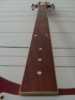
Look at Dave's headstock picture above. Note the small rectangle of pure white paint in the truss rod recess, No yellowing. I'd bet that it escaped conversion varnish at the factory. There was some tape applied over the assembly when the CV was sprayed (it builds up), hence no CV in the pocket. The white acrylic lacquer stayed white.
Look at Dave's headstock picture above. Note the small rectangle of pure white paint in the truss rod recess, No yellowing. I'd bet that it escaped conversion varnish at the factory. There was some tape applied over the assembly when the CV was sprayed (it builds up), hence no CV in the pocket. The white acrylic lacquer stayed white.
“I say in speeches that a plausible mission of artists is to make people appreciate being alive at least a little bit. I am then asked if I know of any artists who pulled that off. I reply, 'The Beatles did.”
― Kurt Vonnegut
― Kurt Vonnegut