
Anniversary 360
Moderators: rickenbrother, ajish4

-
jingle_jangle

- RRF Moderator
- Posts: 22679
- Joined: Wed Dec 22, 2004 6:00 am
- Contact:
And there are some guards and TRCs headed your way to put on them!
It is fun to be a small part of the "birth process"!
It is fun to be a small part of the "birth process"!
“I say in speeches that a plausible mission of artists is to make people appreciate being alive at least a little bit. I am then asked if I know of any artists who pulled that off. I reply, 'The Beatles did.”
― Kurt Vonnegut
― Kurt Vonnegut
-
beatlefreak

- Senior Member
- Posts: 6160
- Joined: Wed Jun 14, 2006 5:45 am
- Contact:
-
melibreits
- Senior Member
- Posts: 4081
- Joined: Wed Mar 12, 2003 6:00 am
- Contact:

-
jingle_jangle
- RRF Moderator
- Posts: 22679
- Joined: Wed Dec 22, 2004 6:00 am
- Contact:
A number of my customers have asked me how much of my work is farmed out, or done by assistants.
Answer: None.
I've run small businesses before, with a number of skilled and semi-skilled employees, and I became a shop manager/tax preparer/bookkeeper/workman's comp form filler-outer. It got to the point very quickly where I envied my employees, because they were doing what I loved to do, whilst I was stuck in an office and on the road, working at keeping them busy.
So every sanding stroke, conversion varnish layer, and buffing step is done by me.
I recently was working and thinking how much physical labor it takes to prepare a guitar, sand in between coats of varnish, and wet-sand before buffing. I average 2 sanding strokes a second; I spend about 4 hours prepping a guitar for sealer, sanding about 50% of the time; another half-hour sanding the sealer coats, again at 50%; another two hours sanding the guitar or bass, including fretboard, in between frets, this time at about 75%, and two more hours wetsanding prior to buffing at 75%.
That's 18,900 sanding strokes per guitar, not including some of the work done with a random-orbital sander. And I do several guitars per month.
Yikes!
Anyway, I'm at 9,000 posts now, so it's time to go back to sanding. I'm beginning to learn how to do it correctly, too.
Answer: None.
I've run small businesses before, with a number of skilled and semi-skilled employees, and I became a shop manager/tax preparer/bookkeeper/workman's comp form filler-outer. It got to the point very quickly where I envied my employees, because they were doing what I loved to do, whilst I was stuck in an office and on the road, working at keeping them busy.
So every sanding stroke, conversion varnish layer, and buffing step is done by me.
I recently was working and thinking how much physical labor it takes to prepare a guitar, sand in between coats of varnish, and wet-sand before buffing. I average 2 sanding strokes a second; I spend about 4 hours prepping a guitar for sealer, sanding about 50% of the time; another half-hour sanding the sealer coats, again at 50%; another two hours sanding the guitar or bass, including fretboard, in between frets, this time at about 75%, and two more hours wetsanding prior to buffing at 75%.
That's 18,900 sanding strokes per guitar, not including some of the work done with a random-orbital sander. And I do several guitars per month.
Yikes!
Anyway, I'm at 9,000 posts now, so it's time to go back to sanding. I'm beginning to learn how to do it correctly, too.
“I say in speeches that a plausible mission of artists is to make people appreciate being alive at least a little bit. I am then asked if I know of any artists who pulled that off. I reply, 'The Beatles did.”
― Kurt Vonnegut
― Kurt Vonnegut

-
melibreits
- Senior Member
- Posts: 4081
- Joined: Wed Mar 12, 2003 6:00 am
- Contact:
-
jingle_jangle
- RRF Moderator
- Posts: 22679
- Joined: Wed Dec 22, 2004 6:00 am
- Contact:

Paul,
When you said
"Anyway, I'm at 9,000 posts now, so it's time to go back to sanding. I'm beginning to learn how to do it correctly, too".
I wasn't sure if you meant the sanding or the posting. If you think you need more practice feel free to move my bass up to the front of the line if you need to practice some more.
When you said
"Anyway, I'm at 9,000 posts now, so it's time to go back to sanding. I'm beginning to learn how to do it correctly, too".
I wasn't sure if you meant the sanding or the posting. If you think you need more practice feel free to move my bass up to the front of the line if you need to practice some more.
LET THE WORLD KNOW YOU WANT PAUL TO BRING BACK THE 4001. JOIN OUR FACEBOOK GROUP!! http://www.facebook.com/group.php?gid=147641915268984
-
sloop_john_b

- Rick-a-holic
- Posts: 13843
- Joined: Tue Jan 25, 2005 6:00 am
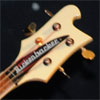
Is this anyone we know? Seems a little soon to be selling doesn't it?
LET THE WORLD KNOW YOU WANT PAUL TO BRING BACK THE 4001. JOIN OUR FACEBOOK GROUP!! http://www.facebook.com/group.php?gid=147641915268984
-
jingle_jangle
- RRF Moderator
- Posts: 22679
- Joined: Wed Dec 22, 2004 6:00 am
- Contact:
Not to change the topic...
I suppose this is right ON topic: Here are a few shots of the 75th gold engraved guards and TRCs in production here in SF:
First, the graphics are done in Graphite, with several different laser powers and widths, in both vector and raster files. This shot shows the monitor. As you can see, this is a TRC setup, to engrave 12 at one time:
http://i63.photobucket.com/albums/h146/jangle_jingle/75th%20gold%20trim/DSC00287.jpg
The precut acrylic TRCs are placed, face-down, in the Belly of the Beast, a Universal Laser 460. It takes 1 hour and 45 minutes to produce 12 of the TRC engravings.
http://i63.photobucket.com/albums/h146/jangle_jingle/75th%20gold%20trim/DSC00285.jpg
Here's the machine actually doing the engraving of the RIC logo:
http://i63.photobucket.com/albums/h146/jangle_jingle/75th%20gold%20trim/DSC00286.jpg
Following engraving, the TRCs are cleaned up by hand with a toothbrush to remove vaporized acrylic, and then blown off and treated to a hand-sprayed silver coat, But first they are stuck temporarily to a "T-stick", which has double-faced tape on the top so the newly-painted TRCs are not handled until they're dry (about 5 minutes). These sticks are also used for guards.
Each TRC receives 20 coats of the microscopically-thin silver paint, which dries within seconds:
http://i63.photobucket.com/albums/h146/jangle_jingle/75th%20gold%20trim/DSC00257.jpg
http://i63.photobucket.com/albums/h146/jangle_jingle/75th%20gold%20trim/DSC00263.jpg
Next each TRC is cleaned of excess silver paint; anywhere not recessed is wiped absolutely clean:
http://i63.photobucket.com/albums/h146/jangle_jingle/75th%20gold%20trim/DSC00266.jpg
http://i63.photobucket.com/albums/h146/jangle_jingle/75th%20gold%20trim/DSC00267.jpg
Next, on goes the gold. It takes four coats of this specially-mixed high-density gold urethane to cover a TRC or guard.
http://i63.photobucket.com/albums/h146/jangle_jingle/75th%20gold%20trim/DSC00270.jpg
Finally, here's a newly-minted laser-engraved and paint-filled TRC, seen as it looks on the headstock:
http://i63.photobucket.com/albums/h146/jangle_jingle/75th%20gold%20trim/DSC00273.jpg
Here I'm painting the back side of a laser-engraved upper 300-series guard:
http://i63.photobucket.com/albums/h146/jangle_jingle/75th%20gold%20trim/DSC00241.jpg
And here are a partially-completed batch of guards:
http://i63.photobucket.com/albums/h146/jangle_jingle/75th%20gold%20trim/DSC00246.jpg
http://i63.photobucket.com/albums/h146/jangle_jingle/75th%20gold%20trim/DSC00236.jpg
The guards and TRCs are finally shipped to RIC, just in time to be paired up with their otherwise-finished commemorative guitars and basses.
I suppose this is right ON topic: Here are a few shots of the 75th gold engraved guards and TRCs in production here in SF:
First, the graphics are done in Graphite, with several different laser powers and widths, in both vector and raster files. This shot shows the monitor. As you can see, this is a TRC setup, to engrave 12 at one time:
http://i63.photobucket.com/albums/h146/jangle_jingle/75th%20gold%20trim/DSC00287.jpg

The precut acrylic TRCs are placed, face-down, in the Belly of the Beast, a Universal Laser 460. It takes 1 hour and 45 minutes to produce 12 of the TRC engravings.
http://i63.photobucket.com/albums/h146/jangle_jingle/75th%20gold%20trim/DSC00285.jpg

Here's the machine actually doing the engraving of the RIC logo:
http://i63.photobucket.com/albums/h146/jangle_jingle/75th%20gold%20trim/DSC00286.jpg

Following engraving, the TRCs are cleaned up by hand with a toothbrush to remove vaporized acrylic, and then blown off and treated to a hand-sprayed silver coat, But first they are stuck temporarily to a "T-stick", which has double-faced tape on the top so the newly-painted TRCs are not handled until they're dry (about 5 minutes). These sticks are also used for guards.
Each TRC receives 20 coats of the microscopically-thin silver paint, which dries within seconds:
http://i63.photobucket.com/albums/h146/jangle_jingle/75th%20gold%20trim/DSC00257.jpg

http://i63.photobucket.com/albums/h146/jangle_jingle/75th%20gold%20trim/DSC00263.jpg

Next each TRC is cleaned of excess silver paint; anywhere not recessed is wiped absolutely clean:
http://i63.photobucket.com/albums/h146/jangle_jingle/75th%20gold%20trim/DSC00266.jpg

http://i63.photobucket.com/albums/h146/jangle_jingle/75th%20gold%20trim/DSC00267.jpg

Next, on goes the gold. It takes four coats of this specially-mixed high-density gold urethane to cover a TRC or guard.
http://i63.photobucket.com/albums/h146/jangle_jingle/75th%20gold%20trim/DSC00270.jpg

Finally, here's a newly-minted laser-engraved and paint-filled TRC, seen as it looks on the headstock:
http://i63.photobucket.com/albums/h146/jangle_jingle/75th%20gold%20trim/DSC00273.jpg

Here I'm painting the back side of a laser-engraved upper 300-series guard:
http://i63.photobucket.com/albums/h146/jangle_jingle/75th%20gold%20trim/DSC00241.jpg

And here are a partially-completed batch of guards:
http://i63.photobucket.com/albums/h146/jangle_jingle/75th%20gold%20trim/DSC00246.jpg

http://i63.photobucket.com/albums/h146/jangle_jingle/75th%20gold%20trim/DSC00236.jpg

The guards and TRCs are finally shipped to RIC, just in time to be paired up with their otherwise-finished commemorative guitars and basses.
“I say in speeches that a plausible mission of artists is to make people appreciate being alive at least a little bit. I am then asked if I know of any artists who pulled that off. I reply, 'The Beatles did.”
― Kurt Vonnegut
― Kurt Vonnegut