
Hello all,
I might have a chance to get a look at a BG 75 4001...I would like to know if these have a ``thin`` neck ?? 1 1/2 at the nut ?? What kind of price should I pay ?? Supposed to be in exc. original condition...I am shopping for a second RIC...I have a 2006 4003 ( April-May production ) with a ``thick neck`` and sometimes have trouble with it ( pain at the wrist )...I guess it was made just before they went to thinner necks this year.
Marc
4001 75, a good year ??
Moderators: rickenbrother, ajish4
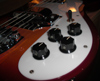
I think the neck on the 75 is approximately the same "width" as your 4003...1 11/16" but the thickness (front to back) should be noticeably thinner(flatter) than your 4003 neck. I hope this helps!
'73 4001 MG '88 4003S JG '89 4003S FG '91 4003S MG
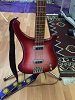
I have a 75. The neck is nice, not too thin, certainly not chunky. The nut is a little wider than my J bass, but not as wide as my 4004. Ted's description sounds spot on. I have noticed the headstock begins to develop between the first fret and the nut, so at the nut it is actually kind of chunky. But it's rather slim by the first fret.
Odd about prices, they seem to be dropping a bit now (?)...in really good condition they fetch some big cash however. Mine's in decent shape, six months ago I might have expected $1200. Now I'd guess that it might fetch a grand.
Odd about prices, they seem to be dropping a bit now (?)...in really good condition they fetch some big cash however. Mine's in decent shape, six months ago I might have expected $1200. Now I'd guess that it might fetch a grand.
Above e-mail is inactive. try ed_ardzinski@**** where **** is Hotmail.com or Yahoo.com. I tend to see things inthe hotmail box quicker...
-
rickenbrother

- RRF Moderator
- Posts: 13222
- Joined: Sun May 26, 2002 5:00 am


-
green_us90
- Intermediate Member
- Posts: 530
- Joined: Fri Jun 04, 2004 12:23 pm
I am told that Rickenbacker used a shaper to make the neck profiles back then. The person who told me this did not remember if the bit was custom made or if it was off the shelf. The neck slab was run through on one side and then back through on the other. After a few years of use, the bit(s) wore out and then the company switched to something else.
-
dale_fortune
- Intermediate Member
- Posts: 1241
- Joined: Sat Oct 30, 2004 6:00 am
We used a large table shaper with a solid carbide 3 flute cutting blade. The blade was special made for the shape that was popular in that time. We had cutting blades for every model that we made. The same table shaper was used with different cutting blades for the different neck profiles. It took 2 passes per side to cut/profile the neck shape. 1st pass was about 1/8 inch, then the neck was turned over and the other side had the same amount removed. After that 1st pass was done, the shaper blade was raised and the final cut was made. A large/heavy device that held the neck in place with air pressure was used to run the back of the necks against the cutting blade. I did the 1st steps by rough cutting the back of the neck to shape on the 18 inch band saw. From there they went to Paul Bennett who did all the work on the table shapers. He also did the shaping of the body wings before they were glued on the finished neck stock.