
I have a number of my Rickenbackers stored in a temperature controlled room inside their cases. I usually loosen up the strings by a few steps to save the neck from tension.
Right or wrong?
Would appreciate comments...
Strings on storage instruments - tension or not?
Moderator: jingle_jangle
Strings on storage instruments - tension or not?
"Silly Rabbit! Trix are for Kids"

Russell: I always keep the tension on my Rickenbackers and have never had a problem. The neck is designed for tension so my advice is to keep them tuned to pitch when you put them in their cases.
Life, as with music, often requires one to let go of the melody and listen to the rhythm
Please join the Official RickResource Forum Facebook Page https://www.facebook.com/groups/379271585440277
Please join the Official RickResource Forum Facebook Page https://www.facebook.com/groups/379271585440277

Yet Roger McGuinn, in his very fine video/DVD that I finally found about two months ago, says that he tunes down his 370-12 and uses a capo. The reason given, I think I recall correctly, is to relieve some of the tension on the neck.
My 360-12 is from August 2005, and while no doubt climatic swings up here in Toronto played a part, the neck of the guitar was bowing. I had it fixed rather nicely by some friends at Songbird Music.
Even since viewing the McGuinn DVD, I've followed his advice, and so far, I haven't had any further problems with the neck.
Now, like a lot of places, the weather here has not been "normal".
I do keep my 6-string 381 tuned to pitch, but then again, I haven't experience any problems with it yet.
As usual, I am confused.
My 360-12 is from August 2005, and while no doubt climatic swings up here in Toronto played a part, the neck of the guitar was bowing. I had it fixed rather nicely by some friends at Songbird Music.
Even since viewing the McGuinn DVD, I've followed his advice, and so far, I haven't had any further problems with the neck.
Now, like a lot of places, the weather here has not been "normal".
I do keep my 6-string 381 tuned to pitch, but then again, I haven't experience any problems with it yet.
As usual, I am confused.
How much!?!

My gut tells me that storing a guitar with a capo with any tension on it at all is scarier than tuning to pitch.
I don't leave capos on my guitars. I do tune to the pitch that I play each guitar. I have only seen one acoustic of mine affected at all by this. That guitar is a Taylor 12-string jumbo that after 20 years is starting to show a tiny bit of perceptible warp in the face from being in standard tuning for that entire time. In another forty or fifty years, I'll probably have to get it looked at.
I have had some other guitars that were affected by other things, but not tension. I suppose that this is more a problem when the guitar in question is experiencing changes in humidity and temperature. I tend to use light to medium strings, but when I use medium strings I always tune down.
I don't leave capos on my guitars. I do tune to the pitch that I play each guitar. I have only seen one acoustic of mine affected at all by this. That guitar is a Taylor 12-string jumbo that after 20 years is starting to show a tiny bit of perceptible warp in the face from being in standard tuning for that entire time. In another forty or fifty years, I'll probably have to get it looked at.
I have had some other guitars that were affected by other things, but not tension. I suppose that this is more a problem when the guitar in question is experiencing changes in humidity and temperature. I tend to use light to medium strings, but when I use medium strings I always tune down.
"rubber heads don't dent easily"


Good question. Probably not.
I'm generally reporting the way I do things. I have known a number of guitarists who have left capos on their instruments and have suffered scarring from it (okay, the instruments suffered probably more scarring than the friends, but I'm not positive about that either), and that is what triggered my trepidation. The other concern about using a capo for long periods is the way it changes the distribution of the tension.
Anything about tension would affect a 12-string more than a 6. There is a considerable amount of tension on the neck of a bass, too. Also, acoustic guitars would have some sensitivities that would be greater and less than electrics (acoustic guitars have less bridge support, but usually have thicker necks, etc.)
I'm generally reporting the way I do things. I have known a number of guitarists who have left capos on their instruments and have suffered scarring from it (okay, the instruments suffered probably more scarring than the friends, but I'm not positive about that either), and that is what triggered my trepidation. The other concern about using a capo for long periods is the way it changes the distribution of the tension.
Anything about tension would affect a 12-string more than a 6. There is a considerable amount of tension on the neck of a bass, too. Also, acoustic guitars would have some sensitivities that would be greater and less than electrics (acoustic guitars have less bridge support, but usually have thicker necks, etc.)
"rubber heads don't dent easily"
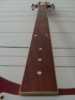
I've have a 64 bass that has always been strung and tuned and lives in the case. There has never been any need for any adjustment and the set up has always been the same.
I have a 64 bass that was unstrung for 15 years and lived in the case. When I put strings back on it this year, it was exactly the same as it was back in 1990. No change whatsoever...
In my experience, strung, or unstrung, it's been a non-issue.
I have a 64 bass that was unstrung for 15 years and lived in the case. When I put strings back on it this year, it was exactly the same as it was back in 1990. No change whatsoever...
In my experience, strung, or unstrung, it's been a non-issue.
-
beatlefreak

- Senior Member
- Posts: 6160
- Joined: Wed Jun 14, 2006 5:45 am
- Contact:
-
johnashfield
- Veteran RRF member
- Posts: 723
- Joined: Thu Mar 14, 2002 8:57 pm
- Contact:

-
melibreits

- Senior Member
- Posts: 4081
- Joined: Wed Mar 12, 2003 6:00 am
- Contact:
Really, John, I think that must be why McGuinn does that. I tried Pyramids on my 360/12, and it was horrible--the strings were so stiff and the octave strings felt like razor blades biting into my fingers. However, I LOVE the Pyramids on my 1967 vintage 365, they feel totally right on that guitar.... perhaps because that guitar was made in the era when flatwounds were standard? I do remember having to re-adjust the truss rods on the 360/12 after installing the Pyramids, and then again when I put the normal Ric strings back on. I've never had to adjust the rods on my 365; it has always felt perfect to me, and is still the best-feeling guitar in my hands.
I don't detune any of my guitars before putting them away, and they are all fine, BTW.
I don't detune any of my guitars before putting them away, and they are all fine, BTW.
"Once I've held and played the best, baby, I won't settle for less!"
-
firstbassman

- Advanced Member
- Posts: 1573
- Joined: Thu Dec 15, 2005 6:00 am
I’m no expert, just my thoughts …
Yes, JH has said (many times) to store RICs with normal string tension. Whether this can be applied to all guitars in all situations I don’t know but here is my logic – If guitars (and basses) are designed and built with the understanding that there is constant tension between the neck/truss rod(s) and the strings, then storing a guitar with the strings loosened seems counter productive and potentially harmful.
As I’ve mentioned before, when this subject came up, storing a guitar with a capo on seems like a really bad idea because of the permanent bend it will create on the high thin strings.
As I recall, Roger never explains why he is tuned down in the video. It’s kind of funny actually. He goes through his entire lesson on TTT and then afterwards says, oh by the way, I’m tuned down a half-step and the original record was in normal tuning. I suppose this is the next question I can ask him. (Or someone else’s turn.)
Yes, JH has said (many times) to store RICs with normal string tension. Whether this can be applied to all guitars in all situations I don’t know but here is my logic – If guitars (and basses) are designed and built with the understanding that there is constant tension between the neck/truss rod(s) and the strings, then storing a guitar with the strings loosened seems counter productive and potentially harmful.
As I’ve mentioned before, when this subject came up, storing a guitar with a capo on seems like a really bad idea because of the permanent bend it will create on the high thin strings.
As I recall, Roger never explains why he is tuned down in the video. It’s kind of funny actually. He goes through his entire lesson on TTT and then afterwards says, oh by the way, I’m tuned down a half-step and the original record was in normal tuning. I suppose this is the next question I can ask him. (Or someone else’s turn.)

Some of you youngsters may also eventually find that if you're still playing and singing with one foot slowly edging toward the grave, squeaking out those high vocal notes isn't as easy as it once was. Dropping the pitch a half-step (or even changing keys) is sometimes a big relief.
I must say though, that the only thing that really bugged me on Roger's DVD was that the guitar wasn't tuned to pitch. It makes it impossible to play along without doing the same thing to your own twelve. Personally, I would have found the DVD much more useful at A440, where the average Joe could just pick up his guitar and play along.
I must say though, that the only thing that really bugged me on Roger's DVD was that the guitar wasn't tuned to pitch. It makes it impossible to play along without doing the same thing to your own twelve. Personally, I would have found the DVD much more useful at A440, where the average Joe could just pick up his guitar and play along.
Tuning a 12'er down a whole step does seem like quite a pain for just a few songs.
Not to mention the accompanying truss rod adjustments that may be necessary.
Every band I've ever been in has tuned down a half step to make the singer's life a little easier. It's usually just enough to turn a tough vocal line into one the he/she could sing all night without strain.
I've always kept all of my guitars at full tension with no ill effects. I see no reason to change that.
Not to mention the accompanying truss rod adjustments that may be necessary.
Every band I've ever been in has tuned down a half step to make the singer's life a little easier. It's usually just enough to turn a tough vocal line into one the he/she could sing all night without strain.
I've always kept all of my guitars at full tension with no ill effects. I see no reason to change that.
Plus five minus five!
-
firstbassman
- Advanced Member
- Posts: 1573
- Joined: Thu Dec 15, 2005 6:00 am
Todd, Kevin, others, I have a question. I agree that reaching those high notes is hard, especially as one gets older. But does tuning down a half or whole step really solve the problem? Why not just keep the guitar in tune and play the song in a different key?
And, does your singer sing every song in the same key? Tuning down for some songs and not others would seem to be a big pain unless you got a lot of extra guitars on the stage.
I can barely sing a lick so ya can’t go by me. But it seems, for our singer, to depend on the song (as well as his voice) to determine which key we play it in.
A very quick glance at our setlist for this Friday reveals that we’re all over the place as far as keys go:
Brown Eyed Girl in G
Mustang Sally in C
Runaway in Amin
Folsom Prison Blues in E
And yet each song seems to be within his range.
Going back through my memory, this is what seems to happen. On R&B type songs in C (Mustang Sally, Feelin’ Alright) he wails up there.
The 60s songs in minor keys (Oh Pretty Woman, Runaway, Love Potion No. 9) seem to be right in his pocket and sound somewhat like the originals.
And all the rest seem to work well also.
Some music theorist a lot smarter than me would have to explain why all this works.
And, does your singer sing every song in the same key? Tuning down for some songs and not others would seem to be a big pain unless you got a lot of extra guitars on the stage.
I can barely sing a lick so ya can’t go by me. But it seems, for our singer, to depend on the song (as well as his voice) to determine which key we play it in.
A very quick glance at our setlist for this Friday reveals that we’re all over the place as far as keys go:
Brown Eyed Girl in G
Mustang Sally in C
Runaway in Amin
Folsom Prison Blues in E
And yet each song seems to be within his range.
Going back through my memory, this is what seems to happen. On R&B type songs in C (Mustang Sally, Feelin’ Alright) he wails up there.
The 60s songs in minor keys (Oh Pretty Woman, Runaway, Love Potion No. 9) seem to be right in his pocket and sound somewhat like the originals.
And all the rest seem to work well also.
Some music theorist a lot smarter than me would have to explain why all this works.