Drilling a hole
Moderator: jingle_jangle

Drilling a hole
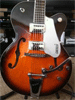
Okay, I'm thinking maybe just bite the bullet and put a second jackhole in the stereo 330/12 for mono. If I start with a really small drill bit and gradually widen it, will I damage the finish?
-
jingle_jangle
- RRF Moderator
- Posts: 22679
- Joined: Wed Dec 22, 2004 6:00 am
- Contact:
If you're drilling through wood, just a jack-sized hole, into the face of the guitar, here's the hot ticket, JDog...
Go to your local big box hardware/bad lumber outlet, or if you want to keep it local, hie thee to the best-stocked mom 'n' pop hardware store in town.
Now you have a choice. If you can, buy one drill bit. It may cost you 5 or 6 bucks, but; hey--look what a refin goes fer. The bit you want to buy is a 3/8" brad point wood bit. You can use this in a handheld power drill; if you don't have a 3/8" drill, get a brad point bit with a 1/4" shaft. It'll look like this:

or this:

Now, lay the guitar in a towel on a countertop, tape over the spot with masking tape, mark the center clearly, and go slowly.
The trickiest part is just before it breaks through to the space on the other side of the hole.
The procedure for doing an acrylic guard would be the same, except you must remove the guard from the guitar or bass, and place it on a piece of scrap wood, MDF, or plywood. Without a backer board like this, the bit will grab and crack the acrylic.
It does help to have access to a drill press...
Go to your local big box hardware/bad lumber outlet, or if you want to keep it local, hie thee to the best-stocked mom 'n' pop hardware store in town.
Now you have a choice. If you can, buy one drill bit. It may cost you 5 or 6 bucks, but; hey--look what a refin goes fer. The bit you want to buy is a 3/8" brad point wood bit. You can use this in a handheld power drill; if you don't have a 3/8" drill, get a brad point bit with a 1/4" shaft. It'll look like this:
or this:
Now, lay the guitar in a towel on a countertop, tape over the spot with masking tape, mark the center clearly, and go slowly.
The trickiest part is just before it breaks through to the space on the other side of the hole.
The procedure for doing an acrylic guard would be the same, except you must remove the guard from the guitar or bass, and place it on a piece of scrap wood, MDF, or plywood. Without a backer board like this, the bit will grab and crack the acrylic.
It does help to have access to a drill press...
“I say in speeches that a plausible mission of artists is to make people appreciate being alive at least a little bit. I am then asked if I know of any artists who pulled that off. I reply, 'The Beatles did.”
― Kurt Vonnegut
― Kurt Vonnegut
-
jingle_jangle
- RRF Moderator
- Posts: 22679
- Joined: Wed Dec 22, 2004 6:00 am
- Contact:
Don, I think JDog's just had his modified, so it's not a factory stereo job.
Correct, JDog?
Correct, JDog?
“I say in speeches that a plausible mission of artists is to make people appreciate being alive at least a little bit. I am then asked if I know of any artists who pulled that off. I reply, 'The Beatles did.”
― Kurt Vonnegut
― Kurt Vonnegut
BTW, If you are drilling a Second hole in the side of the guitar, next to the factory original hole, if memory serves me here, it's like a 7/8" diameter hole.I'd use a Forstner bit for that. For pickguards, as Paul said, Brad Point are the way to go; 3/8" for pot holes; 1/2" for a toggle switch[if it's the std. Switchcraft toggle].1/4", I think, for mini toggles.

"You say you want a revolution."
Life, as with music, often requires one to let go of the melody and listen to the rhythm
Please join the Official RickResource Forum Facebook Page https://www.facebook.com/groups/379271585440277
Please join the Official RickResource Forum Facebook Page https://www.facebook.com/groups/379271585440277