Squire's amplification history

The genius of Chris Squire
User avatar
walker
Advanced Member
Posts: 2908
Joined: Mon Apr 24, 2006 9:03 am
Contact:

Post by walker »

Eddie Offord really did seem to have a heightened sense of awareness when it came to capturing Yes's sound, particularly on 'Close To The Edge.' He really made everybody, not only Chris, shine in the mix. To this day I'm amazed at what he accomplished, particularly on 'Siberian Khatru,' which has at least three different guitar parts - sometimes running concurrently, all the keyboard parts that Wakeman layered, Bruford's drums - which featured very subtle nuanced playing, all the vocal parts, AND Chris's bass nice & loud in the mix without burying any of the other tracks.

From what I can tell by listening, Eddie utilized both direct and amp & cabinet sources for tracking Chris's bass. Not sure if he ever went line-direct from one of Chris's heads, but that wouldn't surprise me.

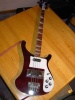
Thanks for looking into the amp specifics, Vincent. I'm surprised that there wasn't a Vox involved with the 'Fragile' recordings. Interesting call on the new Rickenbacker, coming from someone who usually prefers the 60's era basses. I gave a good test drive to a new (2006) 4003V63 a few months ago, and was very pleased by the sound, feel, and aesthetics. It definitely gives testament to the notion that sometimes change can be a good thing. That's not to say that I PREFER the new over the old, but there is an improvement in certain levels of performance, sound, & efficiency which has developed over the years.


Image
jwr2

Post by jwr2 »

after playing a 60s 4001 for 33 years I prefer the new over the old ... but I do like the look and feel of the old basses ...

but if you want to make your 1990 or later Ric bass sound more like an old 4001 put in 500k ohm tone pots ...
vincent_gallo
Member
Posts: 316
Joined: Sat Jun 10, 2006 1:54 am

Post by vincent_gallo »

Thanks Mark for adding insight to Eddie Offord's work. I feel his work is some of the best of all time.

Jeff, did you own the 68 that long ?
User avatar
pekka
Member
Posts: 244
Joined: Tue Jul 26, 2005 7:34 pm
Contact:

Post by pekka »

Great thread this one and very nice to read your comments, Vincent.

I don't buy the neck-PU-only -theory either. Just listen to "Roundabout" or "South Side Of The Sky" for example.
User avatar
elysrand
Advanced Member
Posts: 2757
Joined: Fri Nov 17, 2006 6:00 am

Post by elysrand »

Chris told me last night during dinner that it was totally untrue that he ever ran his RM1999 with only the neck pickup. In fact, he said he always intentionally ran the bass in stereo, and ran the neck pickup through the fuzz box, the bridge pickup into his flanger/octavia box, and both through tremelo. He said he always ran the bridge pickup wide open and then just blended as much or as little neck pickup in as he needed for balance. He also said the bass neck break was not ever repaired until the 1990s. Sam Lee in Soho did not repair it in a "first early repair" in the late-60s like had earlier been surmised. He acknowledged that it was repaired in the later 1990s, as John had said, via Richard Davis - who had been caring for the bass since the mid-1970s.

When I asked him how he played it like that, he said that it was only loose and "flopped around" at the break when the strings were being changed. After the new strings went on and he tightened them up, the neck press-fitted back down and it was fine again until the next time that the strings needed changing.

Wow - I did not expect THAT answer Image But he said he clearly remembers that the repair was not done until after the CS signature model came out.

He also said that if the bridge pickup was disconnected when RIC got the bass, it was only because Richard Davis most likely disconnected it as part of his work on the bass just before sending it to RIC in the 1990s. He was also quite adamant that the fretboard was never replaced. His words: "well if it had ever been replaced, you'd think I would have noticed, do you not, and I never did, I mean, no one ever told me that it was being replaced, and it always looked that same way afterwards as it did before, except for wear marks in the wood itself between the frets from the round-wound strings all those years."
Do unto others as you would have them do unto you, and sit in with the band whenever you can, to keep your chops up!

User avatar
pekka
Member
Posts: 244
Joined: Tue Jul 26, 2005 7:34 pm
Contact:

Post by pekka »

Brilliant! Thanks Elys! Interesting that he used effects on both channels. One question remains and I apologize if it has already been answered...
Does it have the cap?
User avatar
aceonbass
Veteran RRF member
Posts: 6651
Joined: Tue Jul 09, 2002 5:00 am
Contact:

Post by aceonbass »

Uh oh. I hope they saved the wood shavings from Chris's fingerboard when they were done.
User avatar
elysrand
Advanced Member
Posts: 2757
Joined: Fri Nov 17, 2006 6:00 am

Post by elysrand »

Yes, he always left the capacitors in. He did not realize that they reduced the pickup output by filtering out some of the low frequencies. He thought that the capacitors were what made the sound of the bridge pickup unique. He did say that over the years, the output of the bridge pickup fell off noticeably. He did not like it when he got them recharged, as they increased the output of the bridge pickup, at least until the added magnetism began to wane over the following year, and to him it made the sound harsher.
Do unto others as you would have them do unto you, and sit in with the band whenever you can, to keep your chops up!

User avatar
aceonbass
Veteran RRF member
Posts: 6651
Joined: Tue Jul 09, 2002 5:00 am
Contact:

Post by aceonbass »

Pekka, all of my Rick's are wired in stereo and I run them through separate effects units like Chris does only I usually run distortion on the bridge pickup and various amounts of delay and chorus on the neck pickup. Instead of blending in the bridge pickup, I run it full out and use the volume pedal on the bridges processor to blend it in. Odd that I would end up doing it opposite of the way Chris does it. Actually using Rick-O-Sound opens up a lot of possibilities.
jwr2

Post by jwr2 »

Vince:

Yep the 1968 4001 was my main bass for over 30 years ... I bought it used in 1973 without a case ... the neck was bowed and there was already exposed wood on the back ... I got it adjusted and got a fender case and used it for many years ...
User avatar
pekka
Member
Posts: 244
Joined: Tue Jul 26, 2005 7:34 pm
Contact:

Post by pekka »

Yep, Dane. It's usually the way with the stereo that people leave the neck pickup uneffected and as clean and bottom-y as possible and run the bridge pickup through effects etc. Not just with Ricks. Not that I'm saying it's the only correct way to do it, just what I've been noticing when people discuss such things.
Hmmm, gotta try a tremolo for the neck PU the next time I'm at it...
vincent_gallo
Member
Posts: 316
Joined: Sat Jun 10, 2006 1:54 am

Post by vincent_gallo »

Wow Jeff, I didn’t recall that when I purchased it. I will be extra careful with it then and keep your mojo alive and well.

Regarding Elys’s post:
When I spoke to Chris this afternoon about his amplifiers used during some albums he mentioned to me that Elys had called. He was a bit confused by what Elys said regarding the fingerboard replacement as he never requested that and did not remember that much work done. Elys’s question caught him a little off guard. Thinking further today, he thought it might have only been a re-fret, which may make a tiny bit more sense considering the fingerboard does not look much different. This is not to say that the factory did not do such a good job that it goes unnoticed.

Let me politely mention though, that I inspected Chris’s bass very carefully in 1997. By 1997 I was well into 60’s Rickenbacker basses and already owned two 1964 RM 1999’s and 15 other 100% original 60’s 4001’s. I studied Chris’s bass with a somewhat experienced eye. I inspected it closely while visiting Chris in Vancouver, as we were both working there and Chris had it in his hotel room. The neck break was already repaired by 1997 and it appeared to have been repaired for a long period of time. I would have guessed it had been done for at least 15 years. The job was perfect!!!

Aside from that, the bass had not too much noticeable playing wear which was odd considering the bass was used so much. The bass was not abused. I remember the pick guard was trimmed a tiny bit, most likely due to a small crack around a screw hole and a new hole was made in the guard closer in. This was done near the upper neck side of the guard. The chrome hardware had not been too worn and I only noticed missing chrome where Chris’s hand sits—a little on the tailpiece and a little on the horseshoe magnet. The bass played incredible but had a tiny bit higher than normal action. The frets were chewed a bit, but the board was not trashed and most likely only a fret job was done in the late nineties, or maybe the board was sanded a bit. I think Chris may have more clearly noticed a re-finger boarding. He mentioned later after speaking to Elys that the story did not make complete sense to him.

Elys is a great fan of the basses and of Chris and I respect his insight, history lessons and experience, but I know Chris pretty well as a person and a gear head he is not, nor is he completely up to speed with everything from his past. After all, he’s the greatest bassist of all time, not the greatest bass historian. I think his focus may be elsewhere other than details of repair history. We did talk often over the past ten years and I never heard of any radical repairs done to the bass and if they were done they were done so well that Chris did not notice a thing. I believe the Rickenbacker factory has the talent to have made those repairs, and done them so perfectly that Chris would not have noticed anything different. I think the repair history is still unclear and needs further insights.

Chris is very sensitive to the sound and feel of an instrument. With several 60’s basses lined up in my home, Chris certainly knew which were the best sounding and which ones had the fastest necks. What he would not know would be details of original parts, etc. or the details of things less important than making music.
The repair history of Chris’s bass may always have some conflicting views, but I think the thing most of us will agree on is that Chris is the greatest bassist of all time and that owning a Rickenbacker bass from any era is a dream come true.
User avatar
lyle_from_minneapolis
Advanced Member
Posts: 2530
Joined: Sun Nov 19, 2006 7:13 pm

Post by lyle_from_minneapolis »

Amen to that, Vince. I'll take the musician over the tech-head any day. So great to get this kind of info--what a place this is.
Here is where I hide my music:
http://www.soundclick.com/MarkKaufman
j_gary
Intermediate Member
Posts: 1465
Joined: Wed Dec 21, 2005 12:47 pm

Post by j_gary »

Wow!
I'm just happy to be here.
j_gary
Intermediate Member
Posts: 1465
Joined: Wed Dec 21, 2005 12:47 pm

Post by j_gary »

Vince,

You mentioned recently having played a new 4003 and found her as nice, if not better sounding, than any bass you have played. A bold statement from one with so much experience with a wide variety of Ricks. Has Chris ever commented on the modern 4003 or 4004? It would be very interesting to hear his take on a new Rick, the good and the bad.

Great stuff, thanks for sharing some priceless history.
I'm just happy to be here.
Post Reply

Return to “Chris Squire and Yes Forum”