
hey yours looks in good condition - mines a wreck tho its great all the same. The G D and A saddles are all the way back, The E i had to file part of the block on the the bottom of the saddle away.
What is it with 1973?? its like all the famous RIC quirks all come together in one big mess lol!!
Maybe a dumb question, but I need to know!
Moderators: rickenbrother, ajish4
The email address shown is down, you can email me at [email protected]
-
jwr2
I was the previous owner of that '73 ... as far as I can tell it started out jetglo and was also painter red and then white and then stripped down to natural ...
When I got it it was wired toggle vol vol tone ... somehow they did it wrong and the sound was bad ... I replaced most of the chrome put the electronics back to stock and it cleaned up pretty nice ... it still has the 70's pickups in it ... no .0047 cap and no ric-o-sound.
It is a great gigging bass ... it looks nice and plays nice ... a good '70's neck ...


When I got it it was wired toggle vol vol tone ... somehow they did it wrong and the sound was bad ... I replaced most of the chrome put the electronics back to stock and it cleaned up pretty nice ... it still has the 70's pickups in it ... no .0047 cap and no ric-o-sound.
It is a great gigging bass ... it looks nice and plays nice ... a good '70's neck ...
Jeff did you stick a new bridge on it?
The email address shown is down, you can email me at [email protected]
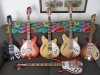
The reason I picked the year 1963 as a reference for a re-issue bass is that the inlay material(or something nearly-identical to it) is readily available----the crushed pearl material is not available. In the interest of accuracy, it's likely RIC won't reissue anything on a C-series level until they find a suitable vendor.
There is an alternative----There were instances where material that was non-pearloid in composition was used on basses for edge-to-edge inlay. I believe this material is what most of us refer to as 'linoleum' inlay material. I have seen 4001 basses from 1973 that have had this style of inlay.
There is an alternative----There were instances where material that was non-pearloid in composition was used on basses for edge-to-edge inlay. I believe this material is what most of us refer to as 'linoleum' inlay material. I have seen 4001 basses from 1973 that have had this style of inlay.
so you replaced the tailpiece but did yoy replace teh saddle section? or did the original just sit on top fine?
The email address shown is down, you can email me at [email protected]
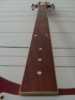
A 68 reissue...with horseshoe..or without...that would be the question..I love the seemingly predominantly darker fretboards from back then that compliment the MOP. Hey Jeff, I take it that your 68 case is original to the bass?? I see you,ve got the curve in the lower part of the case, so your 68 fits nice and snug. My case doesn,t have the curve so there,s an inch or too for movement...not so good
-
jwr2
Owen: I think that I only replaced the tailpiece ... I think I left the original bridge in there ... the new and the old bridges were almost identical ...
Andrew: sorry that is an old 70's Fender case ... it is a perfect fit though ... I bought the '68 in 1973 for $150 without a case ... it was set up very poorly, and had really old strings on it. It was my main bass from 1973 to the late 90's ... Steve's '73 mapleglo was my main bass for a year or so ... then I switched to 5 string basses ...
Andrew: sorry that is an old 70's Fender case ... it is a perfect fit though ... I bought the '68 in 1973 for $150 without a case ... it was set up very poorly, and had really old strings on it. It was my main bass from 1973 to the late 90's ... Steve's '73 mapleglo was my main bass for a year or so ... then I switched to 5 string basses ...
-
rickenbrother

- RRF Moderator
- Posts: 13212
- Joined: Sun May 26, 2002 5:00 am
I have a '73 4001 Jetglow serial # ML like Owens. It has the toaster pickup and checkered binding. This bass has had at least 2 owners before me. I don't seem to have quite as bad a problem with the bridge as the some of you '73 owners do. I wish it was from earlier in the year to have the full fingerboard width crushed m-o-p inlays. The white binding has aged nicely to a cool cream color, but unfortunately the same aging does not look good on the inlays, also like Owens The inlays look yellow and solid, not pearly.
JETGLO should officially be renamed JETGLO ROCKS! 
My inlays are also peeling out of the board, cant be fixed because the inlays are warped upwards not just loose. I dont really notice it so whatever.
My intention is to play this bass until their are no frets left and it falls apart its a nice vintage bass - but its still a wreck
My intention is to play this bass until their are no frets left and it falls apart
its a nice vintage bass - but its still a wreckThe email address shown is down, you can email me at [email protected]
I don't mean to doubt anyones skill here with Ric basses, but I still think that the majority of you guys with intonation problems have your bridge way up too high and can tweak the bass and get rid of that problem. If your bridge is rocking back and forth as you tune up and down, your bridge is set too high, and I would adjust the neck, change string types, gauges, etc. until you solve the problem. I've bought basses like that before and it was always because of improper set up. And I was always able to tweak them until I fixed it, sometimes just barely, but that does not count as long as it is intonated.
I think there is a very narrow parameter within which the old 4001's are supposed to be set, and it takes patience and detective work sometimes to get it back like it was originally. I think the old 4001's were meant to have low action, they play better and intonate better like that.
I think there is a very narrow parameter within which the old 4001's are supposed to be set, and it takes patience and detective work sometimes to get it back like it was originally. I think the old 4001's were meant to have low action, they play better and intonate better like that.
Yes, i think the 4001's were meant to have pretty low action also. Main reason? Those Small frets. The 4003's have quite small frets compared lot a Fender etc, but the 4001's (at leasy my 73) have tiny little frets. Im pressing more on the actual wood than on my other basses, and if the action is too high its awful.
Also, slightly too much relief in the neck and again its awful.
Also, slightly too much relief in the neck and again its awful.
The email address shown is down, you can email me at [email protected]