
"Fireglo" finish....
Moderators: rickenbrother, ajish4

"Fireglo" finish....
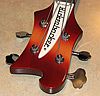
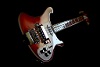
When and why did Rickenbacker change from that beautiful deep red fireglo finish that is so common on the older guitars/basses? I am not a big fan of the newer finish....something about that big mapleglo "hole" in the back that turns me off. That is the only reason I haven't gotten a C64 yet. Just my 2 cents worth....
1973 4001 MG cb fwi
1986 4003 Shadow
2012 4004Cii FG w/gold trim
1986 4003 Shadow
2012 4004Cii FG w/gold trim
I'm not sure when the change occured, but I know what you mean with regards to the more recent Fireglo finishes....I prefer the older ones too, which have more of a blend from the red to the maple.
Like you say, looking at the back ,there is a very distinct red outline, compared to one of the older ones where hardly any of the maple is showing through the finish.
Like you say, looking at the back ,there is a very distinct red outline, compared to one of the older ones where hardly any of the maple is showing through the finish.
-
jwr2


This is interesting....the one on the left looks darker than the new ones (IMHO). The "hole" on the '93 is much smaller than the newer ones I've seen. The newer ones look kind of "pinkish" to me...I don't see the Montezuma Brown connection, personally. I think that looks more like the Autumnglo.
1973 4001 MG cb fwi
1986 4003 Shadow
2012 4004Cii FG w/gold trim
1986 4003 Shadow
2012 4004Cii FG w/gold trim

-
squirebass
- Veteran RRF member
- Posts: 1579
- Joined: Fri Oct 13, 2000 11:05 pm
Chris,
I think part of rhe problem is that these clear coats don't yellow as quickly as the ones created in the 50s and 60s, so it may take a little bit longer to see the results. Also, I think that Montezuma Brown IS autumnglo ,at least the version of autumnglo that appeared in the 50s. John Hall has stated before that there were really three autumnglos, I believe they consisted of two version of Autumnglo, one 50s/60s and the second in the 70s, and Walnut, which I think had a satin finish. I'd have to look it up to get my nomenclature straight, but I think others will jump in and help me. I have a '71 fireglo, and a 1997 v63 in Fireglo, and they are much different, but I THINK the 1997 has "mellowed" a bit since I purchased the bass new in 1997. I'm going to get them out and look at them today and then report back!
I think part of rhe problem is that these clear coats don't yellow as quickly as the ones created in the 50s and 60s, so it may take a little bit longer to see the results. Also, I think that Montezuma Brown IS autumnglo ,at least the version of autumnglo that appeared in the 50s. John Hall has stated before that there were really three autumnglos, I believe they consisted of two version of Autumnglo, one 50s/60s and the second in the 70s, and Walnut, which I think had a satin finish. I'd have to look it up to get my nomenclature straight, but I think others will jump in and help me. I have a '71 fireglo, and a 1997 v63 in Fireglo, and they are much different, but I THINK the 1997 has "mellowed" a bit since I purchased the bass new in 1997. I'm going to get them out and look at them today and then report back!
"This is the big one, Elizabeth, I'm coming to join ya, honey!"
It also has to do with who was doing the paint work as well, I believe that the guy's name was Paul Blehn (?) who did most of the mid 70-s finishes. I have been told stories about one painter who was there for years and was color blind, but Mr Hall liked him and kept him on, any truth to the story, dunno but it's one explanation of the various shades that have appeared.

Never heard of anyone by that name or the color-blind story.
The shade variations coming out of the factory are all due to a variety of painters, different batches and makers of dye, and the environmental conditions at time of application.
But after leaving the shop, the clear coat yellow shift is the biggest factor in the coloration and one which is uncontrollable. It is true, however, that modern clear coats don't yellow hardly at all, at least in the short term.
The shade variations coming out of the factory are all due to a variety of painters, different batches and makers of dye, and the environmental conditions at time of application.
But after leaving the shop, the clear coat yellow shift is the biggest factor in the coloration and one which is uncontrollable. It is true, however, that modern clear coats don't yellow hardly at all, at least in the short term.



-
dead_in_okc
