

Here is a recent photo that captured my attention. How did they achieve this effect?
Please Tell Me About Lighting
Please Tell Me About Lighting
Jeffrey: I am not sure if there is anything more important than light when it comes to taking photographs. With a simple statement of the obvious out of the way, do you have some recommendations about lighting that would be helpful for those of us who are trying to get the nicest looking image of our Rickenbacker.
Here is a recent photo that captured my attention. How did they achieve this effect?
Here is a recent photo that captured my attention. How did they achieve this effect?
Life, as with music, often requires one to let go of the melody and listen to the rhythm
Please join the Official RickResource Forum Facebook Page https://www.facebook.com/groups/379271585440277
Please join the Official RickResource Forum Facebook Page https://www.facebook.com/groups/379271585440277

Re: Please Tell Me About Lighting
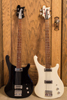
Looks like that picture, Peter, was shot with lights pulled as far back as not to have glare shining back at the camera. I have the absolute best results photographing guitars & basses inside a camera tent placing the lights just outside the tent eliminating all the movement of the lights. This set up allows maximum lighting with virtually little/no glare. Of course, every guitar's finish reacts differently but there is minimal adjustments needed. A great set up for anyone!
Leprosy is rare & scarce but nobody wants that!
Re: Please Tell Me About Lighting
Good description of a popular technique, Mike. Most of the time, tenting is used on relatively small highly reflective subjects, such as jewelry. In this case, with this gorgeous 360 a large softbox was used (most likely) with the guitar placed on a white background (BG), but with digital editing this could have been photographed against anything, with the BG removed in Photoshop (PS). You can see from the reflections on the guitar that a rectangular light source was used, indicating a softbox, which is a large flat translucent panel as part of a tentlike box with the lighting unit at the apex of the tent. This gives a nice flat, even light that does not drop off dramatically making it perfect for product photography.

Re: Please Tell Me About Lighting
Interestingly this is my my 2nd 330,im sure you have all seen it.taken from the same guitar store in Glasgow.I might add this store is great to deal with and are really friendly.Note the mark above the A tuner this is my 06 330 BBR.Love the light middle in my BBR nice flame on the back also.
http://www.guitarguitar.co.uk/images.as ... Ltd%20Edit
http://www.guitarguitar.co.uk/images.as ... Ltd%20Edit
Re: Please Tell Me About Lighting
Jeff, agreed. Most likely softboxes were used in this shot. I think I could have avoided the glare nearly completely on the fretboard if this was shot in my tent along with two softboxes on either side, which is usually how I shoot. I do love some slight glare on any borders of a guitar though. It really highlights it in an unusal way that is pleasant to the eye of a guitar player. No question editing in Photoshop does wonders. For smaller items I even shoot in a smaller tent, known as a cocoon, and shoot that within the tent with the softboxes alongside. Guess you can say I'm a tent freak! 
Leprosy is rare & scarce but nobody wants that!
Re: Please Tell Me About Lighting
Let's go camping, you bring the tents! 
-
paologregorio
- Senior Member
- Posts: 6376
- Joined: Wed Aug 08, 2007 12:56 pm
- Contact:
Re: Please Tell Me About Lighting
Aw, I thought this thread was going to be about stage lighting.  I must have sweated off another five pounds being under the stage light that was over my head tonight. I had to wear sunglasses, and I think I got a sunburn from it as well. We had to unplug the overhead strobe, as the blinking of the strobe was being picked up as a clicking sound by my AC30-wonderful.
Back on topic; cool tips for photographing guitars; I have had horrible results with lighting and my digicam-the produce glare and reflections on the guitars, so it's nice to know there are some tricks to use for this sort of thing; I'm going to try a low budget facsimile; a halogen behind a white sheet.
I must have sweated off another five pounds being under the stage light that was over my head tonight. I had to wear sunglasses, and I think I got a sunburn from it as well. We had to unplug the overhead strobe, as the blinking of the strobe was being picked up as a clicking sound by my AC30-wonderful.Back on topic; cool tips for photographing guitars; I have had horrible results with lighting and my digicam-the produce glare and reflections on the guitars, so it's nice to know there are some tricks to use for this sort of thing; I'm going to try a low budget facsimile; a halogen behind a white sheet.
Re: Please Tell Me About Lighting
I have a BA in Technical Theatre and Broadcasting with an emphasis on Audio Production. The technology has changed dramatically since my studies but lighting the stage is something I do know a thing or two about.
A very basic problem that occurs with the majority of people (you guys and gals) trying to photograph their instruments is due to on-camera flash. I would venture to guess that 99.9999% of you use a compact point-and-shoot digital (or film) camera (PAS) to photograph your instruments. These cameras have a built-in flash that is virtually in the same position as the lens, as far as the subject (the photographed object) is concerned; this creates a major problem as the surface of an instrument is usually highly reflective causing the flash to turn off prematurely resulting in under-exposure of the image, in addition to the flash itself showing up in the image as flare and hotspots. For the majority of my photographs I do at home I use whatever available light that is present, and I position the instrument to minimize reflections I see on it. This is best accomplished with a SLR (single lens reflex) camera so I can actually see what the film/sensor will see. An SLR has a mirror in it to bounce the image forming light from the lens to a viewfinder that shows exactly the image as photographed, allowing for the most accurate composition. A PAS camera may have a small simple viewfinder that is out of alignment with the lens causing parallax, where what you see is not what you get.
http://en.wikipedia.org/wiki/Parallax
In a sense, an expensive $7000.00 Leica M series rangefinder camera is no better than a $250.00 Casio PAS camera as the Leica has the same veiwfinder issues as the PAS camera due to the nature of the Leica's finder system!
http://us.leica-camera.com/photography/m_system/m8/
http://www.casio.com/products/Cameras/E ... /EX-S10SR/
This is the camera I use:
http://www.usa.canon.com/consumer/contr ... elid=12929
I am not saying you have to get an SLR, but knowing the limitations of the camera you have is a great start in learning how to best take advantage of it to obtain good results.
A very basic problem that occurs with the majority of people (you guys and gals) trying to photograph their instruments is due to on-camera flash. I would venture to guess that 99.9999% of you use a compact point-and-shoot digital (or film) camera (PAS) to photograph your instruments. These cameras have a built-in flash that is virtually in the same position as the lens, as far as the subject (the photographed object) is concerned; this creates a major problem as the surface of an instrument is usually highly reflective causing the flash to turn off prematurely resulting in under-exposure of the image, in addition to the flash itself showing up in the image as flare and hotspots. For the majority of my photographs I do at home I use whatever available light that is present, and I position the instrument to minimize reflections I see on it. This is best accomplished with a SLR (single lens reflex) camera so I can actually see what the film/sensor will see. An SLR has a mirror in it to bounce the image forming light from the lens to a viewfinder that shows exactly the image as photographed, allowing for the most accurate composition. A PAS camera may have a small simple viewfinder that is out of alignment with the lens causing parallax, where what you see is not what you get.
http://en.wikipedia.org/wiki/Parallax
In a sense, an expensive $7000.00 Leica M series rangefinder camera is no better than a $250.00 Casio PAS camera as the Leica has the same veiwfinder issues as the PAS camera due to the nature of the Leica's finder system!
http://us.leica-camera.com/photography/m_system/m8/
http://www.casio.com/products/Cameras/E ... /EX-S10SR/
This is the camera I use:
http://www.usa.canon.com/consumer/contr ... elid=12929
I am not saying you have to get an SLR, but knowing the limitations of the camera you have is a great start in learning how to best take advantage of it to obtain good results.
Re: Please Tell Me About Lighting
aaahhhh! leica advocates come in!  ok i must admit that jeff is right. i have to however advocate leica - not crazy expensive m8 - but one of their first intrusions into digital photography - digilux zoom. it is relatively dated camera but i have taken every ebay photo with it during last 8 years. it is sturdy and you can simply turn the damn flash off. so that is what i do. turn it off and take all my pictures outside on a nice day. the major benefit is that there is no need to process them afterwards since the resolution is 1.3 megapixel low.
ok i must admit that jeff is right. i have to however advocate leica - not crazy expensive m8 - but one of their first intrusions into digital photography - digilux zoom. it is relatively dated camera but i have taken every ebay photo with it during last 8 years. it is sturdy and you can simply turn the damn flash off. so that is what i do. turn it off and take all my pictures outside on a nice day. the major benefit is that there is no need to process them afterwards since the resolution is 1.3 megapixel low. dusan palka who is also known as grazioso on infamous auction web site
if you want to reach the man and expect an answer please make sure you remove this email address ([email protected]) from your spam block if you have one.
if you want to reach the man and expect an answer please make sure you remove this email address ([email protected]) from your spam block if you have one.
Re: Please Tell Me About Lighting
Ah yes, the good old early Leica Digilux, although, to be more accurate, it was made by Panasonic. As far as I know the first real digital Leica is the M8, which I have used, a good friend of mine has a few Leicas, mostly M6s but he does have an M8, along with virtually every modern Leica lens! 
I used to own a couple of CLs and a small handful of German lenses, including a 90mm Tele-Elmarit, which I wish I still had.
I used to own a couple of CLs and a small handful of German lenses, including a 90mm Tele-Elmarit, which I wish I still had.
Re: Please Tell Me About Lighting
jeff to be completely accurate it was fuji who made digilux zoom. almost exact thing as finepix4800 
dusan palka who is also known as grazioso on infamous auction web site
if you want to reach the man and expect an answer please make sure you remove this email address ([email protected]) from your spam block if you have one.
if you want to reach the man and expect an answer please make sure you remove this email address ([email protected]) from your spam block if you have one.
Re: Please Tell Me About Lighting
I didn't know that, I just assumed it was Panasonic as they have been partners for a long time doing digital cameras together. 
-
bassduke49
- Senior Member
- Posts: 6580
- Joined: Wed May 14, 2003 5:00 am
Re: Please Tell Me About Lighting
One of the other things to watch out for is reflections of the camera/photographer. If you can control the environment in the photo shoot, try to keep the area immediately behind and around the camera as dark as possible. This keeps out unsightly reflections. That's also why most professional cameras, lenses, and tripods are black. At the studio where I worked (Kalmbach Publishing Co.), they set up one studio with black drapes, and took down all the overhead dropped ceiling, painted all the structure and plumbing up there flat black, and kept as much as possible in the room black so that they could concentrate on lighting without much worry of reflections.


Re: Please Tell Me About Lighting
I agree with most everything that has beed advised. Of course the tent is the best idea. But, even if you don't have the money for such a large translucent tent, the set up will be expensive. A large soft box is another excellent choice for reducing or eliminating glare, or bouncing your light off a white umbrella with covered ribs, like an eclipse umbrella. For the photo you have posted, most likely the photographer flared the background as well. In true high key photography (shooting against a white background) it is important to have a background light that will flare the background at 4 times the amount of light used to light the subject. For example, if you are shooting the subject at f8 to maintain depth of field to bring out the details in the subject, you should maintain the background light at f32. If not, the light fall off from your main light will turn your background gray. Lighting the background will also eliminate shadows.
Since camera mounted flashes will never give you the results you are looking for, there is another method that works if all the required equipment is not available. Set up your "studio" outside on an overcast day where there is no direct sunlight, and you can see no shadows. Bright, overcast days are very similar to diffused light in the studio. The clouds will act like a giant soft box, diffusing your main light. (the sun!)
Cheers, dog
Since camera mounted flashes will never give you the results you are looking for, there is another method that works if all the required equipment is not available. Set up your "studio" outside on an overcast day where there is no direct sunlight, and you can see no shadows. Bright, overcast days are very similar to diffused light in the studio. The clouds will act like a giant soft box, diffusing your main light. (the sun!)
Cheers, dog
Never use money as a means to measure wealth
Re: Please Tell Me About Lighting
It is important to watch just how much you flare out the BG as the light can wrap around the subject and cause a severe lack of contrast.