
Shielding vs output
Moderators: rickenbrother, ajish4
Shielding vs output
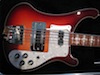
I thought I did a nice shielding job on my 08 4003. When it was done I noticed there was a drop in output volume from the pickups. There was no buzz but the overall tone was gone. Too much conductive tape ?
It's too early in the morning to talk about our relationship !
-
cassius987

- Senior Member
- Posts: 4723
- Joined: Mon Aug 04, 2008 2:11 pm
Re: Shielding vs output
That shouldn't happen. Maybe you have partially shorted one or both pickups. May not be the shielding's fault, if you were doing a lot of soldering you could have overheated the plastic between the copper shielding and pickup leads, creating a partial short. My 4003FL is shielded probably far more than any bass needs to be and that caused no change in tone or output.

Re: Shielding vs output
Josh said what I would do too.
Re: Shielding vs output
No soldering. I used conductive tape that can overlap and does not need soldering. Guess I'll start over.
It's too early in the morning to talk about our relationship !
Re: Shielding vs output
You need to solder anyway. If I assume you are using copper tape to the term, then the plastic adhesive will shield the strips of copper from one another. I wouldn't trust the tape for a five minute solder job.
-
cassius987
- Senior Member
- Posts: 4723
- Joined: Mon Aug 04, 2008 2:11 pm
Re: Shielding vs output
Technically the tape he is using is continuous... but it's so easy for it to lift up as time passes that I believe you should solder it anyways. It also enhances continuity if there are problem areas.
Re: Shielding vs output
I used copper tape (I think, it's been a while) and soldiered each piece to the other.cassius987 wrote:Technically the tape he is using is continuous... but it's so easy for it to lift up as time passes that I believe you should solder it anyways. It also enhances continuity if there are problem areas.

Re: Shielding vs output
Many copper tapes, especially if they are made for shielding, have conductive adhesives just to make it so you don't have to solder them. This connection may not be quite as good as solder, and may not last as long, especially with the noise you're trying to shield against.Malchik wrote:You need to solder anyway. If I assume you are using copper tape to the term, then the plastic adhesive will shield the strips of copper from one another. I wouldn't trust the tape for a five minute solder job.
Most of this stuff is designed for "RFI" shielding. RFI means Radio Frequency Interference. In the RF range, even a bit of overlap at the seams will provide a good deal of capacitive coupling between the pieces. At audio frequencies, especially in the 50/60Hz range, capacitive coupling takes a huge amount of overlap. So soldering can definitely help...
I have NO idea what to do with those skinny stringed things... I'm just a bass player...
-
cassius987
- Senior Member
- Posts: 4723
- Joined: Mon Aug 04, 2008 2:11 pm
Re: Shielding vs output
Thanks for pointing out this discrepancy... I had always wondered what the deal was. I find shielding is best for getting a good, consistent ground and getting rid of "wacky" sounds--probably RFI. For audio frequency hum, I believe humbuckers or RWRP are the way to go. The two together make for a very quiet bass, but either alone can have problems, as I have witnessed firsthand.cjj wrote:Most of this stuff is designed for "RFI" shielding. RFI means Radio Frequency Interference. In the RF range, even a bit of overlap at the seams will provide a good deal of capacitive coupling between the pieces. At audio frequencies, especially in the 50/60Hz range, capacitive coupling takes a huge amount of overlap. So soldering can definitely help...