
hey all!
nOOb here with a couple of questions
I traded my 330 (bought new back in 1991) for a 480
don't know if I did the right thing, but I never bonded with the 330, and I really like that 480 I got in a trade
it's Jetglo
supposedly from 1974
so my questions are, how can I date my 480 ?
it's got serial no. OA 251
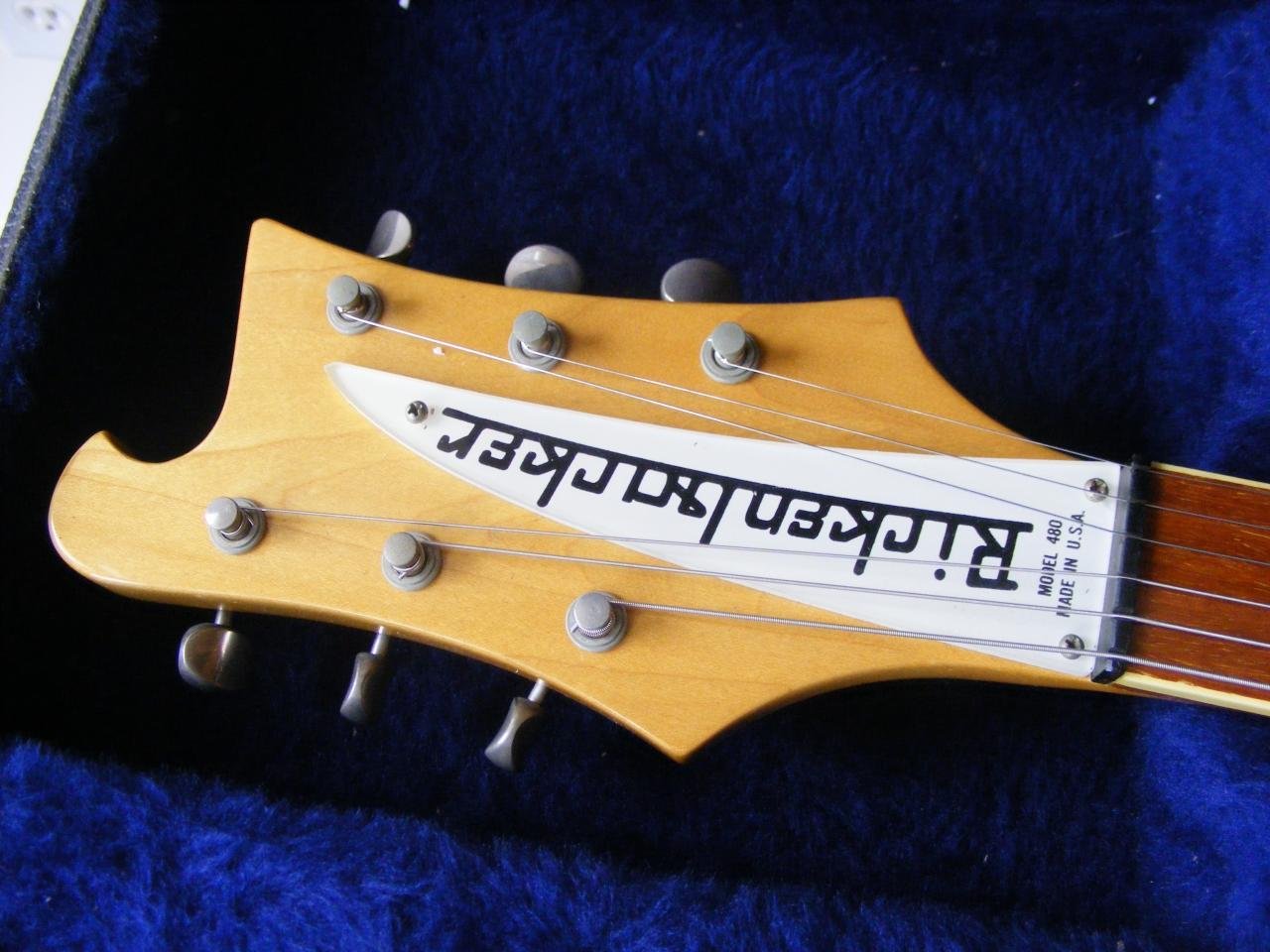
and this one thing that bothers me, it's got a headplate, not with the raised logo, but with a printed logo under a plexi layer
and moreover, in small print, it reads MODEL 4001, MADE IN U.S.A.
so does it have a retrofitted headplate of a 4001 bass, or what ? anyone can confirm that this is normal, or not ?
hmmm, it's a nice guitar though, plays like butter and sounds pretty sweet
thanks for helping me
cheers
couple of questions about a 480
Moderators: rickenbrother, ajish4

Re: couple of questions about a 480
To get the date, go to:
http://www.rickenbacker.com/service_serials.asp
And type in your serial number. It should come back and tell you your guitar was made in January of 1975.
Sounds like it's got a replacement Truss Rod Cover (or TRC, but the official name of the thing is a name plate) from a 4001. The back painted plexiglas ones were used up until sometime in 1975, so it could be correct for your guitar to have a plexi one, but it should say model 480...
Oh, and welcome to the RRF!
Edit: Here's a picture of a 1975 with a plexi TRC:
http://www.rickresource.com/register/us ... llsize.jpg
http://www.rickenbacker.com/service_serials.asp
And type in your serial number. It should come back and tell you your guitar was made in January of 1975.
Sounds like it's got a replacement Truss Rod Cover (or TRC, but the official name of the thing is a name plate) from a 4001. The back painted plexiglas ones were used up until sometime in 1975, so it could be correct for your guitar to have a plexi one, but it should say model 480...
Oh, and welcome to the RRF!
Edit: Here's a picture of a 1975 with a plexi TRC:
http://www.rickresource.com/register/us ... llsize.jpg
I have NO idea what to do with those skinny stringed things... I'm just a bass player...
-
jingle_jangle

- RRF Moderator
- Posts: 22679
- Joined: Wed Dec 22, 2004 6:00 am
- Contact:
Re: couple of questions about a 480
You sure that's a printed label? Could be back-painted plexi...
Re: couple of questions about a 480
hey, thank you kindly for the replies
based on the info I found in another thread, I believe the TRC on my 480 is :
fourth generation : back-painted plexiglass, sharp sides, "Made In U.S.A." parallel to nut, as well as model number,
which happens to be 4001, whereas it should have been 480
apart from that, I'd say it looks exactly like the pic posted by CJ Johanssen
based on the info I found in another thread, I believe the TRC on my 480 is :
fourth generation : back-painted plexiglass, sharp sides, "Made In U.S.A." parallel to nut, as well as model number,
which happens to be 4001, whereas it should have been 480
apart from that, I'd say it looks exactly like the pic posted by CJ Johanssen
Re: couple of questions about a 480
another question :
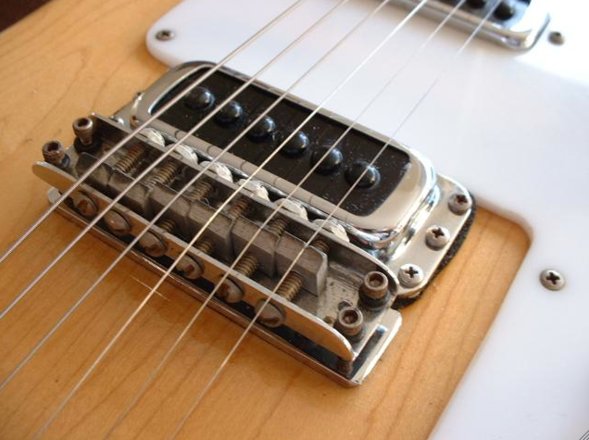
looking at the bridge on my 480 (which is a bit tilted), I plan to do a set-up, lower the action a little and set intonation, I noticed that the four screws do not have those little coil springs, but have rubber O-rings instead, is this common ?
thanks again
looking at the bridge on my 480 (which is a bit tilted), I plan to do a set-up, lower the action a little and set intonation, I noticed that the four screws do not have those little coil springs, but have rubber O-rings instead, is this common ?
thanks again
Re: couple of questions about a 480
so, the coil springs go in between screws and top surface of the bridge, right ?
like in this picture ?

looking at part 06114 on this bridge assembly drawing got me confused

like in this picture ?
looking at part 06114 on this bridge assembly drawing got me confused
-
jingle_jangle
- RRF Moderator
- Posts: 22679
- Joined: Wed Dec 22, 2004 6:00 am
- Contact:
Re: couple of questions about a 480
The springs are on the newer Ricks; O-rings have been used in the past. The general idea is to put some kind of tension on the height screws so that they don't vibrate out of adjustment. Do you want historical accuracy (O-rings) or better function (springs)? Both the drawing and photograph show the same positioning for the springs and are correct.
-
IHeartRics

- Member
- Posts: 482
- Joined: Sat Apr 12, 2008 12:17 am
- Contact:
Re: couple of questions about a 480
Mine have the o rings where the springs are in the photo, but always vibrate up and out anyway. I've often thought about putting them underneath instead.
Expect nothing and you'll never be disappointed (and I mean that in an optimistic way).
http://www.reverbnation.com/thelowlies
http://www.myspace.com/thelowlies
http://www.reverbnation.com/thelowlies
http://www.myspace.com/thelowlies

Re: couple of questions about a 480
That's my bridge in the picture. I had buzzing issues and saddle rattling, I ordered new parts from POTR to replace the o-rings and add springs to the intonation screws, fixed all my problems and I was able to intonate perfectly afterwards. I kept the original parts for posterity's sake but the springs are much better.
If it was going to sit in a museum then i'd put the true, original parts back on it. But since i'm going to be playing it every day, i'd rather have an instrument that works correctly.
If it was going to sit in a museum then i'd put the true, original parts back on it. But since i'm going to be playing it every day, i'd rather have an instrument that works correctly.
-
jingle_jangle
- RRF Moderator
- Posts: 22679
- Joined: Wed Dec 22, 2004 6:00 am
- Contact:
Re: couple of questions about a 480
I've had best results with a tiny bit of LocTite applied to the screw threads (it will wick into them) after the bridge is adjusted exactly where you want it. There was a discussion awhile back about which LocTite was best, blue, green or red. I use the red, which is very strong, as long as it isn't overdone.
-
kennyhowes

- Veteran RRF member
- Posts: 5025
- Joined: Sat Jan 27, 2001 1:03 am
- Contact:
Re: couple of questions about a 480
Interesting. How does this product affect future adjustment?jingle_jangle wrote:I've had best results with a tiny bit of LocTite applied to the screw threads (it will wick into them) after the bridge is adjusted exactly where you want it. There was a discussion awhile back about which LocTite was best, blue, green or red. I use the red, which is very strong, as long as it isn't overdone.
Re: couple of questions about a 480
It would make it more of a hassle than usual, but the LockTite stuff isn't like cement, and with some force you can loosen it and adjust like normal. (provided you buy the right type, as paul mentioned.) Of course then you'd have to re-apply it again.kennyhowes wrote:Interesting. How does this product affect future adjustment?
Re: couple of questions about a 480
hey again! thanks for the replies
should have waited for them, meanwhile I swapped the O-rings and put springs instead
might switch back to O-rings, I'll just have a go and see what works best for me
Also, I noticed that the saddles on my bridge don't have springs (item 06113 on the drawing), is that common as well for bridge of that era (early 1975) ?
Anyway, intonation and set-up are near perfect to my ears, I'm still honeymooning but the 480 could become my fav guitar, never felt this way with the 330 I used to have
@ Spike : I borrowed your picture (thanks!) because it triggered my question about the O-rings
should have waited for them, meanwhile I swapped the O-rings and put springs instead
might switch back to O-rings, I'll just have a go and see what works best for me
Also, I noticed that the saddles on my bridge don't have springs (item 06113 on the drawing), is that common as well for bridge of that era (early 1975) ?
Anyway, intonation and set-up are near perfect to my ears, I'm still honeymooning but the 480 could become my fav guitar, never felt this way with the 330 I used to have
@ Spike : I borrowed your picture (thanks!) because it triggered my question about the O-rings
Re: couple of questions about a 480
Nope. In my case I added that because vibrations were being transferred from the strings to the saddles and causing them to buzz. Adding springs puts a constant force against the saddles to keep them from moving. Same concept applies to the height adjusters.bieke wrote:Also, I noticed that the saddles on my bridge don't have springs (item 06113 on the drawing), is that common as well for bridge of that era (early 1975) ?
This is what a stock 480 bridge looks like, minus cover. Also, it'd be great if you posted in the 480 picture thread in the photography section.
-
jingle_jangle
- RRF Moderator
- Posts: 22679
- Joined: Wed Dec 22, 2004 6:00 am
- Contact:
Re: couple of questions about a 480
Mr. Howes:kennyhowes wrote:Interesting. How does this product affect future adjustment?jingle_jangle wrote:I've had best results with a tiny bit of LocTite applied to the screw threads (it will wick into them) after the bridge is adjusted exactly where you want it. There was a discussion awhile back about which LocTite was best, blue, green or red. I use the red, which is very strong, as long as it isn't overdone.
I apply the LocTite with the tip of a toothpick. Too much and it's difficult to shift, but a small drop with a toothpick seems to be just the right amount that can be overcome with yer normal Allen wrench.