It's not always so that the majority is completely rightjohnhall wrote:Google search "Nashville Tuning" and you'll get 735,000 items.
Then try Googling "Nashville Stringing" and you'll get 57,700 results.
I think they're both accurate descriptions, so take your pick.
If you want to really argue about something, let's talk about vibratos and tremolos . . .
 Nashville Tuning means at least one more thing than changeing to thinner strings: Among country music pros it's the name for the open E9 tuning B-D-E-F#-G#-B-E-G#-D#-F# (Wikipedia: http://en.wikipedia.org/wiki/E9_tuning) - but now we are into pedal steel land... So maybe there is - after all - a mixup between those two expressions. ... Yes vibratos and tremolos... that lovely old discussion. I think Leo Fender (or somebody in his staff) came up with the words Syncronized Tremolo - which is superbly for marketing. And these days everybody know what it is - even it's wrong because they do mean... erhhh... vibrato... or do they... Some Fender guitars have tremolo units... as do some of the F amps - but but when it comes to amps it's no longer changes in the pitch but a fast variation in the volume Still we all know what we are talking about.
But the most important part of my original answer here was (I probably didn't get my point across very well in the first place
), that this stringing (or tuning) (which is also used outside Nashville btw)  - won't hurt the guitar due to the balanced sets of strings as well as it changes the guitars overall sound without adding anything - it sounds a bit like a 12 stringer or a pedal steel but with los of bass and midrange... It feels - as well - a bit rubberlike to play a guitar with N....
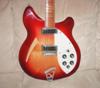
BTW John... I'm not going to high string, Nashville tune or Nashville string my 360... it sounds EXCELLENT the way it is