

Too bad ...
Moderators: rickenbrother, ajish4





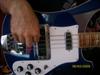

Looking great Ted! BTW, I note you mentioned the action is 3/32 at the 20th fret with a "cobbled together" set up; I normally have my action either 2 or 3/32 at the 12th, depending on various factors.I recently had some fret and nutwork done by a very highly regarded English luthier (not my normal one I might add) who really was not happy with me having my action that low, even when I explained how lightly I played. Heck, I used to go lower than that! Wierd how different people react differently; Martin Petersen (my normal luthier) wouldn't have batted an eyelid at that sort of action. Any comments?
"Be kind, for everyone you meet is fighting a hard battle."
I should probably explain. The cobbled setup was that the tailpiece was shimmed up with bits of pine from a wine crate to match the body height. This was to neutralize the hole that was cut in the body by the previous owner. The nut is a new RIC nut that is not yet glued in place and needs a little shaping to fit properly. The ability to lower the action without serious buzzes or note-outs is an merely indication of the precision of the neck and frets. For most players, 2/32 to 3/32 is good action. Of course action height is entirely personal preference. There is no right or wrong that applies to everyone. John Entwistle is said to have played with his strings just over the fret tops. From the picture on the cover of 'Basics' issue 36, Chris Squire apparently likes his action a bit higher. I have also heard that Jamerson's action was so high that few people could even play his bass. When a luthier become judgemental about your style preferences, it is time to move on. IMHO One of the fundamentals of lutherie is understanding that no two players are the same and that some are even extreme.
I have played the basses of two of my favorite fretless players, Gary Willis and Percy Jones. Gary's was so low I couldn't play it without constant buzzing, and Percy's was so high I just put it down after barely touching it! Funny how both of them play Ibanez basses.
BTW, my band, Rare Blend (www.rareblend.net), may be doing a show in Baltimore November 20th with Tunnels, Percy's band (www.buckyballmusic.com).
BTW, my band, Rare Blend (www.rareblend.net), may be doing a show in Baltimore November 20th with Tunnels, Percy's band (www.buckyballmusic.com).

Superb work, Ted! I've been very impressed by your lutherie skills. When you said "The action is about 3/32nds at the 20th fret.", did you mean the same height for all 4 strings?
Indeed, guitar/bass set-up is really a matter of personal preference and I totally agree it's not a good thing that a luthier is judgemental about a player/customer's style preference. Some players prefer a totally straight neck and low action while others want the opposite. However, I find that a bigger neck relief or higher action does yield a fuller and louder acoustic and amplified sound. IMHO, set-up is all about finding the balance/compromise between sound and playability.
I set up my 4001/3 necks to almost straight (apprx. .008" relief on the E string side and .003" relief on the G string side at the 8th fret when the strings are pressed at the 1st and last frets). With the very "elastic" TI flatwounds, I set my string heights to 7/64" for the E and 3/32 for the G at the last fret. Get them any lower and I'll have fret buzz, especially in the 3rd~6th frets area. I do find the basses sound even better with a little higher action but don't want to fight with it. Some of my bass playing friends have big relief and high action and can't play my Rick basses because they get mucho fret buzz.
Indeed, guitar/bass set-up is really a matter of personal preference and I totally agree it's not a good thing that a luthier is judgemental about a player/customer's style preference. Some players prefer a totally straight neck and low action while others want the opposite. However, I find that a bigger neck relief or higher action does yield a fuller and louder acoustic and amplified sound. IMHO, set-up is all about finding the balance/compromise between sound and playability.
I set up my 4001/3 necks to almost straight (apprx. .008" relief on the E string side and .003" relief on the G string side at the 8th fret when the strings are pressed at the 1st and last frets). With the very "elastic" TI flatwounds, I set my string heights to 7/64" for the E and 3/32 for the G at the last fret. Get them any lower and I'll have fret buzz, especially in the 3rd~6th frets area. I do find the basses sound even better with a little higher action but don't want to fight with it. Some of my bass playing friends have big relief and high action and can't play my Rick basses because they get mucho fret buzz.
Paul: Yes, I measured that action on all 4 strings. After doing a little fretwork I found that I can get the action down to 2/32 (1/16). This bass plays great now.
Here is the work I did on the hole under the bridge. It is a bit rough but I did not have much to work with. The hole was jagged and asymetrical. I did not want to remove too much of the original wood so I cleaned up the edges with a chisel. The plug is all walnut rather than a maple/walnut sandwich.

Here is the tailpiece in place. It should look more even after more sanding and finishing.

Here is the work I did on the hole under the bridge. It is a bit rough but I did not have much to work with. The hole was jagged and asymetrical. I did not want to remove too much of the original wood so I cleaned up the edges with a chisel. The plug is all walnut rather than a maple/walnut sandwich.
Here is the tailpiece in place. It should look more even after more sanding and finishing.
-
jwr2


