
I like it, but I also liked the late 1960's MoPar colors as well. Go Mango Orange, Sub Lime, and Plum Crazy Purple. I think this bass in yellow with black hardware, tailpiece, pick guard, and TRC would be a killer color combo!!
Sepp
TV Yellow C64 now available
Moderators: rickenbrother, ajish4
-
Kopfjaeger

- Advanced Member
- Posts: 1908
- Joined: Fri Jun 24, 2011 8:49 am
Re: TV Yellow C64 now available
Vintage/Classic Rickenbacker Enthusiast!
1972 4001 Jetglo
1973 4001 Burgundyglo
2011 4003 Jetglo
1986 4003 Shadow
1972 4001 Jetglo
1973 4001 Burgundyglo
2011 4003 Jetglo
1986 4003 Shadow

Re: TV Yellow C64 now available
Maybe a stupid question, but what that "TV" stands for?
Rickenbacker 4003JG, Aria 1540, Epiphone Jack Casady, DIY P-bass
https://burning-cities.bandcamp.com │ https://transuranicheavyelements.bandcamp.com │ https://karvaiset-orjuuttajat.bandcamp.com │ https://matula.bandcamp.com
https://burning-cities.bandcamp.com │ https://transuranicheavyelements.bandcamp.com │ https://karvaiset-orjuuttajat.bandcamp.com │ https://matula.bandcamp.com

Re: TV Yellow C64 now available
TV means that the color was invented to appear as normal white for use in television. In those days of black and white, a really white guitar would cause a lot of glare and bleeding, so this yellow was their way to "tone it down" for the camera's narrow range of proper exposure.mikko wrote:Maybe a stupid question, but what that "TV" stands for?
All I wanna do is rock!

Re: TV Yellow C64 now available
Wow!  I like the White, Special Green was great, This is over the top Fantastic!
I like the White, Special Green was great, This is over the top Fantastic!-
Hotzenplotz

- Intermediate Member
- Posts: 942
- Joined: Sun Sep 26, 2010 8:51 am
Re: TV Yellow C64 now available
THAT is an interesting information!!! Thank You!kiramdear wrote:TV means that the color was invented to appear as normal white for use in television. In those days of black and white, a really white guitar would cause a lot of glare and bleeding, so this yellow was their way to "tone it down" for the camera's narrow range of proper exposure.mikko wrote:Maybe a stupid question, but what that "TV" stands for?
Re: TV Yellow C64 now available
i like it!!! but i think i would get bored after a few months....mutch better the white or the special green imho
-
rickyfricky

- Intermediate Member
- Posts: 692
- Joined: Wed Jan 06, 2010 9:09 pm
Re: TV Yellow C64 now available
"NONE MORE YELLOW"T.A.R. wrote:Wow!

Watch those teeth, Marlin. I'm not sure we've properly sedated the beast . . .

Re: TV Yellow C64 now available
So it is TV Yellow...good.
That "yellow mustard" look is pretty off-putting...
That "yellow mustard" look is pretty off-putting...
Re: TV Yellow C64 now available
This, right here.DoubleThink wrote:Brilliant colour but, you know, I'd love it even more if it didn't have the reverse headstock. The reverse head seems so disingenuous on a right-handed player, IMHO. Love the colour, though.
I cannot stand that reverse headstock.
The colour is great.

Re: TV Yellow C64 now available
The same applies to black & white portrait photography; white shirts/blouses/sweaters, etc. against caucasian skin can make the clothing blow out or if printing for the white to get tone in it the skin tone can get too dark. Light blue or grey is the way to go, in that case.kiramdear wrote:TV means that the color was invented to appear as normal white for use in television. In those days of black and white, a really white guitar would cause a lot of glare and bleeding, so this yellow was their way to "tone it down" for the camera's narrow range of proper exposure.mikko wrote:Maybe a stupid question, but what that "TV" stands for?
-
wilmingtonian
- New member
- Posts: 38
- Joined: Wed Sep 28, 2011 12:59 pm
Re: TV Yellow C64 now available
I've heard the same thing about 'blood' in B/W movies being some color other than true blood red, I suppose a dark red would show as too black?kiramdear wrote:TV means that the color was invented to appear as normal white for use in television. In those days of black and white, a really white guitar would cause a lot of glare and bleeding, so this yellow was their way to "tone it down" for the camera's narrow range of proper exposure.mikko wrote:Maybe a stupid question, but what that "TV" stands for?
As a photographer (and working in b/w) I can relate to the exposure / contrast concerns, but the accepted version still brings some questions to my mind...
Why yellow? It could easily be an off-white of any shade - that's assuming the early cameras "saw" or recorded all colors equally, as varying degrees of brightness. It's not like a green-screen technology, where a particular color has to be taken into consideration.
Making a quick search a couple of websites mention an early tv show with doctors' operating garb or labcoats or whatever not being white but "tv yellow." I can understand wanting doctors to appear in white, that much makes sense. What I don't get is yellow being the color of choice. Or, if contrast was such an issue, why would controlled lighting in TV studios - and all or nearly all early TV was created in studio (I guess, I wasn't born yet) - not be designed to be less contrasty? Certainly it was a concern that went beyond guitars or lab coats.
I think the basic concept is valid - true white guitars may appear too bright, but what about other items - the pickguards (though vintage examples seem to have black pickguards - and the term seems to have originated with Gibsons), etc.? I think there is some truth to the theory, but, don't see any special qualities to "tv yellow" in particular that would make it particularly agreeable to tv viewing.
And I don't think the early guitar painters were striving to render the guitars as white, but at least make them less technically challenging to broadcast (what was so special about them looking white?). And how many guitars were making regular appearances on TV that the makers/owners were concerned with the broadcast issues? Seems like it would be very small number, and the technical problem left to the broadcasters.
I don't claim to be an expert, but the theory, at least as explained in a sentence or two, brings up these questions.
-
electrofaro

- Senior Member
- Posts: 3611
- Joined: Sun Apr 26, 2009 3:25 pm
Re: TV Yellow C64 now available
I only know TV as True Vintage, however, if it means that in TV Yellow I don't know.wilmingtonian wrote:the term seems to have originated with Gibsons
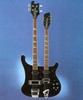
johnhall wrote:In reality they're pretty much like this one:

That is one weird looking bass, Mr Hall

'67 Fender Coronado II CAB * '17 1963 ES-335 PB * currently rickless
-
Hotzenplotz
- Intermediate Member
- Posts: 942
- Joined: Sun Sep 26, 2010 8:51 am
Re: TV Yellow C64 now available
Now the history of a need for this colour is clear. Very interesting!
About taste: not mine. (Thinking all the time: "PEEEEEEE ALERT, PEEEEEEE ALERT!")
Prefer to see it the way it was originally made for: black and white.
About taste: not mine. (Thinking all the time: "PEEEEEEE ALERT, PEEEEEEE ALERT!")
Prefer to see it the way it was originally made for: black and white.

Re: TV Yellow C64 now available
My thoughts exactly!qwezirider wrote:Good Lord, that is most definitely YELLOW.

Re: TV Yellow C64 now available
I don't think the problem related so much to broadcast TV but rather the kinescope process. (In that era the only means of TV recording was to capture the screen image on film.) Relatively low film speeds required that the screen intensity of the kinescope transfer device be set quite high and masses of pure white objects would either burn the image or the contrast ratio for everything else was skewed. I would have thought that gray would work as well but probably the early vidicon tubes were more sensitive to yellow and make for a crisper image.wilmingtonian wrote:Making a quick search a couple of websites mention an early tv show with doctors' operating garb or labcoats or whatever not being white but "tv yellow." I can understand wanting doctors to appear in white, that much makes sense. What I don't get is yellow being the color of choice. Or, if contrast was such an issue, why would controlled lighting in TV studios - and all or nearly all early TV was created in studio (I guess, I wasn't born yet) - not be designed to be less contrasty? Certainly it was a concern that went beyond guitars or lab coats.
I think the basic concept is valid - true white guitars may appear too bright, but what about other items - the pickguards (though vintage examples seem to have black pickguards - and the term seems to have originated with Gibsons), etc.? I think there is some truth to the theory, but, don't see any special qualities to "tv yellow" in particular that would make it particularly agreeable to tv viewing.
And I don't think the early guitar painters were striving to render the guitars as white, but at least make them less technically challenging to broadcast (what was so special about them looking white?). And how many guitars were making regular appearances on TV that the makers/owners were concerned with the broadcast issues? Seems like it would be very small number, and the technical problem left to the broadcasters.
I don't claim to be an expert, but the theory, at least as explained in a sentence or two, brings up these questions.
Anyway, just speculating.