
Pickup Magnetics 101 -------
Moderator: jingle_jangle
Pickup Magnetics 101 -------
I ordered one from the same batch ( Feb 11), it was 11.68K, steaming.....
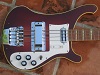
Re: RIHS For Sale
Pardon my pickup ignorance, but does the hot winding make it have higher volume output, a different tone or both?

Re: RIHS For Sale
***SALE PENDING***

Re: RIHS For Sale
Both, for various reasons that someone such as CJ or Scott can better explain.BobHyde wrote:Pardon my pickup ignorance, but does the hot winding make it have higher volume output, a different tone or both?

Re: RIHS For Sale
Yep. In really simple terms, higher output because higher resistance means more windings, which means you have more of them in the magnetic field to generate voltage. Different tone because you have more windings, which changes the inductance and therefore the resonant characteristics of the coil.jps wrote:Both, for various reasons that someone such as CJ or Scott can better explain.BobHyde wrote:Pardon my pickup ignorance, but does the hot winding make it have higher volume output, a different tone or both?
You probably don't want more details... Trust me...


I have NO idea what to do with those skinny stringed things... I'm just a bass player...
Re: RIHS For Sale
Well, I could have given him that kind of explanation!cjj wrote:Yep. In really simple terms, higher output because higher resistance means more windings, which means you have more of them in the magnetic field to generate voltage. Different tone because you have more windings, which changes the inductance and therefore the resonant characteristics of the coil.jps wrote:Both, for various reasons that someone such as CJ or Scott can better explain.BobHyde wrote:Pardon my pickup ignorance, but does the hot winding make it have higher volume output, a different tone or both?
You probably don't want more details... Trust me...
 I was hoping for more meat.
Re: RIHS For Sale
What, you want MATH???jps wrote:Well, I could have given him that kind of explanation!cjj wrote:Yep. In really simple terms, higher output because higher resistance means more windings, which means you have more of them in the magnetic field to generate voltage. Different tone because you have more windings, which changes the inductance and therefore the resonant characteristics of the coil.jps wrote: Both, for various reasons that someone such as CJ or Scott can better explain.
You probably don't want more details... Trust me...
I have NO idea what to do with those skinny stringed things... I'm just a bass player...
Re: RIHS For Sale
Can we meet in the middle?
Re: RIHS For Sale
OK, you asked for it. I'll even do it without invoking math!
A pickup creates a voltage in a similar manner to a generator. You can either have a moving (changing) magnetic field near a coil of wire, or you can move the coil of wire in a magnetic field. In the case of a pickup, the strings, moving in the magnetic field cause fluctuations in the strength of the field. If you happen to have a coil of wire near by, you'll get an electric current generated in the coil proportional ti the fluctuations in the magnetic field.
Now, if you have some number of turns of that coil in the field, you'll get some voltage. If you double the number of turns, you'll double the voltage (well, not quite, there are losses and a few other factors to consider). So, more turns equates to a higher output.
Now on the tone side of things. If you have a coil of wire (known in the "biz" as an inductor), it can allow a current to pass through it. But when it is doing this, that current created it's own magnetic field and will tend to resist changes in the amount of current that is passing through the coil. In other words, it really want to remain stable and have the current remain constant. A smaller coil, with fewer turns of wire will generate a smaller magnetic field and will allow the current to change faster than a coil with a lot more turns. So, more turns will allow the current to change faster than a big coil. Faster changes equate to higher frequencies (an AC signal is measured in cycles per second, which essentially means changes per second). So, a coil with more turns will not allow as high of frequencies to pass through it (or to be generated by it, in the case of a pickup).
So, Jeff, is that enough, or do you want me to start with the math???

A pickup creates a voltage in a similar manner to a generator. You can either have a moving (changing) magnetic field near a coil of wire, or you can move the coil of wire in a magnetic field. In the case of a pickup, the strings, moving in the magnetic field cause fluctuations in the strength of the field. If you happen to have a coil of wire near by, you'll get an electric current generated in the coil proportional ti the fluctuations in the magnetic field.
Now, if you have some number of turns of that coil in the field, you'll get some voltage. If you double the number of turns, you'll double the voltage (well, not quite, there are losses and a few other factors to consider). So, more turns equates to a higher output.
Now on the tone side of things. If you have a coil of wire (known in the "biz" as an inductor), it can allow a current to pass through it. But when it is doing this, that current created it's own magnetic field and will tend to resist changes in the amount of current that is passing through the coil. In other words, it really want to remain stable and have the current remain constant. A smaller coil, with fewer turns of wire will generate a smaller magnetic field and will allow the current to change faster than a coil with a lot more turns. So, more turns will allow the current to change faster than a big coil. Faster changes equate to higher frequencies (an AC signal is measured in cycles per second, which essentially means changes per second). So, a coil with more turns will not allow as high of frequencies to pass through it (or to be generated by it, in the case of a pickup).
So, Jeff, is that enough, or do you want me to start with the math???
I have NO idea what to do with those skinny stringed things... I'm just a bass player...
Re: RIHS For Sale
That'll be up to Bob, who asked in the first place.cjj wrote:So, Jeff, is that enough, or do you want me to start with the math???
Re: RIHS For Sale
I have NO idea what to do with those skinny stringed things... I'm just a bass player...
Re: RIHS For Sale
Man, school's in session! Good stuff, CJ, I'm terrible with electronics but I always enjoy reading how all that stuff works.
Re: RIHS For Sale
Thanks! Been keeping myself alive for dang near 40 years doing electronics "stuff", so I hope I still have a clue as to what I'm talkin' about. Though sometimes, it gets a bit fuzzy anymore...badeggs wrote:Man, school's in session! Good stuff, CJ, I'm terrible with electronics but I always enjoy reading how all that stuff works.
I have NO idea what to do with those skinny stringed things... I'm just a bass player...
Re: RIHS For Sale
So, hypathetically, a guy, let's call him "Kevin", bought said RIHS and wanted to make it sound more '60's ish. What would you do, remove a certain amount of the windings, change the magnets, both? Just askin'.