

'65 Selmer Zodiac Twin 30 Value
Moderator: jingle_jangle
'65 Selmer Zodiac Twin 30 Value
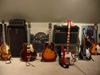
Can anyone tell me what a really nice mid 60's Selmer Zodiac 30 is worth these days? I rarely see them offered and this one has the original 2-12" Celestions with stand and footswitch. For those who have not seen these up close they have the really neat crocodile tolex with the "blinking green eye" tremolo. In my opinion they have thee sound and more versatility than the Vox AC30TB!
They are fantastic amps. I've always wanted one. That particular example looks to be in very good condition, and the "crocodile tolex" is prized by Selmer freaks (like me). I'd say anywhere from $850 to $1100 U.S. Check this site:
http://www.ampaholics.com
Click under the Selmer link. They've got some on offer there.
Of course, if you ever want to sell the one you've got, you've got a willing purchaser right here.
http://www.ampaholics.com
Click under the Selmer link. They've got some on offer there.
Of course, if you ever want to sell the one you've got, you've got a willing purchaser right here.
Marshall, Vox, Selmer.......all these vintage amps have become quite expensive. The Hiwatt and Orange/Matamp vintage models listed on that website are for sale at much more reasonable prices......and all three had a reputation of outstanding reliability and build quality above more common amps. The Matamp is still being produced in Huddersfield in small quantities as far as I know, and were functionally exactly the same as Orange amps.
That link is very interesting, I must say. Many other players agree that Marshall and Vox amps were bettered by lesser known and lesser distributed British amps in the 60's and 70's. Peter Green used a low powered Matamp and I hear they were very popular in UK recording studios during the early days of rock. There was Hiwatt's association with The Who, and Selmer was used by Cream in the early days. Marshall, Vox, Fender, and Ampeg did not totally rule the early rock world. Matamp/Orange, Selmer, Sunn, and Acoustic are four other brands that made just as strong a showing based on sonics if not in total sales. Matamp is probably the only amp brand in that list of 8 that kept building amps along their original tube circuitry with no loss of quality on a continual basis until now, if what I have read is correct.
You would think that somebody would have resurrected the Selmer brand like some other vintage brands have been recently.
That link is very interesting, I must say. Many other players agree that Marshall and Vox amps were bettered by lesser known and lesser distributed British amps in the 60's and 70's. Peter Green used a low powered Matamp and I hear they were very popular in UK recording studios during the early days of rock. There was Hiwatt's association with The Who, and Selmer was used by Cream in the early days. Marshall, Vox, Fender, and Ampeg did not totally rule the early rock world. Matamp/Orange, Selmer, Sunn, and Acoustic are four other brands that made just as strong a showing based on sonics if not in total sales. Matamp is probably the only amp brand in that list of 8 that kept building amps along their original tube circuitry with no loss of quality on a continual basis until now, if what I have read is correct.
You would think that somebody would have resurrected the Selmer brand like some other vintage brands have been recently.

http://www.rockometer.com/amps/park.html
http://www.guitarsite.com/discussion/messages/21735.shtml
http://www.joerichardsonexpress.com/
http://www.ampaholics.org.uk/DISCLAIMER.htm
http://vintageamps.com/PlexiPalaceUBBcgi/ultimatebb.cgi?ubb=search (Search Words: "Marcus Hardy")
I don't have my own warning site, but "Marshall 4x12, late 60's basketweave, all original, excellent condition", seems an inappropriate description for a mid 70's date coded, plastic handled, chipboard backed, re-grilled and badged, damaged-coned quad box. I guess I should be happy I actually received anything from this questionable fellow.
http://www.guitarsite.com/discussion/messages/21735.shtml
http://www.joerichardsonexpress.com/
http://www.ampaholics.org.uk/DISCLAIMER.htm
http://vintageamps.com/PlexiPalaceUBBcgi/ultimatebb.cgi?ubb=search (Search Words: "Marcus Hardy")
I don't have my own warning site, but "Marshall 4x12, late 60's basketweave, all original, excellent condition", seems an inappropriate description for a mid 70's date coded, plastic handled, chipboard backed, re-grilled and badged, damaged-coned quad box. I guess I should be happy I actually received anything from this questionable fellow.
Two wrongs don't make a right, but three rights do make a left.
Some of the best advice I ever received, considering you are more interested in sound than in collecting, is to only buy late model used gear in very good to mint condition from a stable manufacturer. New gear at dealer wholesale is also OK, and there are distressed dealers all over the place these days. Vintage gear is unreliable due to aging of certain components, no matter who you get it from. You have to be able to fix it yourself if economical operation is an issue, and I discount VERY heavily these days for anything over 10 years old. Most desireable vintage amps have been copied and improved upon by many boutique amp manufacturers. Weber VST has reproduction speakers for sale, but NOS tubes are drying up at reasonable prices and NOS electrolytics are very questionable and will require a careful reforming, but will surely die at a future date regardless if they were used much or not. THERE IS BASICALLY NO WAY TO KEEP A VINTAGE AMP A VINTAGE AMP AT A REASONABLE PRICE. NOS part prices have become outrageous. The modern tube amps built right with better components will outlast old vintage amps. It makes more sense to keep current manufacturers in business than jacking up prices on old gear, so I decided to leave the old gear behind. I replaced my old stereo tube amps with new Conrad-Johnson, and no amount of tweaking will get those old amps to come up to the quality level of new C-J gear. The same is true for guitar amps. No vintage tube amp I ever heard sounds better than my Traynor YCV40; in fact, the YCV40 is a lot quieter because of the DC heater supplies and regulated HV supplies. They are easily available for less than $400 on the used market in great condition. Therefore, no vintage amp could possibly be worth more than $400 to me.
The vintage guitar amp market is due a big markdown just like the audiophile amp market has experienced. My friend is selling off antique motors he has collected over the past 20 years because he sees the way the economy is headed and he is unloading as fast as he can while prices are high, outrageously high. I gave just under dealer wholesale cost for my C-J stack of three current production components because dealers are distressed and taking what they can get. I probably overpaid a bit.
I paid less than 1/3 MSRP for my last bass, a real Spector and not an Asian import, in mint and almost unused condition. Not a scratch anywhere. I expect the trend to continue. Some guys will eventually catch on that better to buy a mint used boutique amp for less than half than a vintage amp that's jacked up twice of what it ought to be. I paid $389 delivered for a demo Traynor YCV40 with the full factory warranty, and the MSRP was around $800. If I want a vintage amp, I think I can get one at a much better price a few years from now, and if not, why bother when deals on new gear like my Traynor will be around for a long time, and possibly even better deals. We are simply glutted with a lot of things that will be getting dumped in an economic downturn. And i don't want to get caught holding discounted goods instead of cold hard cash.
The vintage guitar amp market is due a big markdown just like the audiophile amp market has experienced. My friend is selling off antique motors he has collected over the past 20 years because he sees the way the economy is headed and he is unloading as fast as he can while prices are high, outrageously high. I gave just under dealer wholesale cost for my C-J stack of three current production components because dealers are distressed and taking what they can get. I probably overpaid a bit.
I paid less than 1/3 MSRP for my last bass, a real Spector and not an Asian import, in mint and almost unused condition. Not a scratch anywhere. I expect the trend to continue. Some guys will eventually catch on that better to buy a mint used boutique amp for less than half than a vintage amp that's jacked up twice of what it ought to be. I paid $389 delivered for a demo Traynor YCV40 with the full factory warranty, and the MSRP was around $800. If I want a vintage amp, I think I can get one at a much better price a few years from now, and if not, why bother when deals on new gear like my Traynor will be around for a long time, and possibly even better deals. We are simply glutted with a lot of things that will be getting dumped in an economic downturn. And i don't want to get caught holding discounted goods instead of cold hard cash.



Yes Traynor is still made by Yorkville, a company that has an excellent warranty.
Life, as with music, often requires one to let go of the melody and listen to the rhythm
Please join the Official RickResource Forum Facebook Page https://www.facebook.com/groups/379271585440277
Please join the Official RickResource Forum Facebook Page https://www.facebook.com/groups/379271585440277
The Traynor YCV series of combo amps is the standard that you judge all high production tube amps against. Fender, Ampeg, Marshall, Vox, Peavey, Crate, Mesa Boogie and any other volume manufacturer has nothing that is price competitive for the same level of what you actually get. The vintage amps really don't sound better. My father says my modded Traynor sounds as good as anything he ever heard in the old days, except it doesn't have the hissing and popping issues of those old amps. Collecting vintage amps when you have a player viewpoint is throwing money away and dragging trouble in the door. Amps should be shoved on down the line when repair issues become a big problem. The best place to be in the vintage market right now is on the selling side. The newer tubes on the market have gotten rid of the need to buy NOS tubes, except for fixing up a museum piece, and that is another market due some readjustment. I stopped buying NOS tubes.
I would like to dump my Heathkit tube amps for what I have in them, but the collapse of the Asian collector market that shoved the prices up to obscene levels has probably axed that opportunity forever. The potting of the power transformers is what caused the high failure rates, and returning the amps to stock gives you a very unreliable amp for extended listening, sort of like a vintage Vox AC30 tube amp. Both are junk amps by modern reliability standards in stock form and totally undeserving of a serious player's or listener's time and money. Give your money to somebody like Yorkville who are actually doing you a favor, if you are a player. I am considering selling some things I have, because I could always pick them back up later at a cheaper price and use the money now for other things/investments.
I would like to dump my Heathkit tube amps for what I have in them, but the collapse of the Asian collector market that shoved the prices up to obscene levels has probably axed that opportunity forever. The potting of the power transformers is what caused the high failure rates, and returning the amps to stock gives you a very unreliable amp for extended listening, sort of like a vintage Vox AC30 tube amp. Both are junk amps by modern reliability standards in stock form and totally undeserving of a serious player's or listener's time and money. Give your money to somebody like Yorkville who are actually doing you a favor, if you are a player. I am considering selling some things I have, because I could always pick them back up later at a cheaper price and use the money now for other things/investments.

what have ya got?
I too disagree with "older is better". But I like older amps with tagboards cause they're easier to tinker with. I like the simplicity of the older bassmans/JTM45 circuitry.
Recapping my MESA 400+ was a very unpleasant situation. The design makes for a tedious task.
I'll be looking into that Traynor soon.
I too disagree with "older is better". But I like older amps with tagboards cause they're easier to tinker with. I like the simplicity of the older bassmans/JTM45 circuitry.
Recapping my MESA 400+ was a very unpleasant situation. The design makes for a tedious task.
I'll be looking into that Traynor soon.
Buy it before someone else does
I have a pair of Heathkit W5M monoblocks with the early Peerless output transformers, so they could go back to the late 50's. I have a copy of the original assembly manual. I have two new Hammond power transformers for them. Also a lot of tested good modern high grade computer electrolytics to up the power supply capacitance. It has the audiophile correct CLC "pi" type power supply with a capacitor input filter for stiffness and a 7 Henry choke, but of course the capacitor bank is weak as caps were expensive in the 50's and the choke was there to smooth things out.
Tung-Sol 5881 or JJ 6L6GC output tubes should spiff up the Traynor YCV40. I liked JJ or Ei tubes a bit better than the Sovtek tubes in the front end, but at least the Sovtek tubes were quiet. Ei tubes have the most sparkle and upper harmonics. JJ tubes were overall better balanced top to bottom. I had Tung-Sol 5881 tubes laying around, so of course I tried them and they are fabulous in the bottom end and turn the YCV40 into a good little tube bass practice amp when a Celestion G12H80 was installed. Didn't expect an open back cab to go down that low and loud on 40 watts and a single 12" speaker. Don't forget that the YCV40 autobiases itself and doesn't need matched pairs, something the higher priced amps rarely do. It's also at least half solid state if you study the schematic, but the solid state is used in places that don't affect the sound much and does a lot of good things like voltage regulation, DC heaters, tube rectifier simulation, autobiasing, etc. Mesa has a better quality of circuit board, but it should for the price.
Tung-Sol 5881 or JJ 6L6GC output tubes should spiff up the Traynor YCV40. I liked JJ or Ei tubes a bit better than the Sovtek tubes in the front end, but at least the Sovtek tubes were quiet. Ei tubes have the most sparkle and upper harmonics. JJ tubes were overall better balanced top to bottom. I had Tung-Sol 5881 tubes laying around, so of course I tried them and they are fabulous in the bottom end and turn the YCV40 into a good little tube bass practice amp when a Celestion G12H80 was installed. Didn't expect an open back cab to go down that low and loud on 40 watts and a single 12" speaker. Don't forget that the YCV40 autobiases itself and doesn't need matched pairs, something the higher priced amps rarely do. It's also at least half solid state if you study the schematic, but the solid state is used in places that don't affect the sound much and does a lot of good things like voltage regulation, DC heaters, tube rectifier simulation, autobiasing, etc. Mesa has a better quality of circuit board, but it should for the price.
I (and most of the rest of the world) think that Ampeg SVT's and B-15N's are the tube bass amps that all others are compared to. Having said that, there are a lot of other nice bass amps out there including Traynors.
I had an orange Marshall super Lead 100 watt head once.
That Selmer is beautiful, there are a lot of nice ones in the new The Tube Amp Book by Aspen Pittman.
Nothing sounds like an old tube amp for guitar.
Hey Phil, where have you been Russia again? Do the toilets flush sideways there?
I had an orange Marshall super Lead 100 watt head once.
That Selmer is beautiful, there are a lot of nice ones in the new The Tube Amp Book by Aspen Pittman.
Nothing sounds like an old tube amp for guitar.
Hey Phil, where have you been Russia again? Do the toilets flush sideways there?