
http://guitarinternational.com/2012/06/ ... itar-gods/
1950s and 1960s
The origins of modern guitar playing, and the importance of the guitar virtuoso, might be traced back to early 20th century roots music, the blues, and the increasing visibility of electric guitar players and rock and roll in the 1950s.
Early pioneers like T-Bone Walker and Robert Johnson demonstrated what could be achieved with the instrument as a force of raw power and technical experimentation. This influence found a form in the rockabilly and gradual transition of traditional blues into commercial pop through the likes of Chuck Berry, Bo Diddley, and Dan Cedrone by the late 1950s. Berry’s Gibson solos, chords and infectious stage persona particularly helped inspire a generation of young guitarists in the United States and the United Kingdom.
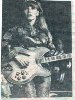
Roger McGuinn
The development of blues guitar into rock guitar, its use in pop, and the incorporation of everything from Indian sitar music to classical and folk anchored the great guitarists of the 1960s.
Keith Richards’ use of Fender, Les Paul and Telecaster guitars was important for creating The Rolling Stones’ distinct sound, while George Harrison’s use of overdrive and ongoing experimentation with melody and effects in The Beatles played a key role in changing guitar styles.
For me, however, it would be technical innovators like The Byrd’s Roger McGuinn, and his creation of distinctive tones through a Rickenbacker, that would take guitar playing to a more virtuoso level.
In a similar way, Eric Clapton’s Gibson fusion of country, blues and overdriven effects, coupled with riffs and wah wah pedals, joined to the experimentation of Jeff Beck, Peter Townshend and Peter Green to take blues in new directions.
Above all, however, it was Jimi Hendrix’s wah wah pedals, high bends, longer solos and effects manipulation that marked him out as one of the most significant ‘guitar god’s of all time.
