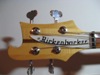
I am largely in agreement with you here Dane. I had been struggling to understand your long-held outspoken opposition to the Hipshot bridge until you spelt it out in this post (I guess I'm a bit slow on the uptake). In the case of the Hipshot, a bridge with the same functionality could have been designed without the bulbous tail that mimics the shape of the Rickenbacker tailpiece and, as such, the Hipshot would appear to infringe upon RIC's trademark. In the case of the Lollar pickup, any discernible difference in appearance would impact upon the desirability of the pickup, which suggests that there is a trademark infringement if, as John Hall states, there is a multiplicity of designs that could replicate the functionality of the HS without mimicking the appearance of the Rickenbacker product.aceonbass wrote: Have you seen the Lollar HS? It doesn't have a different appearance. It looks the same, and that's the core of the trade mark issue. Besides that, anyone, especially Lollar, could have filed a challenge to the trade mark in the federal courts any time in the last several years and didn't. So it's kinda like the way Gibson, Fender, and others lost many of their trade mark rights, but in reverse. Lollar, and Hipshot for that matter, should have made a product that was functionally interchangeable, but didn't. They both make products that LOOKED exactly, or kinda like what they were replacing in order to sell them to people who they knew wouldn't buy them unless they LOOKED like what they were replacing. That LOOK is the basis of the trade mark. In the case of Lollar's pickup, it's made to look like an original HS and fit RIC's surround. In the case of Hipshot's bridge, it's made to cover the same footprint when it didn't have to. The offending parties just take all that for granted, and even though it stares you in he face, I think it just doesn't occur to most people.
My only point of difference is that a court may well take a more nuanced approach - hence my use of language as "appear to infringe" and "suggests... a trademark infringement". Until the argument has been tested in court (and potentially subject to an appeals process) or there has been an out-of-court settlement (always a preferable solution), there is no definitive answer to the question, though there may be a strong legal opinion towards one side or the other. Whilst there is a widely-held belief that the law is black-and-white, this is not always the case - interpretation at the court level is subject to change over time. Additionally, small differences in fact can result in what appears to be a radical difference in application of the law to different cases. Further, there can be variations in interpretation and application of the law between different courts and different judicial officials in respect of identical facts. When talking about the potential outcome of a legal process, it is rarely possible to have 100% certainty. This is one of the reasons why litigation is usually a last resort in resolving a dispute.