
(We now join this RM 1999 restoration already in progress)
Moderators: rickenbrother, ajish4
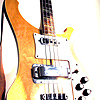
Re: (We now join this RM 1999 restoration already in progres
Awesome, Mark! Awesome!

Re: (We now join this RM 1999 restoration already in progres
Heh heh! Maybe I'll bring it back later on a different bass!BigJohnAZ wrote:Love the FG, even though the PumpkinGlo was starting to grow on me
Thanks guys!
Re: (We now join this RM 1999 restoration already in progres
Having played around on the bass for a few days now, I'm noticing it's tonal characteristics. Compared to the '68 4001, the RM has more of a deeper gutteral sound whereas the '68 has more of a twang to it. Making a pickup-to-pickup comparison, the toaster on the '68 is warm and full, but also has a nice treble bite to it, but the '64 toaster is much mellower, almost as if the treble pot's been backed off a tad. This difference surprises me since both pickups read approx 7.5 and appear to produce the same volume. I have to wonder how much the wiring harnesses affect the pickups to result in this difference.
The horseshoe of the '68 has a nice warm attack, but is significantly mellower than the '64 HS which is significantly louder and brighter. This difference is less surprising since the HS mags on the '68 are more porous which results in a weaker magnetic pull than the denser magnets on the '64 HS. Plus, the bobbin designs are very different, too.
So with the two '68 pickups occupying similar frequency ranges and the '64 pickups being mellow vs brash, the two basses actually sound much more dissimilar than I expected. The RM sounds a lot like Squire's on 'The Yes Album'. I'll set up some mics tomorrow and do some audio/video testing.
The horseshoe of the '68 has a nice warm attack, but is significantly mellower than the '64 HS which is significantly louder and brighter. This difference is less surprising since the HS mags on the '68 are more porous which results in a weaker magnetic pull than the denser magnets on the '64 HS. Plus, the bobbin designs are very different, too.
So with the two '68 pickups occupying similar frequency ranges and the '64 pickups being mellow vs brash, the two basses actually sound much more dissimilar than I expected. The RM sounds a lot like Squire's on 'The Yes Album'. I'll set up some mics tomorrow and do some audio/video testing.

Re: (We now join this RM 1999 restoration already in progres
Well, I'll be awaiting this - now where did I put my popcorn.....walker wrote:The RM sounds a lot like Squire's on 'The Yes Album'. I'll set up some mics tomorrow and do some audio/video testing.

Re: (We now join this RM 1999 restoration already in progres
Check in Engineering.johnallg wrote:...now where did I put my popcorn.....


Re: (We now join this RM 1999 restoration already in progres
Great Fireglo, Mark. 
Re: (We now join this RM 1999 restoration already in progres
Here's an abbreviated pictorial history of the restoration:
I purchased the bass from fellow RRF'er Gerry Fergusson in 2006.


The only original hardware on it was the tuners and the jackplate. The pickups and harness were from late 1971, and the harness found a new home in Dave Pascoe's '72 Azureglo. It came in the OHSC which had an extra latch on it to replace the broken one. I found a replacement for it from a lapsteel case.


The body panel of the case was broken after the long journey from the Merry Old Land Of Oz, so I inserted a new plank of wood between the old wall of the case and the blue lining and glued & clamped it all together.

Under the hood, the bass had taken a bit of a beating from extra routing and a gazillion screw holes, and someone had sanded down the top/rear of the body, compromising the original shape:


Over the course of two years, I managed to track down the period correct hardware the bass needed - the toaster pickup, which I totally lucked out on for $80


...the tailpiece/bridge, the strap pins, the harness, a hand-cut Bakelite nut, and a pickguard & thumbrest from Tony Dudzik @ Pickguardian. Dane Wilder originally made one for me, but that had to be replaced since it no longer fit when the body was reconstructed. The horseshoe pickup is a 8-4 pole lapsteel conversion, and I cut the surround from the same lapsteel.


That brought the bass correct hardware-wise, but there was still the routing damage and the funky Pumpkin-glo color that needed tending too. Also, the headstock was pitched forward causing the strings to pop off when played, and the neck had a bit of an S-curve to it. Here's the angle of the RM headstock compared to the '68 4001, l-to-r.

At that point in 2008, I sent the bass to Chip Little for neck & fretwork which became a 5 year odyssey of misfortune that I believe I've already outlined. To his credit, he did correct the headstock tilt. The bass is strung with DR Nickel roundwound strings (100-80-65-45) and tuned standard.

I purchased the bass from fellow RRF'er Gerry Fergusson in 2006.
The only original hardware on it was the tuners and the jackplate. The pickups and harness were from late 1971, and the harness found a new home in Dave Pascoe's '72 Azureglo. It came in the OHSC which had an extra latch on it to replace the broken one. I found a replacement for it from a lapsteel case.
The body panel of the case was broken after the long journey from the Merry Old Land Of Oz, so I inserted a new plank of wood between the old wall of the case and the blue lining and glued & clamped it all together.
Under the hood, the bass had taken a bit of a beating from extra routing and a gazillion screw holes, and someone had sanded down the top/rear of the body, compromising the original shape:
Over the course of two years, I managed to track down the period correct hardware the bass needed - the toaster pickup, which I totally lucked out on for $80
...the tailpiece/bridge, the strap pins, the harness, a hand-cut Bakelite nut, and a pickguard & thumbrest from Tony Dudzik @ Pickguardian. Dane Wilder originally made one for me, but that had to be replaced since it no longer fit when the body was reconstructed. The horseshoe pickup is a 8-4 pole lapsteel conversion, and I cut the surround from the same lapsteel.
That brought the bass correct hardware-wise, but there was still the routing damage and the funky Pumpkin-glo color that needed tending too. Also, the headstock was pitched forward causing the strings to pop off when played, and the neck had a bit of an S-curve to it. Here's the angle of the RM headstock compared to the '68 4001, l-to-r.
At that point in 2008, I sent the bass to Chip Little for neck & fretwork which became a 5 year odyssey of misfortune that I believe I've already outlined. To his credit, he did correct the headstock tilt. The bass is strung with DR Nickel roundwound strings (100-80-65-45) and tuned standard.
Re: (We now join this RM 1999 restoration already in progres
Fast-forward to early 2013 when phase 2 began - replacing the top body wing and inserting a new neck block to address the damage there, and giving the bass a Fireglo refin.
The first step was stripping off the lovely Pumpkin-glo:

then removing the body wings:


then cutting out enough of the neck to smooth over all the routing, and gluing in the new neck block:


cutting the new top body wings - option B was selected, gluing it and the original bottom wing to the neck:


removing the fretboard:


Boy, there's a face only Herman Munster's mother could love... sheesh. Nice!
Look at how crazy-thin the neck is without the fretboard - that's 7/8 of an inch.

Routing the new cavities, putting the fretboard back on, and putting the tailpiece on and stringing it up to see how the neck looks.


The first step was stripping off the lovely Pumpkin-glo:
then removing the body wings:
then cutting out enough of the neck to smooth over all the routing, and gluing in the new neck block:
cutting the new top body wings - option B was selected, gluing it and the original bottom wing to the neck:
removing the fretboard:
Boy, there's a face only Herman Munster's mother could love... sheesh. Nice!
Look at how crazy-thin the neck is without the fretboard - that's 7/8 of an inch.
Routing the new cavities, putting the fretboard back on, and putting the tailpiece on and stringing it up to see how the neck looks.
Last edited by walker on Tue Aug 06, 2013 6:47 am, edited 3 times in total.
Re: (We now join this RM 1999 restoration already in progres
Prepping the headstock with vinyl putty before painting:


Getting the dirt & grey discoloration out of the wood on the back of the neck using oxalic acid. I learned this trick from Tim Ellis at TC Ellis Guitars.


~AND NOW~
PAINTING!


Getting the dirt & grey discoloration out of the wood on the back of the neck using oxalic acid. I learned this trick from Tim Ellis at TC Ellis Guitars.
~AND NOW~
PAINTING!
Re: (We now join this RM 1999 restoration already in progres
Reassembly:


I managed to get the strings lined up just about perfectly over the HS poles.

All four pots are dated the 25th week of 1964.

Complete:


And back to it's home:

I managed to get the strings lined up just about perfectly over the HS poles.
All four pots are dated the 25th week of 1964.
Complete:
And back to it's home:

Re: (We now join this RM 1999 restoration already in progres
Mark, That is just fantastic! Very well documented and an inspiration. Thank you for sharing this!
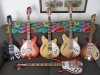
Re: (We now join this RM 1999 restoration already in progres
How could anyone not be proud of this...super job, Mark, and a great story from beginning to end....walker wrote:Reassembly:
I managed to get the strings lined up just about perfectly over the HS poles.
All four pots are dated the 25th week of 1964.
Complete:
And back to it's home:

Re: (We now join this RM 1999 restoration already in progres
Nice job, Mark. I like how you did the shading under the guard and surround!
-
Kopfjaeger

- Advanced Member
- Posts: 1908
- Joined: Fri Jun 24, 2011 8:49 am
Re: (We now join this RM 1999 restoration already in progres
Mark,
Awesome job! I like how you chronicled the entire journey with all the fotos at the end! I can't wait to see & hear this bass in person!
Sepp
Awesome job! I like how you chronicled the entire journey with all the fotos at the end! I can't wait to see & hear this bass in person!
Sepp
Vintage/Classic Rickenbacker Enthusiast!
1972 4001 Jetglo
1973 4001 Burgundyglo
2011 4003 Jetglo
1986 4003 Shadow
1972 4001 Jetglo
1973 4001 Burgundyglo
2011 4003 Jetglo
1986 4003 Shadow
Re: (We now join this RM 1999 restoration already in progres
You have balls of steel, mark!