
You can put this one to bed by emailing or calling Andy Babiuk at the HOG.
Andy handled many of the Fabs guitars first hand and gained access to thousands of Beatle pics some of which he was forebidden to print in his book due to copyright reasons.
I met a few of the guys/firms he was working with in the 90's including a guy named Wayne Rogers who owns Retro Music. I've never seen so many non-circulated Beatle photos as Wayne has in his collection.
I'm confident Andy will provide the correct answer to the fingerboard mystery. lol
Good luck!
325 Questions
Moderators: rickenbrother, ajish4
Peter:
I think the finish IS NOT original. Originally the fretboard of a Rickenbacker Capri from 1958 was unfinished. Lennon's too.
I'm sure the 'finishing' was done at 'Burns' in september 1963.
Mr. Les Andrews opinion is very important, but he was only in charge of the the refret. I believe the job of refinshing the instrument was made by Derek Adams. Could you contact him?
Or maybe, is there any register about what was done?
About if there was enough time to spoil the fretboard finishing by using the guitar, my answer is: Perhaps.
Don't forget the guitar was also retouched in black, but if you see pics from the Ed Sullivan show, the instrument is again in poor condition. He really USED that guitar. And it seems he wasn't a careless man with his guitars.
I agree with Larry too. The coach painter (Charly Bantam) only sprayed it black.
I do appreciate your comments too.
All the best.
Marcelo.
I think the finish IS NOT original. Originally the fretboard of a Rickenbacker Capri from 1958 was unfinished. Lennon's too.
I'm sure the 'finishing' was done at 'Burns' in september 1963.
Mr. Les Andrews opinion is very important, but he was only in charge of the the refret. I believe the job of refinshing the instrument was made by Derek Adams. Could you contact him?
Or maybe, is there any register about what was done?
About if there was enough time to spoil the fretboard finishing by using the guitar, my answer is: Perhaps.
Don't forget the guitar was also retouched in black, but if you see pics from the Ed Sullivan show, the instrument is again in poor condition. He really USED that guitar. And it seems he wasn't a careless man with his guitars.
I agree with Larry too. The coach painter (Charly Bantam) only sprayed it black.
I do appreciate your comments too.
All the best.
Marcelo.

Marcello: As with all new models, there is often some variation in the manner in which they are produced. I would argue that this was the same for Rickenbacker during the late 1950s and early 1960s. Just when one is sure that a particular variation was not produced, voila, up it comes! I have seen many examples of these over the years.
I believe that John William's comments require our attention
I am still waiting on Les Andrews. While he did the re-fret he may have some information about the refinishing. Being a famous instrument, he may have a memory of the process.
I am not at all sure that Burns did any refinishing on this instrument. The name Derek Adams has arisen on a number of occasions. I have not been able to make contact. True, he did refinish some instruments but there has been no confirmation that he did in fact do the job. Lest this seem too unduly churlish, it will be remembered that it was initally thought by the experts that Adams painted the instrument black. We now know this to be inaccurate.
Who did the retouching? Was the fretboard lacquered at the same time. Most of all, who was paying attention to these details in any event.
You have raised some interesting questions and I hope we will get to the bottom of them. Perhaps we can find Derek Adams or a relative or friend of Charles Bantam who may have more to offer.
John Winston also makes a good point about contacting Andy Babiuk. These question could certainly be put to him too. I would have thought, however, that Andy might have included this in his book had the details been known.
The detectives are on the case.

I believe that John William's comments require our attention
It is entirely probable that Lennon's 1958 Model 325 was oiled and remotedly possible that it was lightly lacquered. I would not argue that it was not or could not have been later. It is just hard re-create these early days and rule out inconsistencies from the factory.My .02 cents worth: My two '58 365s do not have lacquered fretboards. My '59 315 DOES NOT have a lacquered fretboard. My '59 345 DOES have a lacquered fretboard. All are factory original.
That being said, the non-lacquered fretboards are certainly oiled. They are NOT bare. Repeat, they are NOT bare.
My .02 cents worth: My two '58 365s do not have lacquered fretboards. My '59 315 DOES NOT have a lacquered fretboard. My '59 345 DOES have a lacquered fretboard. All are factory original.
That being said, the non-lacquered fretboards are certainly oiled. They are NOT bare. Repeat, they are NOT bare.
I am still waiting on Les Andrews. While he did the re-fret he may have some information about the refinishing. Being a famous instrument, he may have a memory of the process.
I am not at all sure that Burns did any refinishing on this instrument. The name Derek Adams has arisen on a number of occasions. I have not been able to make contact. True, he did refinish some instruments but there has been no confirmation that he did in fact do the job. Lest this seem too unduly churlish, it will be remembered that it was initally thought by the experts that Adams painted the instrument black. We now know this to be inaccurate.
Who did the retouching? Was the fretboard lacquered at the same time. Most of all, who was paying attention to these details in any event.
You have raised some interesting questions and I hope we will get to the bottom of them. Perhaps we can find Derek Adams or a relative or friend of Charles Bantam who may have more to offer.
John Winston also makes a good point about contacting Andy Babiuk. These question could certainly be put to him too. I would have thought, however, that Andy might have included this in his book had the details been known.
The detectives are on the case.
Life, as with music, often requires one to let go of the melody and listen to the rhythm
Please join the Official RickResource Forum Facebook Page https://www.facebook.com/groups/379271585440277
Please join the Official RickResource Forum Facebook Page https://www.facebook.com/groups/379271585440277
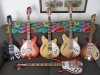
Peter: I'm gonna be the 'fly in the ointment' again, and say that IMO when the guitars were factory fresh in 1958 and in unsold condition, the fretboards were not lacquered or oiled. IF they were oiled, then it soaked it up straight away, and gave the appearance of not being oiled at all...
Most of the pics F.C. Hall took of the new model 325s in early 1958 show a very light shade of wood on the fretboards, like dry wood.
I know what JWilli has said, but is he referring to fretboard oil applied at the time the guitars were made? (Jwilli don't cuss me too bad)
Most of the pics F.C. Hall took of the new model 325s in early 1958 show a very light shade of wood on the fretboards, like dry wood.
I know what JWilli has said, but is he referring to fretboard oil applied at the time the guitars were made? (Jwilli don't cuss me too bad)
John: I appreciate your first-hand obervation in this regard. This may have been a consistent and standard practice. I confess, to having some surprise that the surface of the fretboard would go out completely dry. Your point is, however, taken.
Another thing to consider, is that oiled fretboards would not take lacquer too well and so your observation may hold up over the long haul.
You are not a fly in the ointment at all.....Help me help me help me.
Another thing to consider, is that oiled fretboards would not take lacquer too well and so your observation may hold up over the long haul.
You are not a fly in the ointment at all.....Help me help me help me.
Life, as with music, often requires one to let go of the melody and listen to the rhythm
Please join the Official RickResource Forum Facebook Page https://www.facebook.com/groups/379271585440277
Please join the Official RickResource Forum Facebook Page https://www.facebook.com/groups/379271585440277
The plot thickens and thickens Larry. Yet another lead and an interesting one as well. Most intriguing.Another interesting thing, my friend Alan Stratton who was there at the time believes V81 would have been sprayed black by George Harrison's brother Peter. He also worked in a garage doing body work and spraying taxis black. He believes they wouldn't have bothered to go to Wallasey with the guitar nor would they have trusted just anybody to do the job. Now if we could just get through to Peter Harrison.
Life, as with music, often requires one to let go of the melody and listen to the rhythm
Please join the Official RickResource Forum Facebook Page https://www.facebook.com/groups/379271585440277
Please join the Official RickResource Forum Facebook Page https://www.facebook.com/groups/379271585440277
Hi everybody:
I don't know about every model or guitar produced by Rickenbacker in those years.
I mean, if their factory fretboards weren't lacquered or oiled, or not... but I'm sure about the V81 wasn´t lacquered or oiled from the factory.
And as Peter says: oiled fretboards definitely wouldn't take lacquer well.
It was, in my opinion, slightly sprayed by september 1963. Not before.
But, let's keep on investigating.
I don't know about every model or guitar produced by Rickenbacker in those years.
I mean, if their factory fretboards weren't lacquered or oiled, or not... but I'm sure about the V81 wasn´t lacquered or oiled from the factory.
And as Peter says: oiled fretboards definitely wouldn't take lacquer well.
It was, in my opinion, slightly sprayed by september 1963. Not before.
But, let's keep on investigating.
Marcelo
One thing to keep in mind when talking about vintage ricks from the 1950's is that their really is no true consistancy.They were not only manufacturing for customers,but also experimenting with different techniques.
Inconsistancies were even present in the 1960's.A perfect example is the use of short pole toasters pickups for the neck position.Some say it stopped around 1964,but I have seen it on late sixties ricks.
One thing to keep in mind when talking about vintage ricks from the 1950's is that their really is no true consistancy.They were not only manufacturing for customers,but also experimenting with different techniques.
Inconsistancies were even present in the 1960's.A perfect example is the use of short pole toasters pickups for the neck position.Some say it stopped around 1964,but I have seen it on late sixties ricks.
-
larrywassgren
- Veteran RRF member
- Posts: 401
- Joined: Wed Aug 16, 2000 8:34 pm
I know that my '58 325 never had any lacquer on the fretboard but was it lightly oiled? I can't say for sure as I never saw it when it left the factory. Over the years it's darkened from playing. My opinion is Lennon's never had any oil on the fretboard as you can see photos in the Japanese Rickenbacker book and also Richard Smith's book and the fretboard is very light in color. Oil would have darkened it. By the time Astrid took those great shots in Hamburg Lennon had already played it some(maybe a month) so the finish already looks a little darker. Peter, have you been in contact with Alan Stratton yet? He does believe Peter Harrison would have refinished Lennon's '58 to black. It's frustrating as he knew Peter Harrison as he went to school with him and Peter would be happy to talk with him. He still lives at Friar Park but how do you call him? It's like trying to talk to Paul McCartney or Ringo Starr. We'll do our best to get to him!
Hey, have you all seen this?
http://www.tonewerks.com/page10.html
That's the EXACT rosewood on the V81.
Good work Joe!
All the best, Marcelo.
http://www.tonewerks.com/page10.html
That's the EXACT rosewood on the V81.
Good work Joe!
All the best, Marcelo.
NOTE: THIS IS MY OWN THEORIE ABOUT THESE FACTS, AND IS NOT TO DESCREDIT ANYBODY'S PREVIOUS INVESTIGATION ON THE SAME SUBJECT.
Lennon’s Rickenbacker 325 Capri 1958 (V81)
“The Refinishing Affaire”
INTRODUCTION:
First of all, we can state definitely that the V81 Lennon's Rickenbacker 325 from 1958, was FACTORY MADE with an UNFINISHED FRETBOARD. There are several pictures, from Hamburg 1961, clearly showing that the fretboard has just begun to be 'touched'.
__________________________________________________
THE REFINISHING: WHEN IT HAPPENED?
On his wonderful article ‘Baby’s in black’ from his web-page PeterMcCormack says:
"The first photo that is currently available of John Lennon's 325 in black finish was taken on September 21, 1962 during the Beatles' performance at the Tower Ballroom. This photo is shown below."
That photo was certainly taken at the Tower Ballroom, and the photographer was Michael McCartney (Paul’s younger brother) since it appears on one of his books, but… WHEN IT WAS REALLY TAKEN?
The Beatles, with Ringo Starr on drums, played the Tower Ballroom, in New Brighton, exactly on 6 times during 1962.
1-September 14th: Sam Leach’s “Operation Big Beat”. Six groups’ show, headed by The Beatles.
2- September 21st: A special five-group evening to celebrate Rory Storm’s birthday.
3- October 12nd: 12-act presentation with Little Richard heading the bill.
4- November 23rd: the 12th Annual Lancashire and Cheshire Arts Ball.
5- December 1st: The Beatles were added to the bill just one day before the gig in order to boost poor ticket sales.
6- December 7th: The Beatles headed a seven-group line-up.
So, what is the evidence on this picture that it was taken on September 21st?
I, personally, don’t trust on Michael McCartney ‘dazed’ memories as to be absolutely sure that the picture was taken on that exact date.
“John can be seen in the far right in the photo playing his harmonica with his 325 Rickenbacker painted black. The Bigsby vibrato is clearly visible on his guitar which aids in its identification. September 1962 was an exceedingly busy month for the Beatles with live performances documented on September 5-10 inclusive, 12-17 inclusive, 19 and 20th.”
Yes, and 21-23 inclusive, 25-26, and 28-30 inclusive too!!!! So, when Lennon could give the guitar to Bantam for refinishing?
“They were in the studio recording on September 11, 1962. The only free day during this period was September 18, 1962. Assuming that the black paint would take a day to dry, it is probable that the refinishing took place on September 18th and in Liverpool as London was a 6 and a half hour drive away.”
We cannot assume that fresh paint on a guitar would take a day to dry. A work of ‘painting’ or ‘refinishing’ an electric guitar, always takes no less than two days to be done because of the necessary time for the paint to dry. And it could be maybe even more than that in a place like England! It’s just something impossible that Bantam´s work was to be done in just one day.
“The actual date of the refinishing is still unknown. The dates suggested herein may seem to some to speak to a level of precision that transcends the facts gathered thus far. There are, of course, other explanations that are feasible including an earlier refinishing on September 10 and 11, 1962 while the Beatles were in London recording.”
And why not a later refinishing date like October 23-25 inclusive?
Lennon’s Rickenbacker 325 Capri 1958 (V81)
“The Refinishing Affaire”
INTRODUCTION:
First of all, we can state definitely that the V81 Lennon's Rickenbacker 325 from 1958, was FACTORY MADE with an UNFINISHED FRETBOARD. There are several pictures, from Hamburg 1961, clearly showing that the fretboard has just begun to be 'touched'.
__________________________________________________
THE REFINISHING: WHEN IT HAPPENED?
On his wonderful article ‘Baby’s in black’ from his web-page PeterMcCormack says:
"The first photo that is currently available of John Lennon's 325 in black finish was taken on September 21, 1962 during the Beatles' performance at the Tower Ballroom. This photo is shown below."
That photo was certainly taken at the Tower Ballroom, and the photographer was Michael McCartney (Paul’s younger brother) since it appears on one of his books, but… WHEN IT WAS REALLY TAKEN?
The Beatles, with Ringo Starr on drums, played the Tower Ballroom, in New Brighton, exactly on 6 times during 1962.
1-September 14th: Sam Leach’s “Operation Big Beat”. Six groups’ show, headed by The Beatles.
2- September 21st: A special five-group evening to celebrate Rory Storm’s birthday.
3- October 12nd: 12-act presentation with Little Richard heading the bill.
4- November 23rd: the 12th Annual Lancashire and Cheshire Arts Ball.
5- December 1st: The Beatles were added to the bill just one day before the gig in order to boost poor ticket sales.
6- December 7th: The Beatles headed a seven-group line-up.
So, what is the evidence on this picture that it was taken on September 21st?
I, personally, don’t trust on Michael McCartney ‘dazed’ memories as to be absolutely sure that the picture was taken on that exact date.
“John can be seen in the far right in the photo playing his harmonica with his 325 Rickenbacker painted black. The Bigsby vibrato is clearly visible on his guitar which aids in its identification. September 1962 was an exceedingly busy month for the Beatles with live performances documented on September 5-10 inclusive, 12-17 inclusive, 19 and 20th.”
Yes, and 21-23 inclusive, 25-26, and 28-30 inclusive too!!!! So, when Lennon could give the guitar to Bantam for refinishing?
“They were in the studio recording on September 11, 1962. The only free day during this period was September 18, 1962. Assuming that the black paint would take a day to dry, it is probable that the refinishing took place on September 18th and in Liverpool as London was a 6 and a half hour drive away.”
We cannot assume that fresh paint on a guitar would take a day to dry. A work of ‘painting’ or ‘refinishing’ an electric guitar, always takes no less than two days to be done because of the necessary time for the paint to dry. And it could be maybe even more than that in a place like England! It’s just something impossible that Bantam´s work was to be done in just one day.
“The actual date of the refinishing is still unknown. The dates suggested herein may seem to some to speak to a level of precision that transcends the facts gathered thus far. There are, of course, other explanations that are feasible including an earlier refinishing on September 10 and 11, 1962 while the Beatles were in London recording.”
And why not a later refinishing date like October 23-25 inclusive?
TESTIMONIES:
CHRIS WARTON SAYS:
"John Lennon asked me whether I could get his guitar painted black. I cannot remember if there was any specific reason I think he just fancied a change of colour.
I told him I could get the job done by way of a favour and this was arranged. Charlie Bantam reluctantly agreed to paint it. He didn't know who the Beatles were and, to be fair, it was a time when they were not that well known outside Merseyside. He painted it with black Tekaloid enamel which was the make of coach paint used on the vehicles. It certainly had several coats of paint and it took several days to complete because I remember John kept asking if it was ready.”
Several days? My own theory is that the refinishing job was made on October 23, 24 and 25. Those are the only three altogether free days on the group’s hectic agenda during the second half of 1962, and since it took several days to complete, as Whorton says...
“The control panel retained it's gold finish but I think this was also repainted.”
That’s another interesting point. As far as I can see the pickguard WAS repainted. If we pay attention to that photo on ‘Fab Beatles Guitars’ page (photo is from the ‘Ed Sullivan Show’ rehearsals in New York) we can clearly see the pickguard has been painted using a gold paint with a copper color cast, while the nameplate has still its original brass color cast also seen in every other ’50s Rickenbacker guitar.
“I remember when we returned it to John he said we had put it back the wrong way around. Billy Kinsley from The Merseybeats can confirm all this as I remember he was with me when John got the guitar back.
As far as the precise time of year I would guess September 1962 but I cannot be absolutely sure."
Yes, I understand you’re not sure, Chris. But… What Billy Kinsley has to say about it?
On Andy Babiuk’s excellent book ‘Beatles Gear’ (page 73) we can read the following:
‘Billy Kinsley, bassist for The Merseybeats, says he played the freshly-painted black Rickenbacker before even Lennon did, because it was Kinsley’s DJ friend, Chris Whorton, who brought the refinished guitar to the Cavern. “The Beatles were doing the lunchtime session , and Tony Crane and I got there about 11.30, way before show commenced,” says Kinsley. “Chris showed me the guitar and invited me to have a play. I just couldn’t believe how good it looked resprayed black.”
The Beatles were doing the lunchtime session at the Cavern on October 26th (Mark Lewisohn’s ‘The Beatles’ Live’, page 116) *
(*NOTE: If the guitar would have been refinished on September 18th, Lennon never could have it back before a lunchtime session at the Cavern, simply because the September 19th Cavern appearance was on a night session. Their next lunchtime show was on September 20th.)
And by the way, what Chris Whorton said to Babiuk? On page 74 we can read:
“Bantam was a perfectionist. He used Tekaloid black coach paint, and he did the job at his garage in Birkenhead. It took about three days because we had to let the paint dry.”
So once again those ‘three days’ Whorton says can easily be October 24, 25 and 26.
As another point of interest to mention is quite confusing to read Babiuk stating the Mike McCartney’s photo at The Tower Ballroom as taken during the October 12nd appearance (?), while McCormack says it was from the September 21st venue.
So I’d say: Why couldn´t it be from the November or December shows?
CHRIS WARTON SAYS:
"John Lennon asked me whether I could get his guitar painted black. I cannot remember if there was any specific reason I think he just fancied a change of colour.
I told him I could get the job done by way of a favour and this was arranged. Charlie Bantam reluctantly agreed to paint it. He didn't know who the Beatles were and, to be fair, it was a time when they were not that well known outside Merseyside. He painted it with black Tekaloid enamel which was the make of coach paint used on the vehicles. It certainly had several coats of paint and it took several days to complete because I remember John kept asking if it was ready.”
Several days? My own theory is that the refinishing job was made on October 23, 24 and 25. Those are the only three altogether free days on the group’s hectic agenda during the second half of 1962, and since it took several days to complete, as Whorton says...
“The control panel retained it's gold finish but I think this was also repainted.”
That’s another interesting point. As far as I can see the pickguard WAS repainted. If we pay attention to that photo on ‘Fab Beatles Guitars’ page (photo is from the ‘Ed Sullivan Show’ rehearsals in New York) we can clearly see the pickguard has been painted using a gold paint with a copper color cast, while the nameplate has still its original brass color cast also seen in every other ’50s Rickenbacker guitar.
“I remember when we returned it to John he said we had put it back the wrong way around. Billy Kinsley from The Merseybeats can confirm all this as I remember he was with me when John got the guitar back.
As far as the precise time of year I would guess September 1962 but I cannot be absolutely sure."
Yes, I understand you’re not sure, Chris. But… What Billy Kinsley has to say about it?
On Andy Babiuk’s excellent book ‘Beatles Gear’ (page 73) we can read the following:
‘Billy Kinsley, bassist for The Merseybeats, says he played the freshly-painted black Rickenbacker before even Lennon did, because it was Kinsley’s DJ friend, Chris Whorton, who brought the refinished guitar to the Cavern. “The Beatles were doing the lunchtime session , and Tony Crane and I got there about 11.30, way before show commenced,” says Kinsley. “Chris showed me the guitar and invited me to have a play. I just couldn’t believe how good it looked resprayed black.”
The Beatles were doing the lunchtime session at the Cavern on October 26th (Mark Lewisohn’s ‘The Beatles’ Live’, page 116) *
(*NOTE: If the guitar would have been refinished on September 18th, Lennon never could have it back before a lunchtime session at the Cavern, simply because the September 19th Cavern appearance was on a night session. Their next lunchtime show was on September 20th.)
And by the way, what Chris Whorton said to Babiuk? On page 74 we can read:
“Bantam was a perfectionist. He used Tekaloid black coach paint, and he did the job at his garage in Birkenhead. It took about three days because we had to let the paint dry.”
So once again those ‘three days’ Whorton says can easily be October 24, 25 and 26.
As another point of interest to mention is quite confusing to read Babiuk stating the Mike McCartney’s photo at The Tower Ballroom as taken during the October 12nd appearance (?), while McCormack says it was from the September 21st venue.
So I’d say: Why couldn´t it be from the November or December shows?
ABOUT THE 'BURNS FINISHING':
"Mr. Derek Adams was an independent refinisher of furniture and instruments in London in the 1960's. He was located at the Railway Arches in London in an area often referred to as SE2. Mr. Adams used a faster curing polyester finish that could be completed in short order and refinishing could be done within a period of a day or so. This process would have allowed for the faster turnaround required by Lennon in the fall of 1962. It has been established by Burns Company and guitar guru Paul Day that Mr. Adams did refinishing work for Burns Company.”
Yes he did, so Paul Day is right, but not on the fall of 1962. Mr. Derek Adams got in touch with Lennon’s 325 just after another luthier from Burns Company (Mr. Leslie Andrews) cleaned the fretboard (basically shaving it) before refretting the guitar.
”While numerous attempts to reach Mr. Adams directly have failed over the period from August 1999 to September 2001. Apparently Mr. Adams has gone on record that there was very little money to be made by refinishing guitars. In any event, his whereabouts is not known and the reader can be assured that trying to locate him is one of the dead ends discussed at the outset of this article.
The first indication that Derek Adams may have been involved in the refinishing of Lennon's guitar came from Burns London Limited in October 2000. Personal correspondence from Mr. Barry Gibson of Burns London on October 3, 2000 was brief but to the point. He was most helpful in tracking down the details and his efforts, in spite of a busy schedule, were truly appreciated. On the matter of spraying the instrument black, Mr. Gibson writes:
"JOHN LENNON'S RICKENBACKER WAS RESPRAYED BY MR DEREK ADAMS WHO SPRAYED ALL THE BURNS GUITARS AT THAT TIME AS A SUBCONTRACTER." Barry Gibson, Burns London Ltd., 39 WINDSOR ROAD CHOBHAM SURREY GU24 8LD”
And he certainly did, but before...
During the second half of September (1963) Mr. Leslie Adams from ‘Burns Company of London’, pulled John's badly worn frets off his guitar, and shaved the fretboard with a 'wood planer' removing several milimetres of depth off the top. Then new fret 'tang' slots were cut or 'deepened' to apply new 'Burns' frets.
Let's hear Mr. Adams tell the story:
"This guitar was black and it was badly worn and quite dull, showing raw wood in places.”
Ok, so if the guitar WAS black and WAS badly worn, Burns or Adams could NEVER have done ‘the first refinishing’ from 1962. Otherwise the guitar would have been just refinished or in its original natural color.
"The work I did concerned the neck only. The frets were worn down to the finger board making it virtually unplayable, the strings had cut grooves in the wood which had turned green indicating that John's hands were very moist. I can confirm that it was in bad shape. The guitar had not been refretted before. I removed all the frets, the wire was just normal Rickenbacker type I would think. The next job was to plane down the board to remove the damage and to straighten out any distortion. This was done with a normal metal hand plane with final finish by glass paper using a long hardwood block. The slots would then be checked for depth as the finger board would now be lightly thinner. This was done with a small hard backed saw of the correct gauge."
After Mr Andrews’s first half of the work, it was Mr. Adams turn and there was one logical and important reason to do it. Mr. Andrew says ‘…the fingerboard would now (after being shaved for the refret) be lightly thinner’. So Derek Adams touched up Lennon’s guitar body in ‘Bison’ black and gave the guitar, including the fretboard, a final light overspray before it's refret. That would give the fretboard rosewood a longer life. And then the guitar was sent back again to Leslie Andrews to refret.
"Mr. Derek Adams was an independent refinisher of furniture and instruments in London in the 1960's. He was located at the Railway Arches in London in an area often referred to as SE2. Mr. Adams used a faster curing polyester finish that could be completed in short order and refinishing could be done within a period of a day or so. This process would have allowed for the faster turnaround required by Lennon in the fall of 1962. It has been established by Burns Company and guitar guru Paul Day that Mr. Adams did refinishing work for Burns Company.”
Yes he did, so Paul Day is right, but not on the fall of 1962. Mr. Derek Adams got in touch with Lennon’s 325 just after another luthier from Burns Company (Mr. Leslie Andrews) cleaned the fretboard (basically shaving it) before refretting the guitar.
”While numerous attempts to reach Mr. Adams directly have failed over the period from August 1999 to September 2001. Apparently Mr. Adams has gone on record that there was very little money to be made by refinishing guitars. In any event, his whereabouts is not known and the reader can be assured that trying to locate him is one of the dead ends discussed at the outset of this article.
The first indication that Derek Adams may have been involved in the refinishing of Lennon's guitar came from Burns London Limited in October 2000. Personal correspondence from Mr. Barry Gibson of Burns London on October 3, 2000 was brief but to the point. He was most helpful in tracking down the details and his efforts, in spite of a busy schedule, were truly appreciated. On the matter of spraying the instrument black, Mr. Gibson writes:
"JOHN LENNON'S RICKENBACKER WAS RESPRAYED BY MR DEREK ADAMS WHO SPRAYED ALL THE BURNS GUITARS AT THAT TIME AS A SUBCONTRACTER." Barry Gibson, Burns London Ltd., 39 WINDSOR ROAD CHOBHAM SURREY GU24 8LD”
And he certainly did, but before...
During the second half of September (1963) Mr. Leslie Adams from ‘Burns Company of London’, pulled John's badly worn frets off his guitar, and shaved the fretboard with a 'wood planer' removing several milimetres of depth off the top. Then new fret 'tang' slots were cut or 'deepened' to apply new 'Burns' frets.
Let's hear Mr. Adams tell the story:
"This guitar was black and it was badly worn and quite dull, showing raw wood in places.”
Ok, so if the guitar WAS black and WAS badly worn, Burns or Adams could NEVER have done ‘the first refinishing’ from 1962. Otherwise the guitar would have been just refinished or in its original natural color.
"The work I did concerned the neck only. The frets were worn down to the finger board making it virtually unplayable, the strings had cut grooves in the wood which had turned green indicating that John's hands were very moist. I can confirm that it was in bad shape. The guitar had not been refretted before. I removed all the frets, the wire was just normal Rickenbacker type I would think. The next job was to plane down the board to remove the damage and to straighten out any distortion. This was done with a normal metal hand plane with final finish by glass paper using a long hardwood block. The slots would then be checked for depth as the finger board would now be lightly thinner. This was done with a small hard backed saw of the correct gauge."
After Mr Andrews’s first half of the work, it was Mr. Adams turn and there was one logical and important reason to do it. Mr. Andrew says ‘…the fingerboard would now (after being shaved for the refret) be lightly thinner’. So Derek Adams touched up Lennon’s guitar body in ‘Bison’ black and gave the guitar, including the fretboard, a final light overspray before it's refret. That would give the fretboard rosewood a longer life. And then the guitar was sent back again to Leslie Andrews to refret.
"The new frets would have been normal Burns wire. After this they would be leveled with a file and glass paper and block. I would have replaced the original nut glued into position. I was not involved in any electronics. I was in charge of the hand working department only. The work would have taken about two hours. I did not see this guitar again after it left me."
Lennon's 1958 325 has African 'Paduak' rosewood on its fretboard. This kind of rosewood, the Paduak, produces the richest orange colour found when freshly cut, so you must finish Padauk quickly to keep it's bright orange colour. If you don't, it will turn dark. And that’s what Derek Adams did. This is why six months later on the Ed Sullivan show (and even now, 40 years later) Lennon’s guitar fretboard is still orange.
“While the Burn's correspondence confirms the expectations of Mr. Day, that Derek Adams may have been involved, recent research argues against the likelihood that Adams did the original refinishing work.”
The original refinisher was Charlie Bantam, from Birkenhead. Derek Adams only did the second refinishing work, in London, on September 1963.
“This is not to discredit the investigation of Mr. Gibson who was most helpful, however, he did not provide the source of his information and we are researching an event that took place nearly 40 years earlier. The are numerous reasons, in my view, for excluding Mr. Adams as the original refinisher for Lennon's guitar. As it came to pass Burns London did have a later encounter with John Lennon's 1958 Rickenbacker Model 325 in September 1963. They performed repairs to the frets and electronics of the guitar, however, their involvement may not have involved refinishing in September 1963. There are several reasons arguing against Adams' involvment.”
COINCIDENCE?
Another point of interest to mention is that after the first modifications made on July 1961 (Bigsby vibrato and bow-tie bridge, plus four new knobs) everytime the guitar was modified, that modification was coincidental on time with some free days on John's-Beatles’ agenda.*
October 23 - 24 & 25, 1962: He sends the guitar to refinish it black, and changes the knobs again putting a Höfner set.
April 28th to May 10th, 1963: He puts the 'Burns' Knobs and changes the original white switch tip for a longer black one.
September 16th to October 3rd, 1963: A journalist called Chris Roberts, friend of John, takes it to 'Burns London' for fix electronics and some general repair (retouch on black finishing, re-fret, and a thin lacquer overspray on previously shaved fretboard).
*Please, see Mark Lewisohn’s 'The Beatles Live', on pages 116, 117, 149 & 153.
All the best, Marcelo Ravelo.
Lennon's 1958 325 has African 'Paduak' rosewood on its fretboard. This kind of rosewood, the Paduak, produces the richest orange colour found when freshly cut, so you must finish Padauk quickly to keep it's bright orange colour. If you don't, it will turn dark. And that’s what Derek Adams did. This is why six months later on the Ed Sullivan show (and even now, 40 years later) Lennon’s guitar fretboard is still orange.
“While the Burn's correspondence confirms the expectations of Mr. Day, that Derek Adams may have been involved, recent research argues against the likelihood that Adams did the original refinishing work.”
The original refinisher was Charlie Bantam, from Birkenhead. Derek Adams only did the second refinishing work, in London, on September 1963.
“This is not to discredit the investigation of Mr. Gibson who was most helpful, however, he did not provide the source of his information and we are researching an event that took place nearly 40 years earlier. The are numerous reasons, in my view, for excluding Mr. Adams as the original refinisher for Lennon's guitar. As it came to pass Burns London did have a later encounter with John Lennon's 1958 Rickenbacker Model 325 in September 1963. They performed repairs to the frets and electronics of the guitar, however, their involvement may not have involved refinishing in September 1963. There are several reasons arguing against Adams' involvment.”
COINCIDENCE?
Another point of interest to mention is that after the first modifications made on July 1961 (Bigsby vibrato and bow-tie bridge, plus four new knobs) everytime the guitar was modified, that modification was coincidental on time with some free days on John's-Beatles’ agenda.*
October 23 - 24 & 25, 1962: He sends the guitar to refinish it black, and changes the knobs again putting a Höfner set.
April 28th to May 10th, 1963: He puts the 'Burns' Knobs and changes the original white switch tip for a longer black one.
September 16th to October 3rd, 1963: A journalist called Chris Roberts, friend of John, takes it to 'Burns London' for fix electronics and some general repair (retouch on black finishing, re-fret, and a thin lacquer overspray on previously shaved fretboard).
*Please, see Mark Lewisohn’s 'The Beatles Live', on pages 116, 117, 149 & 153.
All the best, Marcelo Ravelo.