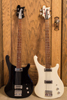
Can anyone point me to a resource outlining the source of the mother of pearl-ish inlay material on an early 80s 4003?
Customs wants to know and won't let it in the country until I can show them.
devnulljp wrote:Can anyone point me to a resource outlining the source of the mother of pearl-ish inlay material on an early 80s 4003?
Customs wants to know and won't let it in the country until I can show them.
I think RIC customer service is your best bet for an official answer that your overzealous custom officers will accept. It should be rather evident to them that it is a synthetic material...
Colonel Sanders wrote:I think RIC customer service is your best bet for an official answer that your overzealous custom officers will accept. It should be rather evident to them that it is a synthetic material...
Good call.
I found an old post by John Hall talking about how it's a synthetic resin, and have dug out the customer service numbers. Hopefully, that will work.
It's frustrating, but you always have to handle customs issues with kid gloves -- they can easily impound your guitar if you look at them sideways
collin wrote:IIRC, the non-full-width inlays were done like this specifically because the new shape created a pool-like cavity that resin could sit in and harden.
It's made from dinosaurs and other organic materials that were on the earth millions of years ago. Indeed, oil is endangered, but as used in polyester resin, as used on these guitars, it's not banned yet.
Sorry but your customs people are complete idiots if they can't see this is plastic.
collin wrote:It was presumably much quicker, easier and cheaper than paying a guy to sit and cut inlay material from a sheet, glue-in etc.
It wasn't. But its was significantly stronger an stiffer when done that way. Now, with the advent of CNC and modern adhesives we're able to do it the old way but keep the strength intact.
John, forgive me if this has been addressed before, but why can't you guys use the Abalam crushed pearl for inlays? It comes in thicknesses which can be "worked down" and it is very stable stuff. It looks very much like the old stuff from the 60's as well.
collin wrote:It was presumably much quicker, easier and cheaper than paying a guy to sit and cut inlay material from a sheet, glue-in etc.
It wasn't. But its was significantly stronger an stiffer when done that way. Now, with the advent of CNC and modern adhesives we're able to do it the old way but keep the strength intact.
Interesting! Good to know..
FabGearHead wrote:why can't you guys use the Abalam crushed pearl for inlays? It comes in thicknesses which can be "worked down" and it is very stable stuff. It looks very much like the old stuff from the 60's as well.
I'll guess here that price is a huge factor. Abalam is NOT cheap ($100+ for a 9" square piece...). Might not be able to laser cut it as they do with the plastic inlays, not sure though.
johnhall wrote:
Also, given the majority of our product is exported, why would we use something that would make our product unable to be exported? DOH!
John, I totally forgot about that aspect! I had the Fish and Wildlife guys hold one of my guitars in Customs once because of the three ( 2.35, 4, and 5 MM) dots in the fingerboard.
They needed to know the species of the shell I used! I guess you can only jump through so many hoops!
Dang! Sorry Collin, I didn't mean to leave you unanswered! It's been a long day at the shop and I am just getting home...
Great work on your fingerboard! The inlays look just right!