
Neck adjustment in 4001
Moderators: rickenbrother, ajish4
-
bob_atherton

- Intermediate Member
- Posts: 1441
- Joined: Thu Jan 06, 2005 4:47 am
Neck adjustment in 4001
Forgive me , I know this has been done to death but I need to adjust the bow in my 4001 neck & I’ve gone and lost the link to the information…. dohhhh
-
jwr2
Here's some info on that subject ...
The section of the Technical Pages provides information regarding the rewiring of the adjustment of 4001 model truss rods. It is important to note that for models made before 1984 that the truss rods were not designed to move the neck by tightening alone. For pre 1984 instruments, the neck should be moved into place manually and then the rods tightened to hold the neck in position. Failing to follow this procedure may pop the fretboard from the neck of your Rickenbacker.
Back off both nuts, then retighten just until you feel contact with the bearing plate. Tune to pitch. You need to flex the neck back towards straightness before tightening the rods. This can be done using simple gravity and (very little) muscle, or with a clamping setup.
The quick and dirty way is to put the neck across your lap. Hold down the first few frets with your left hand. Let the body hang in space. The body's weight will straighten the neck somewhat while you tighten the rods with your right hand.
The more accurate, but more slow and cumbersome way: You need two pieces of wood slim enough to sit on the fingerboard between your D + A strings. Pad the sides that will touch the fingerboard with cork. You need a reasonably stiff board as long as the neck. Last, you need one clamp with padded jaws that opens to at least 9-10". Place one small piece between the nut and first fret, the other around the 15th fret. Rest the long board on edge on these two pieces. Place your clamp at the 6th fret. Apply just enough clamp tension so that the whole affair will not fall apart. Get your straightedge. Tighten the clamp until you're satisfied (I never go for a totally straight neck). Snug up the rods. Release the clamp, and check your progress.
A little trick I do when I have had to remove truss rods[the old ones] is once I get them out, I use 4/0 steel wool to clean any rust and other **** off of them,polish them up a bit, and then I wax them up with Johnsons' paste floor wax and buff them with a clean towel or rag. This way, you kind of seal the metal against further rusting, as well as make the rods move easier.I also got myself a thread cutting die[a 10-32NF] and redo the threads to clean them up,as most efforts to adjust old rods ends up dinging the threads.I also put around 1/4" more thread length on the rod, too,and this always seems to help.I believe that die cutter size is stated correctly, but if in doubt, take one of the adjusting nuts to the hardware store with you to double check.
The section of the Technical Pages provides information regarding the rewiring of the adjustment of 4001 model truss rods. It is important to note that for models made before 1984 that the truss rods were not designed to move the neck by tightening alone. For pre 1984 instruments, the neck should be moved into place manually and then the rods tightened to hold the neck in position. Failing to follow this procedure may pop the fretboard from the neck of your Rickenbacker.
Back off both nuts, then retighten just until you feel contact with the bearing plate. Tune to pitch. You need to flex the neck back towards straightness before tightening the rods. This can be done using simple gravity and (very little) muscle, or with a clamping setup.
The quick and dirty way is to put the neck across your lap. Hold down the first few frets with your left hand. Let the body hang in space. The body's weight will straighten the neck somewhat while you tighten the rods with your right hand.
The more accurate, but more slow and cumbersome way: You need two pieces of wood slim enough to sit on the fingerboard between your D + A strings. Pad the sides that will touch the fingerboard with cork. You need a reasonably stiff board as long as the neck. Last, you need one clamp with padded jaws that opens to at least 9-10". Place one small piece between the nut and first fret, the other around the 15th fret. Rest the long board on edge on these two pieces. Place your clamp at the 6th fret. Apply just enough clamp tension so that the whole affair will not fall apart. Get your straightedge. Tighten the clamp until you're satisfied (I never go for a totally straight neck). Snug up the rods. Release the clamp, and check your progress.
A little trick I do when I have had to remove truss rods[the old ones] is once I get them out, I use 4/0 steel wool to clean any rust and other **** off of them,polish them up a bit, and then I wax them up with Johnsons' paste floor wax and buff them with a clean towel or rag. This way, you kind of seal the metal against further rusting, as well as make the rods move easier.I also got myself a thread cutting die[a 10-32NF] and redo the threads to clean them up,as most efforts to adjust old rods ends up dinging the threads.I also put around 1/4" more thread length on the rod, too,and this always seems to help.I believe that die cutter size is stated correctly, but if in doubt, take one of the adjusting nuts to the hardware store with you to double check.
-
bob_atherton
- Intermediate Member
- Posts: 1441
- Joined: Thu Jan 06, 2005 4:47 am
Jeff,
Thanks for this very comprehensive instruction.
I’ve just acquired a ‘new’ ’78 4001 and the neck is to quite convex with no string tension to too much concave with strings in tension. Could it be that I might have a slightly duff neck or do you think this is quite normal for a ’78. I am using round wounds. 45, 65, 85, 105.
What type of spanner do you use on the nuts? Sorry more questions I’m afraid.
Thanks very much, Bob
Thanks for this very comprehensive instruction.
I’ve just acquired a ‘new’ ’78 4001 and the neck is to quite convex with no string tension to too much concave with strings in tension. Could it be that I might have a slightly duff neck or do you think this is quite normal for a ’78. I am using round wounds. 45, 65, 85, 105.
What type of spanner do you use on the nuts? Sorry more questions I’m afraid.
Thanks very much, Bob
The way I do it is: for right handed people, take off the TRC, hold a 1/4" nutdriver in your hand, set the bottom of the bass on a rug with your right foot behind it so it won't slip, put the right knee behind the area where the neck meets the body, pull back on the neck around the nut area or first couplke of frets with your left hand and sight down the neck at the same time. Alternately tighten both nuts with the right hand (and nutdriver) until they are fairly tight, usually the E strung side needs to be a little tighter than the G side. Let the neck go and relax your knee also, sight down the neck to see if it is fairly straight, repeat if not, but don't force anything and never turn the nuts unless you have the neck pulled back to release the tension from the forward pull of the strings.
If you do it this way, you don't have to keep picking up and putting the bass back down. I've also tried the knee method and find this way quicker and more accurate as all you have to do is let go and sight down the neck, when it looks pretty straight play it to see how it plays. I also fret a string at both ends on the neck, 1st fret and last and see how much bow there is before I start, I like a little bit like maybe 1/16" inch as they seem to play better and sound fatter and have less fretbuzz. this may take several tries and may even take several weeks or months. If it is severely bowed it can take a long time to completely straighten it out but it can usually be done with patience. If you get to the point where the nuts get very hard to turn all of a sudden, just leave it like that for a while, sometimes a long while, then try again etc.
If you do it this way, you don't have to keep picking up and putting the bass back down. I've also tried the knee method and find this way quicker and more accurate as all you have to do is let go and sight down the neck, when it looks pretty straight play it to see how it plays. I also fret a string at both ends on the neck, 1st fret and last and see how much bow there is before I start, I like a little bit like maybe 1/16" inch as they seem to play better and sound fatter and have less fretbuzz. this may take several tries and may even take several weeks or months. If it is severely bowed it can take a long time to completely straighten it out but it can usually be done with patience. If you get to the point where the nuts get very hard to turn all of a sudden, just leave it like that for a while, sometimes a long while, then try again etc.
-
bob_atherton
- Intermediate Member
- Posts: 1441
- Joined: Thu Jan 06, 2005 4:47 am
What kind of round wounds are you using? Some 4001's like low tension strings like TI 's. What kind of strings did you take off, and was the neck straight with the old strings? If the neck goes from convex to concave it sounds like your strings may be very high tension and sounds like your neck is ok and the truss rods are working ok also.
-
bob_atherton
- Intermediate Member
- Posts: 1441
- Joined: Thu Jan 06, 2005 4:47 am
You do it with the strings tuned to pitch but have to release the tension from them pulling the neck forward, that is a must, you do that by pulling back on the top of the neck (nut actually) to release the string tension with either a weight on the other end like Jeff's method or your foot and knee behind it like my method, it is much easier and quicker than tightening and loosening the strings, that could take all day.
-
bob_atherton
- Intermediate Member
- Posts: 1441
- Joined: Thu Jan 06, 2005 4:47 am
-
bob_atherton
- Intermediate Member
- Posts: 1441
- Joined: Thu Jan 06, 2005 4:47 am
Wow thanks guys.. Mission accomplished the neck is now as straight and fast as any of my basses, just got to tweak the intonation and it’s totally sorted.
Thank you very much once again. FWIW I did the adjustment standing up with my knee behind the bass, scary as hell at first, yet curiously satisfying……
Bob
Thank you very much once again. FWIW I did the adjustment standing up with my knee behind the bass, scary as hell at first, yet curiously satisfying……
Bob
-
bob_atherton
- Intermediate Member
- Posts: 1441
- Joined: Thu Jan 06, 2005 4:47 am
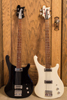
The knee method is very quick, you can do it at a gig during a break if you need to. Incidently the weather changed here in New England very suddenly and I've had to loosen the truss rods on every Ric I've played during the past few weeks, 4001's and 4003's. they all went completely straight on me, never happened this abruptly before. Went from being cool and dry to hot and humid, very strange.