
4001V63 Horseshoe PUP
Moderators: rickenbrother, ajish4
4001V63 Horseshoe PUP
This may have been addressed before, but here goes. It is my understanding that the 4001V63 is a reissue of Macca's bass. But after reviewing photos of his bass (after refin) it looks as there is no Horseshoe on his PUP. Did he have that PUP changed out for the standard PUP assembly? If not, are you able to remove the horseshoe from the PUP without ruining the sound or the PUP. I find that the Horseshoe gets in the way of playing. Please help educate me with this. Also, is the 4001S more accurate to Macca's bass even though it doesn't have the Walnut wings on the headstock? Thanks for any help!
It is what it is!
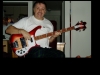


Yes David, McCartney's bass did have a horseshoe bridge pickup originally in it. He sent his bass back to the factory for some repairs in the early 70's. They replaced the horseshoe pup with a new style high gain pup along with installing a new chrome surround.
I believe by this time he had already reshaped the upper bout body horn.
You asked if the 4001v63 is the McCartney clone. No, that would be the 4001c64s.
If (and I assume you do) own a 4001v63, don't remove the horseshoe pup or the covers of it. You'll quickly devalue your bass.
I believe by this time he had already reshaped the upper bout body horn.
You asked if the 4001v63 is the McCartney clone. No, that would be the 4001c64s.
If (and I assume you do) own a 4001v63, don't remove the horseshoe pup or the covers of it. You'll quickly devalue your bass.
Thanks Jon, At the present time I'm shopping for a 4001V63 MG. However, I use to own a 4001S years ago and needed to remove the PUP cover for ease of play. Back to the V63, during my search for one I noticed the Horseshoe PUP and the cover. Can the cover even be removed? From the spec diagram I have seen it looks as if the PUP is directly attached to the split cover. Also, thanks for indicating the 4001c64S, my only problem with that bass is the reversed headstock, it just doesn't look as good on a right hand version of the bass. So, I figured the V63 was as close as I could get with the standard righty headstock and walnut wings. If I want to get that freedom of the PUP cover will I have to change out the complete PUP assembly or can the Horseshoe PUP split cover be removed? Thanks, again to all.
It is what it is!
-
chucksimms
- Veteran RRF member
- Posts: 604
- Joined: Wed Jul 11, 2001 1:16 pm
The pickup magnets/cover can be removed quite easily. I did it with both my 4001CS and C64S. I can't play with the magnets on either. It's a simple thing to put them back in if you ever look at selling it. A lot of folks (John Hall among them) will say it does colour the sound; I wasn't able to distinguish any appreciable difference, but obviously if you're playing right over the pickup (as I do) then it's a necessary (and reversible) modification.
'66 365 O.S. FG, '66 335 FG, '68 375 O.S., '66 330/12 MG, '69 365 O.S. azureglo, 2007 4001C64
-
ken_swearingen
- Advanced Member
- Posts: 2298
- Joined: Wed Mar 31, 2004 6:00 pm
Mark Arnquist worked at the Rickenbacker factory "from July 1972 to October 1976. I was the lead man in charge of the area from when the instruments came into the finishing building until [owner] F.C. Hall picked them up in a van in the afternoon. I worked on most of the instruments to be repaired in that time frame, and if there was a need for structural or any fret work, I got the job.
"The P.M. bass came back to the factory prior to the 'Wings over America tour.' It needed some help. The original cast bridge was cracked, and the saddle assembly rattled and was sagging. The horseshoe magnets were dead. The coil was fine, but the cobalt magnets -- stone dead. The frets needed some serious dressing and a new nut. (He has played around with a zero fret extension over the years, and the bass originally had a stock nut) . . . The finish was nothing at all. It had the patina of dirty wood and sweat. It didn't stink of armpits, but it was not sealed, and we actually discussed sealing for him. We decided not to, as we were already doing work that was not asked for."
And then there was the do-it-yourself sanding job . . .
"The whole bass was not stripped by a professional at all. There were plenty of hack marks and sandpaper gouges . . . The horns just appeared to have been scraped and sanded too much. The front and the back were fairly well done but all of the edges and contours were done amateurishly . . . The bass was definitely his; the original Fire-glo was still in the routes, and under the pickguard there was still some finish."
The Rickenbacker doctors operate
"The team that worked on it was four guys: Arlo (given name Howard, I cannot rememmber his last name) in the electronics area; Joel Heline in check out; Gene Garbis in woodshop/fretting, and myself at the assembly bench and at the buffing area. We had a gathering of minds, and after sending the cobalt magnets out for charging we got the bad news that they would not hold a charge. Bill Myers (plant manager) gathered us and we discussed our options.
"We opted for a custom coil/pickup for 'The Man.' The idea was to overwind a stock coil for a 4001. This is what he got. The tailpiece was replaced with a new casted piece and saddle assembly. The saddles were cut/spaced using calipers, not the normal eyeball method, and the saddles were buffed to a high sheen. The fret work was done by Gene, and then I got the bass after it came back into the finishing building. I leveled and buffed them, then assembled it. Joel was the next to get it, and he made a bone nut for it. There were some blanks left over in Bill's desk, and one of them was used. Then it was filed and restrung with the strings that it came in with . . . [McCartney] only sent it in to get the horseshoe pickup fixed. We took it upon ourselves to do all this work.
"This group was really into this job. Lots of love and care went into what we did. After a few of the staff It needed some help."
Mark Arnquist worked at the Rickenbacker factory "from July 1972 to October 1976. I was the lead man in charge of the area from when the instruments came into the finishing building until [owner] F.C. Hall picked them up in a van in the afternoon. I worked on most of the instruments to be repaired in that time frame, and if there was a need for structural or any fret work, I got the job.
"The P.M. bass came back to the factory prior to the 'Wings over America tour.' It needed some help. The original cast bridge was cracked, and the saddle assembly rattled and was sagging. The horseshoe magnets were dead. The coil was fine, but the cobalt magnets -- stone dead. The frets needed some serious dressing and a new nut. (He has played around with a zero fret extension over the years, and the bass originally had a stock nut) . . . The finish was nothing at all. It had the patina of dirty wood and sweat. It didn't stink of armpits, but it was not sealed, and we actually discussed sealing for him. We decided not to, as we were already doing work that was not asked for."
And then there was the do-it-yourself sanding job . . .
"The whole bass was not stripped by a professional at all. There were plenty of hack marks and sandpaper gouges . . . The horns just appeared to have been scraped and sanded too much. The front and the back were fairly well done but all of the edges and contours were done amateurishly . . . The bass was definitely his; the original Fire-glo was still in the routes, and under the pickguard there was still some finish."
"The P.M. bass came back to the factory prior to the 'Wings over America tour.' It needed some help. The original cast bridge was cracked, and the saddle assembly rattled and was sagging. The horseshoe magnets were dead. The coil was fine, but the cobalt magnets -- stone dead. The frets needed some serious dressing and a new nut. (He has played around with a zero fret extension over the years, and the bass originally had a stock nut) . . . The finish was nothing at all. It had the patina of dirty wood and sweat. It didn't stink of armpits, but it was not sealed, and we actually discussed sealing for him. We decided not to, as we were already doing work that was not asked for."
And then there was the do-it-yourself sanding job . . .
"The whole bass was not stripped by a professional at all. There were plenty of hack marks and sandpaper gouges . . . The horns just appeared to have been scraped and sanded too much. The front and the back were fairly well done but all of the edges and contours were done amateurishly . . . The bass was definitely his; the original Fire-glo was still in the routes, and under the pickguard there was still some finish."
The Rickenbacker doctors operate
"The team that worked on it was four guys: Arlo (given name Howard, I cannot rememmber his last name) in the electronics area; Joel Heline in check out; Gene Garbis in woodshop/fretting, and myself at the assembly bench and at the buffing area. We had a gathering of minds, and after sending the cobalt magnets out for charging we got the bad news that they would not hold a charge. Bill Myers (plant manager) gathered us and we discussed our options.
"We opted for a custom coil/pickup for 'The Man.' The idea was to overwind a stock coil for a 4001. This is what he got. The tailpiece was replaced with a new casted piece and saddle assembly. The saddles were cut/spaced using calipers, not the normal eyeball method, and the saddles were buffed to a high sheen. The fret work was done by Gene, and then I got the bass after it came back into the finishing building. I leveled and buffed them, then assembled it. Joel was the next to get it, and he made a bone nut for it. There were some blanks left over in Bill's desk, and one of them was used. Then it was filed and restrung with the strings that it came in with . . . [McCartney] only sent it in to get the horseshoe pickup fixed. We took it upon ourselves to do all this work.
"This group was really into this job. Lots of love and care went into what we did. After a few of the staff It needed some help."
Mark Arnquist worked at the Rickenbacker factory "from July 1972 to October 1976. I was the lead man in charge of the area from when the instruments came into the finishing building until [owner] F.C. Hall picked them up in a van in the afternoon. I worked on most of the instruments to be repaired in that time frame, and if there was a need for structural or any fret work, I got the job.
"The P.M. bass came back to the factory prior to the 'Wings over America tour.' It needed some help. The original cast bridge was cracked, and the saddle assembly rattled and was sagging. The horseshoe magnets were dead. The coil was fine, but the cobalt magnets -- stone dead. The frets needed some serious dressing and a new nut. (He has played around with a zero fret extension over the years, and the bass originally had a stock nut) . . . The finish was nothing at all. It had the patina of dirty wood and sweat. It didn't stink of armpits, but it was not sealed, and we actually discussed sealing for him. We decided not to, as we were already doing work that was not asked for."
And then there was the do-it-yourself sanding job . . .
"The whole bass was not stripped by a professional at all. There were plenty of hack marks and sandpaper gouges . . . The horns just appeared to have been scraped and sanded too much. The front and the back were fairly well done but all of the edges and contours were done amateurishly . . . The bass was definitely his; the original Fire-glo was still in the routes, and under the pickguard there was still some finish."
-
ken_swearingen
- Advanced Member
- Posts: 2298
- Joined: Wed Mar 31, 2004 6:00 pm
The Rickenbacker doctors operate
"The team that worked on it was four guys: Arlo (given name Howard, I cannot rememmber his last name) in the electronics area; Joel Heline in check out; Gene Garbis in woodshop/fretting, and myself at the assembly bench and at the buffing area. We had a gathering of minds, and after sending the cobalt magnets out for charging we got the bad news that they would not hold a charge. Bill Myers (plant manager) gathered us and we discussed our options.
"We opted for a custom coil/pickup for 'The Man.' The idea was to overwind a stock coil for a 4001. This is what he got. The tailpiece was replaced with a new casted piece and saddle assembly. The saddles were cut/spaced using calipers, not the normal eyeball method, and the saddles were buffed to a high sheen. The fret work was done by Gene, and then I got the bass after it came back into the finishing building. I leveled and buffed them, then assembled it. Joel was the next to get it, and he made a bone nut for it. There were some blanks left over in Bill's desk, and one of them was used. Then it was filed and restrung with the strings that it came in with . . . [McCartney] only sent it in to get the horseshoe pickup fixed. We took it upon ourselves to do all this work.
"This group was really into this job. Lots of love and care went into what we did. After a few of the staff looked at it, Jim Ruthledge (the only lefty bassist in the factory) played it. He loved what we had done. And off it went."
"The team that worked on it was four guys: Arlo (given name Howard, I cannot rememmber his last name) in the electronics area; Joel Heline in check out; Gene Garbis in woodshop/fretting, and myself at the assembly bench and at the buffing area. We had a gathering of minds, and after sending the cobalt magnets out for charging we got the bad news that they would not hold a charge. Bill Myers (plant manager) gathered us and we discussed our options.
"We opted for a custom coil/pickup for 'The Man.' The idea was to overwind a stock coil for a 4001. This is what he got. The tailpiece was replaced with a new casted piece and saddle assembly. The saddles were cut/spaced using calipers, not the normal eyeball method, and the saddles were buffed to a high sheen. The fret work was done by Gene, and then I got the bass after it came back into the finishing building. I leveled and buffed them, then assembled it. Joel was the next to get it, and he made a bone nut for it. There were some blanks left over in Bill's desk, and one of them was used. Then it was filed and restrung with the strings that it came in with . . . [McCartney] only sent it in to get the horseshoe pickup fixed. We took it upon ourselves to do all this work.
"This group was really into this job. Lots of love and care went into what we did. After a few of the staff looked at it, Jim Ruthledge (the only lefty bassist in the factory) played it. He loved what we had done. And off it went."


-
foolycooly
- New member
- Posts: 87
- Joined: Mon Jun 13, 2005 8:42 am