
Here's a question for Mark and Don that I believe you both can give us some insite on, seeing that you both worked at the factory in this year (I think). I'm sure David can also provide some answers also, so here goes.
Can you tell us when the transition of the 4001 took place, and what how the factory went about it in 1973.
I'm refering to the factory replacing the remaining 60's features on the 4001 (ie, removal of the checkered binding, toaster p/u, chushed pearl inlay neck position markers, etc).
I've seen a few 73 4001's with the 60's features but i've seen more 1973 4001's with the modern look of the mid 70's to early 80's.
To the best of your knowledge, was there a specific month when the transition took place in 1973, or was it slow and gradual over the entire year?
Any insites and stories that come to mind that you'd like to share with us are always greatly appreciated (and enjoyed).
Cheers
1973, The Transition Year
Moderators: rickenbrother, ajish4
-
GregShadoan
Yes definately
There was a need to change some things as the inlay material became unavailable,
the bridge base /plate was a sand casting that was prone to caving in and cracking,
the bridge was sagging and the saddles would wobble to and fro,
the neck pickup was not standard to the guitars and the high gain was soon to be in everything.This was the button top not the screw shaft version that was found in the guitars.That was found to have a limited apeal with players as when you dent a string slightly (whether you meant to or not) the volume would drop out.That did not cut it ,so the button top appeared .That did work.
Also the original supplier of the checker binding closed it's doors and left Rick high and dry in regards to the binding.
This did not all happen at once ,yet to collectors and fans of the bass ,it would seem that there was a plot.
NO WAY ,it was just one of those things .Not unlike the Fender of 1972-3 bolt plate ,flat polepieces,Big headstock with big logo,Schaller 'F' tuners,solid zinc cast bridges on Strats,etc.
Funny how 1972/1973 was that way...could it be..............Satan???????
There was a need to change some things as the inlay material became unavailable,
the bridge base /plate was a sand casting that was prone to caving in and cracking,
the bridge was sagging and the saddles would wobble to and fro,
the neck pickup was not standard to the guitars and the high gain was soon to be in everything.This was the button top not the screw shaft version that was found in the guitars.That was found to have a limited apeal with players as when you dent a string slightly (whether you meant to or not) the volume would drop out.That did not cut it ,so the button top appeared .That did work.
Also the original supplier of the checker binding closed it's doors and left Rick high and dry in regards to the binding.
This did not all happen at once ,yet to collectors and fans of the bass ,it would seem that there was a plot.
NO WAY ,it was just one of those things .Not unlike the Fender of 1972-3 bolt plate ,flat polepieces,Big headstock with big logo,Schaller 'F' tuners,solid zinc cast bridges on Strats,etc.
Funny how 1972/1973 was that way...could it be..............Satan???????
So you too want yours "ALAPWOB"?!?!
-
Mike_Andrews
1972 /1973 wasn't that the year of the bong and the gas mask with a fish pump?
Glad I don't do that any more!
Many things changed in this time frame .Suppiers changed and the idea of making a similar pickup that was less labor intensive to make came about .
Maui Wowie I do remember ...more from the Cheech and Chong movies however.
Glad I don't do that any more!
Many things changed in this time frame .Suppiers changed and the idea of making a similar pickup that was less labor intensive to make came about .
Maui Wowie I do remember ...more from the Cheech and Chong movies however.
So you too want yours "ALAPWOB"?!?!
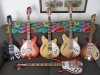
Mark, since we're back on this, do you know exactly why they don't do crushed pearl inlay anymore?? Is it really that hard to find a vendor for the material..? It would have just seemed to be a more prudent thing to do, especially on guitars such as the 370/12RM, Carl Wilson and John Kay models (I know I'm talking about the past and its already done) but maybe for future use they could look into the possibility of doing crushed pearl again...it just looks cool.

You have to believe that he may need to go to Hawaii on this one Don.
Life, as with music, often requires one to let go of the melody and listen to the rhythm
Please join the Official RickResource Forum Facebook Page https://www.facebook.com/groups/379271585440277
Please join the Official RickResource Forum Facebook Page https://www.facebook.com/groups/379271585440277
Peter,
That's funny you mention that; A few years ago, I was refretting a guys 4001 bass, which had the old crushed pearl inlays, and after carefully
removing the frets, and even more carefully planing the fingerboard to get the finish off and level the board, the ends of the inlays were getting pretty thin[you could almost see the wood underneath].I got to thinking, what if I could find what looked like appropriate seashell material, and smash it up,and put it in acrylic resin suspension, and have some replacement crushed pearl for just such an occasion.So on a couple trips to Hawaii, I found what looked like the right shells[they were really cheap]and came home and proceeded to see what I came up with.To make a longer story short,the end results were disappointing.I could not achieve proper shell "flake" size and consistency, which meant I could not get enough flake density per square inch to look right. I think I spent around $40
to do the experiment.Who knows; had I not tried this, I'd never know if you could do it or not.
So there you have one guys struggle documented.
That's funny you mention that; A few years ago, I was refretting a guys 4001 bass, which had the old crushed pearl inlays, and after carefully
removing the frets, and even more carefully planing the fingerboard to get the finish off and level the board, the ends of the inlays were getting pretty thin[you could almost see the wood underneath].I got to thinking, what if I could find what looked like appropriate seashell material, and smash it up,and put it in acrylic resin suspension, and have some replacement crushed pearl for just such an occasion.So on a couple trips to Hawaii, I found what looked like the right shells[they were really cheap]and came home and proceeded to see what I came up with.To make a longer story short,the end results were disappointing.I could not achieve proper shell "flake" size and consistency, which meant I could not get enough flake density per square inch to look right. I think I spent around $40
to do the experiment.Who knows; had I not tried this, I'd never know if you could do it or not.
So there you have one guys struggle documented.

jnbass: Thanks I had heard that but couldn't resist the comment knowing that Don had a Hawaii connection. Thanks for setting the record straight though.
Life, as with music, often requires one to let go of the melody and listen to the rhythm
Please join the Official RickResource Forum Facebook Page https://www.facebook.com/groups/379271585440277
Please join the Official RickResource Forum Facebook Page https://www.facebook.com/groups/379271585440277

Hi Dr.,
try the so called POA shell (blueish)mixed with the ordinary river mussle shell after you have polished off the black back from the latter.The grinded pieces should not be bigger than 1mm.
To mix this try to use white acrylic resin that you can get for enbedding insects (as pendants!! crazy, but common). Ad more hardener (2x) for preparing the mixture, but hurry when filling the inlays.
try the so called POA shell (blueish)mixed with the ordinary river mussle shell after you have polished off the black back from the latter.The grinded pieces should not be bigger than 1mm.
To mix this try to use white acrylic resin that you can get for enbedding insects (as pendants!! crazy, but common). Ad more hardener (2x) for preparing the mixture, but hurry when filling the inlays.
"The youth of today should start thinking about the state in which they want to leave this planet to Keith Richards..."! Quote by an unknown musician