
First, I'd like to thank all who have contributed to this forum. I've spent the last few days going through the content here and have found tons of good stuff.
I have a 4003 from 1996. I would like to mod it to make it as close (sound-wise) to the model 4001C64S (McCartney's C-series bass). Consequently, I believe this means replacing the pickups with a [re-issue] Horseshoe treble pickup and the [re-issue] Toaster bass pickup. My questions are:
(1) I'm I right about these pickups being the ones used in the 4001C64S?
(2) Will the pickups fit in the same cavities as the old ones, or does an additional modification have to be made to fit the pickups in the same spot where they are in the 4001C64S?
(3) Will I need to replace the pickguard? In other words, is the pickguard of the 4003 different from the one in the 4001C64S?
(4) Am I missing anything. Some may suggest the .0043 capacitor, but I do not believe I need it since I'm after the thumpy Macca sound and totally dislike the Geedy Lee/Chris Squire trebley sound.
I apologize in advance for the sensibilities I have offended with 4, but that is just my taste.
Any thoughts welcome...Thanks a million.
Modding a 4003 to approximate 4001C64S
Moderators: rickenbrother, ajish4
The only thing I can help you with is the pickup cavity question. They should fit with no problem, meaning no routing required. I replaced my treble higain with a reissue horseshoe pickup with no problem.
Maybe routing would be required for a toaster-top pickup in the neck position, as for a new pickguard with the pickup hole routed closer to the neck. Or, if not, the toaster-top should fit in the old cavity with no problem if you choose to keep the current position.
Maybe routing would be required for a toaster-top pickup in the neck position, as for a new pickguard with the pickup hole routed closer to the neck. Or, if not, the toaster-top should fit in the old cavity with no problem if you choose to keep the current position.
-
jwr2
a 4003 should require no wood cutting for this mod ...
The hard part is finding a horseshoe to put in it ... RIC is making a lot of 4001c64 basses and they are using all of the horseshoe pickups and they aren't selling any for spare parts ...
But put in a toaster neck pickup you are part way there ...
The hard part is finding a horseshoe to put in it ... RIC is making a lot of 4001c64 basses and they are using all of the horseshoe pickups and they aren't selling any for spare parts ...
But put in a toaster neck pickup you are part way there ...


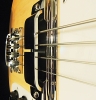
I realize that the mods that are being asked about and proposed have everything to do with achieving the "sound" of a C64... but I once wondered about modding a 4003s to sound AND look like Macca's bass.
So here's a question: Did anyone ever try to stain the "headstock wings" on a 4003 or later 4001 to simulate the walnut wings of the old 60's and early 70's Ricks? Any "success stories"?
So here's a question: Did anyone ever try to stain the "headstock wings" on a 4003 or later 4001 to simulate the walnut wings of the old 60's and early 70's Ricks? Any "success stories"?
My first bass was a Rickenbacker...
My best bass is a Rickenbacker...
My last bass may very well be a Rickenbacker
My best bass is a Rickenbacker...
My last bass may very well be a Rickenbacker
-
jwr2


-
sherekhan
Timothy,
Good point about the zero fret. I had not thought of that. I'll have to search for a bass that has it and try it out, because I have no idea what it feels and sounds like. I read (probably in another post) that in Sir Paul's bass the zero-fret is removable. I wonder if there are any issues with doing it this way.
Thanks to all for your suggestions. This is very helpful. I didn't know about the toaster pickup embargo, for instance.
Good point about the zero fret. I had not thought of that. I'll have to search for a bass that has it and try it out, because I have no idea what it feels and sounds like. I read (probably in another post) that in Sir Paul's bass the zero-fret is removable. I wonder if there are any issues with doing it this way.
Thanks to all for your suggestions. This is very helpful. I didn't know about the toaster pickup embargo, for instance.
A zero fret simply makesd open strings fretted notes. No other change on the sound
The email address shown is down, you can email me at [email protected]
-
jwr2
Paul started playing bass on a hofner ... the hofner has a zero fret ... I used to have a hofner and I also have an acoustic guitar with a zero fret ... the bottom line is there is not a huge difference in the sound ... the difference is subtle ... the main advantage of the zero fret is it makes cutting the nut a lot easier ...
In fact RIC worked on Paul's bass and didn't even notice the zero fret the first time it was in the shop ...
In fact RIC worked on Paul's bass and didn't even notice the zero fret the first time it was in the shop ...

Welcome Alexis.
Here is an article of interest.
--------------------------------------
"It needed some help."
Mark Arnquist worked at the Rickenbacker factory "from July 1972 to October 1976. I was the lead man in charge of the area from when the instruments came into the finishing building until [owner] F.C. Hall picked them up in a van in the afternoon. I worked on most of the instruments to be repaired in that time frame, and if there was a need for structural or any fret work, I got the job.
"The P.M. bass came back to the factory prior to the 'Wings over America tour.' It needed some help. The original cast bridge was cracked, and the saddle assembly rattled and was sagging. The horseshoe magnets were dead. The coil was fine, but the cobalt magnets -- stone dead. The frets needed some serious dressing and a new nut. (He has played around with a zero fret extension over the years, and the bass originally had a stock nut) . . . The finish was nothing at all. It had the patina of dirty wood and sweat. It didn't stink of armpits, but it was not sealed, and we actually discussed sealing for him. We decided not to, as we were already doing work that was not asked for."
And then there was the do-it-yourself sanding job . . .
"The whole bass was not stripped by a professional at all. There were plenty of hack marks and sandpaper gouges . . . The horns just appeared to have been scraped and sanded too much. The front and the back were fairly well done but all of the edges and contours were done amateurishly . . . The bass was definitely his; the original Fire-glo was still in the routes, and under the pickguard there was still some finish."
The Rickenbacker doctors operate
"The team that worked on it was four guys: Arlo (given name Howard, I cannot rememmber his last name) in the electronics area; Joel Heline in check out; Gene Garbis in woodshop/fretting, and myself at the assembly bench and at the buffing area. We had a gathering of minds, and after sending the cobalt magnets out for charging we got the bad news that they would not hold a charge. Bill Myers (plant manager) gathered us and we discussed our options.
"We opted for a custom coil/pickup for 'The Man.' The idea was to overwind a stock coil for a 4001. This is what he got. The tailpiece was replaced with a new casted piece and saddle assembly. The saddles were cut/spaced using calipers, not the normal eyeball method, and the saddles were buffed to a high sheen. The fret work was done by Gene, and then I got the bass after it came back into the finishing building. I leveled and buffed them, then assembled it. Joel was the next to get it, and he made a bone nut for it. There were some blanks left over in Bill's desk, and one of them was used. Then it was filed and restrung with the strings that it came in with . . . [McCartney] only sent it in to get the horseshoe pickup fixed. We took it upon ourselves to do all this work.
"This group was really into this job. Lots of love and care went into what we did. After a few of the staff looked at it, Jim Ruthledge (the only lefty bassist in the factory) played it. He loved what we had done. And off it went."
-------------------------------------------------------
Many thanks to Mark Arnquist
Here is an article of interest.
--------------------------------------
"It needed some help."
Mark Arnquist worked at the Rickenbacker factory "from July 1972 to October 1976. I was the lead man in charge of the area from when the instruments came into the finishing building until [owner] F.C. Hall picked them up in a van in the afternoon. I worked on most of the instruments to be repaired in that time frame, and if there was a need for structural or any fret work, I got the job.
"The P.M. bass came back to the factory prior to the 'Wings over America tour.' It needed some help. The original cast bridge was cracked, and the saddle assembly rattled and was sagging. The horseshoe magnets were dead. The coil was fine, but the cobalt magnets -- stone dead. The frets needed some serious dressing and a new nut. (He has played around with a zero fret extension over the years, and the bass originally had a stock nut) . . . The finish was nothing at all. It had the patina of dirty wood and sweat. It didn't stink of armpits, but it was not sealed, and we actually discussed sealing for him. We decided not to, as we were already doing work that was not asked for."
And then there was the do-it-yourself sanding job . . .
"The whole bass was not stripped by a professional at all. There were plenty of hack marks and sandpaper gouges . . . The horns just appeared to have been scraped and sanded too much. The front and the back were fairly well done but all of the edges and contours were done amateurishly . . . The bass was definitely his; the original Fire-glo was still in the routes, and under the pickguard there was still some finish."
The Rickenbacker doctors operate
"The team that worked on it was four guys: Arlo (given name Howard, I cannot rememmber his last name) in the electronics area; Joel Heline in check out; Gene Garbis in woodshop/fretting, and myself at the assembly bench and at the buffing area. We had a gathering of minds, and after sending the cobalt magnets out for charging we got the bad news that they would not hold a charge. Bill Myers (plant manager) gathered us and we discussed our options.
"We opted for a custom coil/pickup for 'The Man.' The idea was to overwind a stock coil for a 4001. This is what he got. The tailpiece was replaced with a new casted piece and saddle assembly. The saddles were cut/spaced using calipers, not the normal eyeball method, and the saddles were buffed to a high sheen. The fret work was done by Gene, and then I got the bass after it came back into the finishing building. I leveled and buffed them, then assembled it. Joel was the next to get it, and he made a bone nut for it. There were some blanks left over in Bill's desk, and one of them was used. Then it was filed and restrung with the strings that it came in with . . . [McCartney] only sent it in to get the horseshoe pickup fixed. We took it upon ourselves to do all this work.
"This group was really into this job. Lots of love and care went into what we did. After a few of the staff looked at it, Jim Ruthledge (the only lefty bassist in the factory) played it. He loved what we had done. And off it went."
-------------------------------------------------------
Many thanks to Mark Arnquist
Also, here's a posting from Mark in this Forum:
------------------------------
Mark the MD
Posted on Wednesday, October 25, 2000 - 06:01 am:
------------------------------------------------------------------------
The cobalt magnets are actually fairly good.
The problem lioes in that some are unstable and whenthey loose their charge are difficult to recharge.
I am no magnet expert but the experience that I have had with this pickup is really good.
The McCartney pickup was replaced only after several attempts to recharge failed.
At this point a group of guy in the factory had a meeting.This is what was talked about and decided.
If we can't fix the 'dead' ?
We can't just give him something off the rack.
He is too important to just give what we had.
Many of the staff felt we were making something that was less than what we should have been,so we voted on what to make.
The first option was to make a split coil pickup .This was due to the favor put upon the Fender Precision Bass pickup.We rejected this as it would sound too different and would not have the classic Rick tone.
Arlo in the part dept came up with a coil that was the same but different.
He made a coil that was the same dimensions as was standard but with widder pole pieces and he wound it to about 9K.
The standard screw /button tops were not used.
Instead a similar looking screw with a widder shaft was bought and I remember when he cane back from the supplier with them .we all got together to talk it over .
I don't remember Arlo's last name but I do remember that his actual first name wa Howard and he was a tall dark haired man.We all just called him Arlo.He looked nothing like Arlo guthrie and in fact was not really a fan of his music.....
Richard Valesquez assembled the bobbin and Arlo wound it .
I got the job of re-installing all of the hardware and making a replacement pickguard.
We took a tracing of the hole pattern and I drilled them and went over to the wood shop to cut it out .
Greg Renois cut out the outline for me and gave it back to me.
I took it over to the finishing building and finished the edges.
I hope that he likes what we came up with .
As to the original pickups .
Well if it still works -great!
The new ones are pretty good ,but they are not the same .They are like apples and oranges .
they do a good job .
As to the units that came about after the horseshoes ...well I always thought the plastic cover was cheesey,but it was there to replicate the same type of look .That it does .
BUt they in no way sound the same.
+++++++++++++++++++++
------------------------------
Mark the MD
Posted on Wednesday, October 25, 2000 - 06:01 am:
------------------------------------------------------------------------
The cobalt magnets are actually fairly good.
The problem lioes in that some are unstable and whenthey loose their charge are difficult to recharge.
I am no magnet expert but the experience that I have had with this pickup is really good.
The McCartney pickup was replaced only after several attempts to recharge failed.
At this point a group of guy in the factory had a meeting.This is what was talked about and decided.
If we can't fix the 'dead' ?
We can't just give him something off the rack.
He is too important to just give what we had.
Many of the staff felt we were making something that was less than what we should have been,so we voted on what to make.
The first option was to make a split coil pickup .This was due to the favor put upon the Fender Precision Bass pickup.We rejected this as it would sound too different and would not have the classic Rick tone.
Arlo in the part dept came up with a coil that was the same but different.
He made a coil that was the same dimensions as was standard but with widder pole pieces and he wound it to about 9K.
The standard screw /button tops were not used.
Instead a similar looking screw with a widder shaft was bought and I remember when he cane back from the supplier with them .we all got together to talk it over .
I don't remember Arlo's last name but I do remember that his actual first name wa Howard and he was a tall dark haired man.We all just called him Arlo.He looked nothing like Arlo guthrie and in fact was not really a fan of his music.....
Richard Valesquez assembled the bobbin and Arlo wound it .
I got the job of re-installing all of the hardware and making a replacement pickguard.
We took a tracing of the hole pattern and I drilled them and went over to the wood shop to cut it out .
Greg Renois cut out the outline for me and gave it back to me.
I took it over to the finishing building and finished the edges.
I hope that he likes what we came up with .
As to the original pickups .
Well if it still works -great!
The new ones are pretty good ,but they are not the same .They are like apples and oranges .
they do a good job .
As to the units that came about after the horseshoes ...well I always thought the plastic cover was cheesey,but it was there to replicate the same type of look .That it does .
BUt they in no way sound the same.
+++++++++++++++++++++