Most of the fixing in Paraguay is between companies wishing to do business there, and the government...
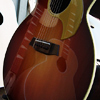
The guitar was originally AZ and needed general restoration; paint poor, varnish cracked and missing, hardware tarnished (comb missing), electrics grungy and crackly, frets worn, etc. Worst defect was a split in the top running from top to bottom and end to end, right at the top (bass) edge of the neck. The split varied in width and ran a bit crookedly. It would have to be repaired and solidified, before anything else could be attended to.
I stripped the guitar and sanded it carefully to #320. This revealed the split a good deal more clearly, and also proved that the guitar was original, with no patching or bad repairs having been made in the past.


In order to clean the crack (which had years of grunge embedded) and prepare it for insertion of a maple stave to solidify the top and provide a basis for the refinish, I decided to open the crack to an even .125" and use a trimmed .125 maple piece to fill it. This could not be done with a router, as the neck gets in the way. It could be done on a mill, but only with a couple hours' setup and with the use of a special 1/8" X 4" long carbide cutter, which is a special order (and very pricey) item of limited utility.
The table saw, with a brand new blade, would do the trick. But first, due to the neck and fretboard standing proud, the body would have to be blocked up so it could slide upside down on the table saw...


3/4 MDF was attached to the body with screws through the neck pickup recess and underneath the bridge plate. These are both invisible once the guitar was assembled, and in any event would be filled with maple splinters and surfaced and painted over. The second MDF block was attached wth permacell tape to the body. Then 1/4" masonite rails were attached with permacell to the MDF blocks. An area in the center of the body was left without blocks so I could align everything and see what I was doing when I set it up on the saw.


It was determined that the blade height would have to be set at 2.2" in order to cut through the body and leave the back plate and binding intact.

Here's the body on the saw, with the blade entering the split, and then coming out the other end, having cut a perfectly-straight and smooth .125" groove, to be filled with a maple stave.


The maple stave is permacelled to a bigger piece of maple to run through my precision thickness sander. It is sanded to precisely .125". The Titebond glue would cause it to swell a bit for a nice tight fit.

The stave is separated from the block, and checked for fit in the body groove:


The two hollow areas in the body are relieved from the stave, it's glued into place, weighted, and allowed to set up overnight on a granite surface plate to assure flatness.


Next, the stave will be sanded, and the guitar will be de-fretted and the fretboard sanded. Then it's paint prep time. Meanwhile, all of the hardware has been replated and is being catalogued and readied for re-installation a week or two down the line.