Since this is a non-RIC question, I'm happy to have it moved to a more appropriate thread.
I recently was able to buy a MIM Fender Classic 60's Strat (Burgundy Mist) that had some "non-Custom Shop relic-ing." Is this the kind of finish repair that can be attempted using Super Glue? Any suggestions on how should I go about fixing it? It's on a curved portion of the body, which I'm guessing would make the sanding a little tricky. I would appreciate your wisdom and advice on how to proceed (whatever it may be). Of course, I could always up the ante by attacking the rest of the body and then sell it for a small fortune
While you're waiting for the guys who actually know what they're talking about to chime in, I'd vote for raiding the wife's nail polish drawer, or even making a trip to the local drugstore to find a matching tint. Then do the very light drop-in build up till you can smooth it down with some really fine sandpaper. You should be able to position the guitar so that the polish won't run--most of that stuff is pretty quick drying anyway.
I just did a similar touch up on my bicycle--I didn't even get around to the sanding/polishing part--the color match did enough to detract from the nick.
I meant to jump on this a couple of days ago; forgive me--somehow I missed it second time around.
There are two things that need to be done in the case of a chip like this:
1. Level the surface so there is no longer a chip or gouge. Since this is a metallic color, painting color (even an exact match!) into the gouge will only serve to highlight the hole in your guitar. Level first, then touch up. Super glue is OK for leveling: over-fill, sand back with #1000 paper, wet.
2. Touch up the paint with a matching color. This is tricky with this one. If it was me, I'd do an eye match in an automotive urethane, scuff the surface slightly, spray the levelled surface and feather it into the surrounding areas, clearcoat the area and feathered area, sand and buff clearcoat.
Because the guitar already has a factory clearcoat, depending upon how thick that coat is, you may see some shadowing, even if this is properly done.
A brushed-on touchup, again, even with perfectly-matched paint, will be noticeable at anything less than 6 feet. Such is the problem with this type of metallic paint. Pearls and candies are even tougher. The only paint that you'll have good success with, whether with a spray gun touch-up, or touching-in with an artist's brush and matching paint, is a solid color or MG.
Thanks everyone, and Paul, your technical wisdom is greatly appreciated....muchas gracias...
I think maybe I'll try to level it with some superglue if for no other reason than to seal off the places where the original finish is still in place, but cracked. You can sort of see that in the first photo.
I've just had a similar mishap to John with my 335.. but I have only left an impression in the finish (about 1mm deep at the deepest). Is filling with super glue and sanding/buffing going to be sufficient? I don't fancy getting a match for TQ!
"I don't want to sound incredulous but I can't believe it" Rex Mossop
antipodean wrote:I've just had a similar mishap to John with my 335.. but I have only left an impression in the finish (about 1mm deep at the deepest). Is filling with super glue and sanding/buffing going to be sufficient? I don't fancy getting a match for TQ!
Evan, I think that Joey has a TQ instrument with a ding like that which he plans to repair. You might check with him to compare your touch-up plans and his. He had great success with that fireglo bass.



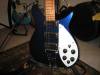





 He had great success with that fireglo bass.