I am posting this as I have a set of the famous exploding/wavy/slimline Grovers on my 74' 4001 and well, they exploded, lol. I have managed to fix them however and it was not as hard as I thought it would be but of course I had access to the right tools, without which I would have probably ruined them. I could not find a step by step guide of how it's done so this is how I went about it.
Note: I have tried peening them and they just keep falling apart on me and I really want to keep them so this is the only way. This guide is in metric units, just convert it to the equivalent imperial measurements if you need to.
Tools required:
> Vertical milling machine with a vernier table (I know this is not exactly the easiest to acquire but this is the most important one on the list so if you do not have 1, get someone who does)
> Table top vice
> M2 x 4mm countersunk metric screws (or the imperial equivalent)
> 1.6mm diameter drill bit and M2 tap (or the imperial equivalent, make sure they match the screws you have)
> Grease
> Basic screw drivers etc.
> Lighter fluid and metal polish
Step 1.
Clean all the parts of the tuners, this might seem obvious but hey, this is the best time to remove all of the dried up sweat and dead skin from all the parts. Use the lighter fluid and metal polish. It takes decades off them.
Step 2.
Take apart any tuners which haven't 'exploded'. This is counter intuitive to do but but they will give up the ghost eventually so might as well not risk them doing so during a gig, and I plan to gig the **** out of mine so i forced my single remaining tuner apart.
Step 3.
measure the pitch of the base plate holes (the holes where the press fit pins go). These need to be measured for each tuner as they vary quite a bit.
Step 4.
mount the housing portion of the tuner on the vertical milling machine and line up the first hole with the drill bit. I was eye-balling the first one trying to match it to the press-fit pins. drill the hole approximately 1mm longer than your screw thread height. Use the vernier gauge on the table to move the drill bit exactly the amount needed according to the pitch of the base plate which will be assembled to this housing. The variation in these sometimes means that you cannot use different parts together, I found.
- tuner housing before
This is the delicate part, mount the tap in the milling machine and manually bring the tap to the holes. apply minimal pressure and manually rotate the chuck while the tap catches the part and start the tap, try to go down half way and bring the tap back out. Repeat this for all 4 holes. Continue the tap by hand. This process ensures that the tap goes down at 90 degrees and reduces the risk of ruining the tuner at this final stage.
- tuner housing after
The hard part is over
 . mount the base plate on the mill and drill a small countersink so that the screws are flush when assembled. TIP, do not flush the screws completely, leave them protruding out ever so slightly, this will cause the tuner to rest on the screw heads rather than the base plate when assembled onto the bass and prevent them from ever coming loose
  .
.
- housing and base plate machined
- finished tuners

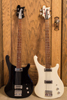
- an image of my Ricky with the newly re-vamped tuners, for good measure ;)



 I just removed two wavy grovers tuners with exploding backs from my 4001 and I am hoping to fix them but I lack the tools (and the skill, I'm afraid).