
A plea for wider 12-string necks - Mr. Hall?
Moderators: rickenbrother, ajish4

-
profjeff
This thread has really motivated me to play my 360/12--to examine the issue first hand, so to speak. Thanks Peter, Miguel, Mark, John, and the rest of you for your terrific insights.
One of the cool things that I have noticed about the 360 is the way the pick glides over the closely spaced strings and the way that you can really get a tight, snappy, percussive strum going. I wonder if a wider spacing would ruin this...Also, I like to wrap my thumb around the neck to fret the bass strings. Anyone else do this?
Back to work with my 360/12. I know you are getting sick of this but here's my latest recording. See if you can hear the zingy percussive sound I was talking about.
http://www.coe.unco.edu/JeffBauer/mp3.html
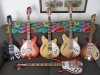
Also, I posted some pics of my guitars here:
http://www.coe.unco.edu/JeffBauer/ric/guitars.html
One of the cool things that I have noticed about the 360 is the way the pick glides over the closely spaced strings and the way that you can really get a tight, snappy, percussive strum going. I wonder if a wider spacing would ruin this...Also, I like to wrap my thumb around the neck to fret the bass strings. Anyone else do this?
Back to work with my 360/12. I know you are getting sick of this but here's my latest recording. See if you can hear the zingy percussive sound I was talking about.
http://www.coe.unco.edu/JeffBauer/mp3.html
Also, I posted some pics of my guitars here:
http://www.coe.unco.edu/JeffBauer/ric/guitars.html
Guys: Are 360/12 nuts cut the same now as they were in the late '60's? Is the spacing the same?
I could answer my own question with a tape measure, but I ask 'cause my 360/12CW feels different than my '68 370/12..it may be the profile of the back of the neck(the CW feels thicker than the '68) but the strings feel closer together on the CW---I can tell when I fret the imfamous open "A" chord...Its tighter on the CW.
Not to detract from the nature of this thread---I can see both sides to this. I find it much easier to cross-pick on an acoustic 12-string than on my Rickenbackers. Why? There is more room. But when I play my Rickenbackers I just think about what I have to do differently. It is just a different approach to playing, Just for the same reason I don't play a Hofner the same way as I do a 4001.
So should you change things? Hmmm.....I've never played a 660/12, so once I do I may be a convert!!
I could answer my own question with a tape measure, but I ask 'cause my 360/12CW feels different than my '68 370/12..it may be the profile of the back of the neck(the CW feels thicker than the '68) but the strings feel closer together on the CW---I can tell when I fret the imfamous open "A" chord...Its tighter on the CW.
Not to detract from the nature of this thread---I can see both sides to this. I find it much easier to cross-pick on an acoustic 12-string than on my Rickenbackers. Why? There is more room. But when I play my Rickenbackers I just think about what I have to do differently. It is just a different approach to playing, Just for the same reason I don't play a Hofner the same way as I do a 4001.
So should you change things? Hmmm.....I've never played a 660/12, so once I do I may be a convert!!
The last time that John Hall and I discussed how nuts were made, he informed me that ALL the nuts were "...spaced -correctly/evenly, and that they are done by a company using a laser. This gives fast, consistent, product and makes assembly easier on the line ."
While from a math standpoint that may be true, I generally replace stock nuts on every 12 string that I work on. This is because the outside string, at the nut, can go out to the edge of the frets (you are not bending the strings on a 12 and definately not in first position). As the notches of the 12 saddle bridge are governed by the center of each pair of saddles , the outside E strings (low E and high E) will always fall into the same basic spread and still remain on the fretboard at the end of the neck. I notch the 12 saddle bridges .045 from the CENTER of each pair. This gives "perfect" spacing and can be done off the guitar.
This adjustment does, however, require relocating the plate sometimes to sit centered on the neck. With a 6 saddle bridge this centering is not necessary , nor with the plates are the holes drilled on symetrical pattern, they look it , but I mark with an etcher, every one that I work on (B for bass and T for treble). That way I won't have to take the guitar apart just because I screwed the plate on backwards .
The nuts are not cut the way they used to be and in one sense that is a wonderous improvement. The old phenolic nuts smelled just aweful and we used a saw and a set of files to do the cutting . To line up the notches , we had an aluminum jig with notches in it , to "copy" the pattern onto the blank nut.
After I left Rickenbacker, my new boss, Klaus Heyne, made me get calipers. I'd love to see him again, it has been 21 years at least since I saw him. His machinist mentality made me re-think the way things are done. He showed me a 'better' way to do things. I have improved and rethought ideas over the years ...always looking for a better way.
This laser cutting is a wonderful thing as are computers.
From the information I have, I must assume that RIC have a Q.C. system in place.
Back to the spacing. By remaking a nut, the old original is kept so that the owner can see the difference in spacing. I can spread the sets of strings apart so you can play the guitar easily, at least if you have average size of fingers.But even with my average size of fingers, I find the spacing close. This mod gets the pairs to about the spacing of a Strat in first position. Fender cuts their nuts in about .120 from the edge of the fretboard. Mine are almost up the the edge of the fret. I use the curved edge of the fret as my outside point .
While from a math standpoint that may be true, I generally replace stock nuts on every 12 string that I work on. This is because the outside string, at the nut, can go out to the edge of the frets (you are not bending the strings on a 12 and definately not in first position). As the notches of the 12 saddle bridge are governed by the center of each pair of saddles , the outside E strings (low E and high E) will always fall into the same basic spread and still remain on the fretboard at the end of the neck. I notch the 12 saddle bridges .045 from the CENTER of each pair. This gives "perfect" spacing and can be done off the guitar.
This adjustment does, however, require relocating the plate sometimes to sit centered on the neck. With a 6 saddle bridge this centering is not necessary , nor with the plates are the holes drilled on symetrical pattern, they look it , but I mark with an etcher, every one that I work on (B for bass and T for treble). That way I won't have to take the guitar apart just because I screwed the plate on backwards .
The nuts are not cut the way they used to be and in one sense that is a wonderous improvement. The old phenolic nuts smelled just aweful and we used a saw and a set of files to do the cutting . To line up the notches , we had an aluminum jig with notches in it , to "copy" the pattern onto the blank nut.
After I left Rickenbacker, my new boss, Klaus Heyne, made me get calipers. I'd love to see him again, it has been 21 years at least since I saw him. His machinist mentality made me re-think the way things are done. He showed me a 'better' way to do things. I have improved and rethought ideas over the years ...always looking for a better way.
This laser cutting is a wonderful thing as are computers.
From the information I have, I must assume that RIC have a Q.C. system in place.
Back to the spacing. By remaking a nut, the old original is kept so that the owner can see the difference in spacing. I can spread the sets of strings apart so you can play the guitar easily, at least if you have average size of fingers.But even with my average size of fingers, I find the spacing close. This mod gets the pairs to about the spacing of a Strat in first position. Fender cuts their nuts in about .120 from the edge of the fretboard. Mine are almost up the the edge of the fret. I use the curved edge of the fret as my outside point .
So you too want yours "ALAPWOB"?!?!

Mark ArnQuist writes "By remaking a nut, the old original is kept so that the owner can see the difference in spacing. I can spread the sets of strings apart so you can play the guitar easily, at least if you have average size of fingers
Can you supply a nut to a 360/12 ric nut in Austrlia?
While I have small hands I also have shortish fingers and 1st position Cmaj always had a buzz as my nail brushes the open G string. Just a tad more spacing would eliminate that. There are local luthiers that can fit the part but non that have done any work on rics
regards
john
john
Can you supply a nut to a 360/12 ric nut in Austrlia?
While I have small hands I also have shortish fingers and 1st position Cmaj always had a buzz as my nail brushes the open G string. Just a tad more spacing would eliminate that. There are local luthiers that can fit the part but non that have done any work on rics
regards
john
john
John , I can supply you with the formula and you can pass that along to whomever you want to work on the guitar .
I have posted previously some info on how to work on 12 strings .They should have a look in the old topics , you can do a search for 12 string info , nuts and bridges etc, set up , what ever you might need .That will help with the anxiety they might have .
I have posted previously some info on how to work on 12 strings .They should have a look in the old topics , you can do a search for 12 string info , nuts and bridges etc, set up , what ever you might need .That will help with the anxiety they might have .
So you too want yours "ALAPWOB"?!?!
-
tomcollins

While John Hall is currently taken up with major products, such as the C Series, I was encouraged by his willingess in the past to consider wider necks on the 360/12, for example. As he pointed out, however, this would be an all or none proposition and would be a departure from longstanding specifications going back a half century. So what is RIC to do, continue to produce instruments like the old 360s based on vintage specifications or move ahead to a new wave of 360s with the wider neck? I would like to see a trial run of 360/12s with the wider neck which would test the demand. So what would we call it the 360/12WN Model?
Life, as with music, often requires one to let go of the melody and listen to the rhythm
Please join the Official RickResource Forum Facebook Page https://www.facebook.com/groups/379271585440277
Please join the Official RickResource Forum Facebook Page https://www.facebook.com/groups/379271585440277
Peter, I understand the postion of those who would want a wider neck; it is one way that would eliminate many of the general concerns about playability when Rick 12's are concerned. But----
A revision of the nut may be all that is needed for many to achieve what they want--a Rick that doesn't feel to cramped when fingering certain chords. This has been discussed at great length, but IMO it would be logical to start with the nut; then go back to the old 1960's 360 radius. Man, they are nice.
A revision of the nut may be all that is needed for many to achieve what they want--a Rick that doesn't feel to cramped when fingering certain chords. This has been discussed at great length, but IMO it would be logical to start with the nut; then go back to the old 1960's 360 radius. Man, they are nice.
-
aladams
Wouldn't the ease of playing on the wider neck actually attract MORE future buyers? I would believe it certainly would; I also think that those who would rather the narrower necks would find a no problem in the VAST re-sale Market once the Wide-necks become available. Or...Mr. Hall you can offer the Wide-neck as an option as all the other RIC options??? AL A.
John: I agree that the change in string spacing on the nut is quite an improvement. It certainly worked on my 1966 Model 450/12.
Al: Apparently the change in neck size requires significant changes on the line and making it an option is not feasible. Perhaps John Hall or other will explain this in more detail. RIC has about 95% of the 12 string market at present so I guess it is fair to ask why making a larger neck is neccessary. Personally, however, I do like the idea of a wider neck, especially in regard to the 360/12 or 330/12 string models.
Al: Apparently the change in neck size requires significant changes on the line and making it an option is not feasible. Perhaps John Hall or other will explain this in more detail. RIC has about 95% of the 12 string market at present so I guess it is fair to ask why making a larger neck is neccessary. Personally, however, I do like the idea of a wider neck, especially in regard to the 360/12 or 330/12 string models.
Life, as with music, often requires one to let go of the melody and listen to the rhythm
Please join the Official RickResource Forum Facebook Page https://www.facebook.com/groups/379271585440277
Please join the Official RickResource Forum Facebook Page https://www.facebook.com/groups/379271585440277
-
aladams
I personally believe that it DOESN'T require significant changes; for example:
a) when any future orders come in, unless stated, all new orders would require the wider neck.
b) Any guitar necks that are NOS in stock would be totally used up before any new wider necks are installed.
c) The bodies would only require an additional 1/8" wider route - to substantiate the acceptance of the wider neck; and that's only if the difference in the neck route is compromised by the additional overlap of the "outside wood" on the body-neck joint.
d) Don't you think that Mr. Hall would love to increase the % by another couple of points? My 2 cents.
a) when any future orders come in, unless stated, all new orders would require the wider neck.
b) Any guitar necks that are NOS in stock would be totally used up before any new wider necks are installed.
c) The bodies would only require an additional 1/8" wider route - to substantiate the acceptance of the wider neck; and that's only if the difference in the neck route is compromised by the additional overlap of the "outside wood" on the body-neck joint.
d) Don't you think that Mr. Hall would love to increase the % by another couple of points? My 2 cents.
If the C series are possible, with the accompanying roughly what? -- 50% or so premiums over "typical" street prices, it seems peculiar that modifications to the 330 and 360/370 models to accept a 660-style neck and fingerboard (obviously a set neck rather than a thru-neck) would be that impossible.
(My 2 cents' worth.)
Fred
(My 2 cents' worth.)
Fred
I totally agree that the necks on the RIC 12's need to be widened, even if it means breaking away from tradition. I have been playing 12-string acoustics for the past 14 years, and I never had any problems with playing a 12-string until I bought a 370-12 earlier this year. As a matter of fact, I was always more comfortable on acoustic 12's than my electric 6-strings (including my RIC 350 & 360)! After 6 months of INTENSE pratice on the new 370-12, I could play many of the Byrds & Beatles classic songs note perfect, but I never did reach COMFORT zone on the fretboard with its cramped string spacing. I never could just pick up the 370-12 and play it without having to concentrate on what I was doing within the first 3 frets. Barre chords were no problem, but all those 1st position chords became hard labor. It was like learning to play the guitar all over again. About a month ago, I finally did the unspeakable, and turned the 370-12 into a 370-6. Ever since I removed those octave strings, playing has been a breeze, and those 3 vintage toasters make it the best sounding guitar in my arsenal. I don't care what anyone says; I'm the SOB who paid for the guitar, and I'm the one who has to play it. If Mr. Hall decides to build a 370-12 with a wider neck, I will be the 1st in line to buy it, and that's a promise he can count on. No one loves the sound of a RIC 12-string more than I do, and it's a shame I had to go back to 6 strings. I might still consider an Arnquist spacing mod, but I think the real solution is a wider neck, period. Until then, I am content with my conversion 370-6. The skinny 12-string neck is for the Byrds! If this isn't a desperate plea from a lifelong RIC player (I learned to play guitar on my dad's 1958 345), I don't know what is.
Jeff
Jeff