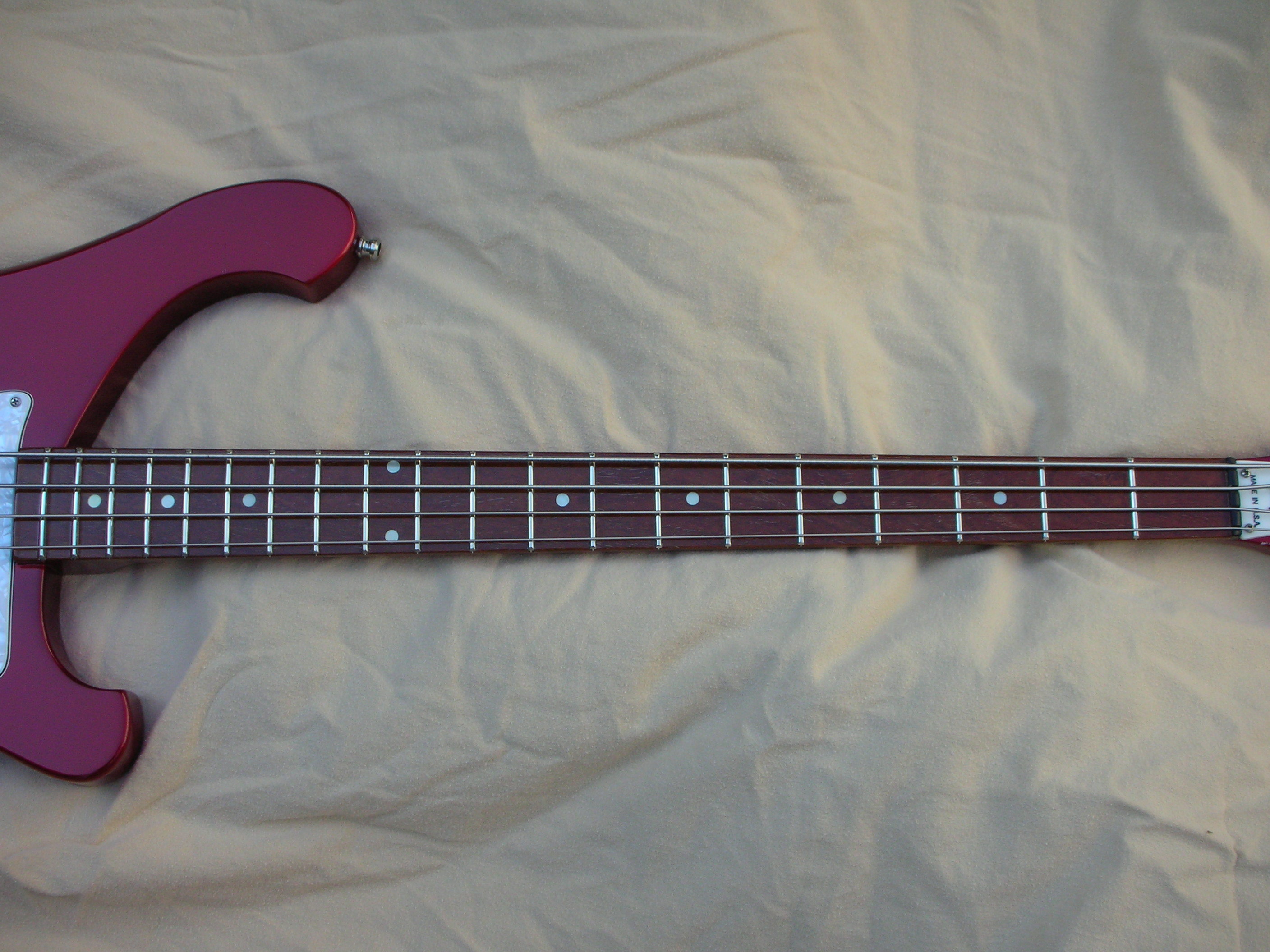
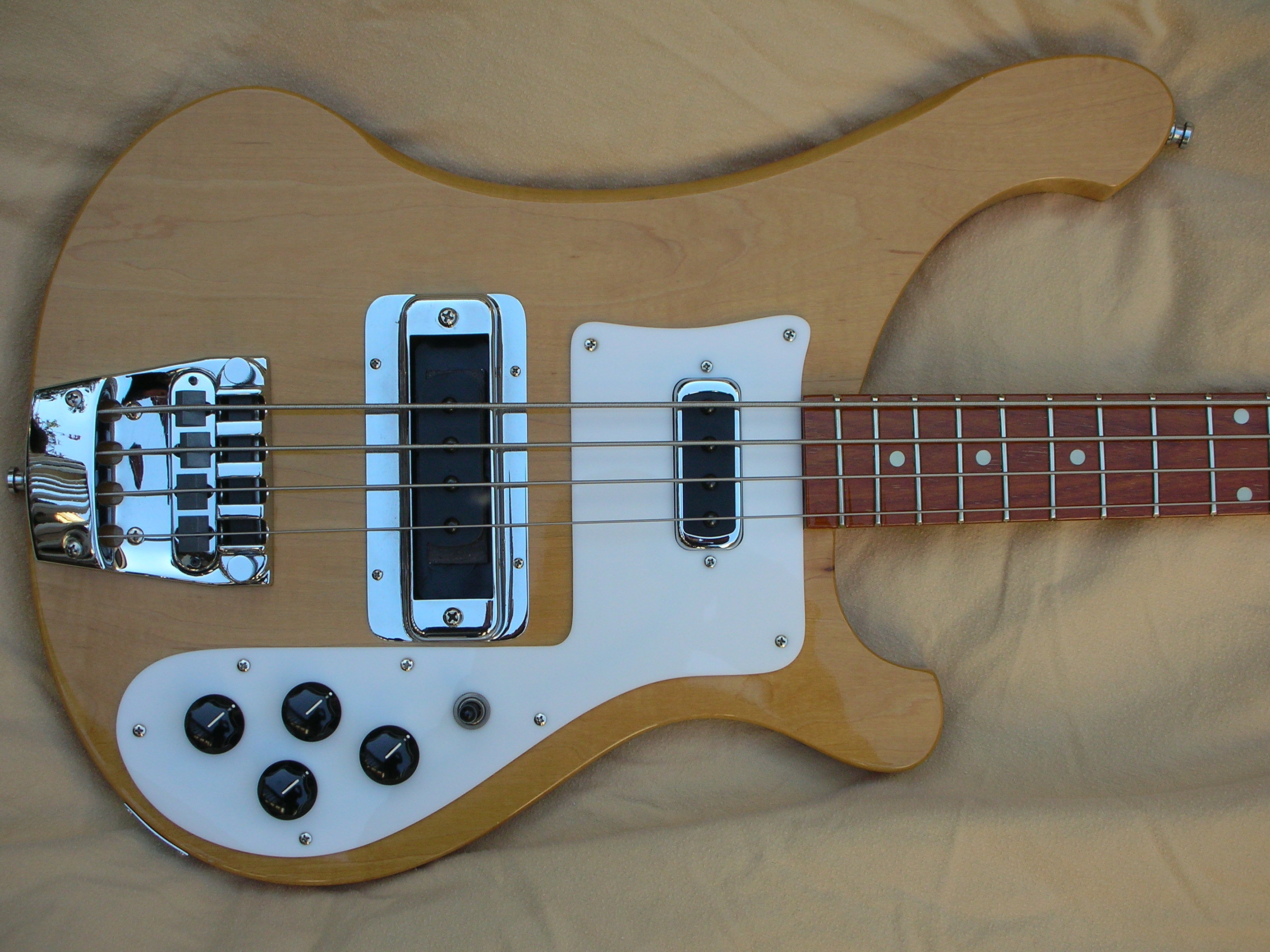
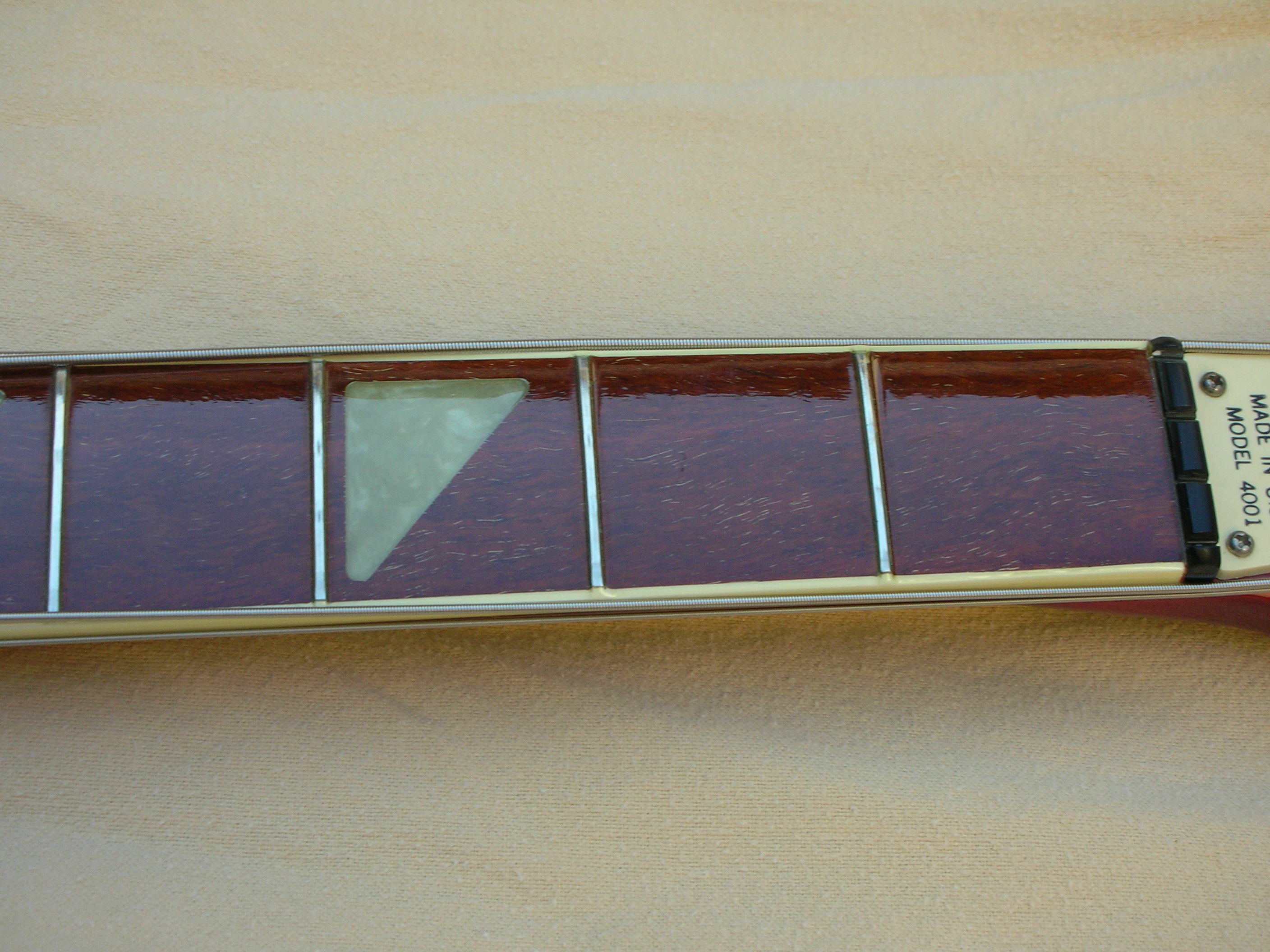
My late 80's 4003's were born with really fat frets and I like 'em!
http://www.rickresource.com/register/us ... llsize.jpg


Moderators: rickenbrother, ajish4
I'm not sure, but I'll take your word for it. Same frets came on my other '87 and on my '88. Must have been OEM in the late 80's Here's my '87 MG:Gilmourisgod wrote:I must have had the old softer nickel ones on my 79' 4001, I'd forgotten about the tarnish, but now that you mention it I remember that the frets would go dull looking if you left it in the case awhile, or on parts of the neck that didn't get played much. Those frets you have look like medium jumbo's?

If the question is what does the end user do, there are tons of answers, including use an aftermarket bridge, add more screws or just don't worry about it because it's probably not worth the sweat. Or if one is obsessed about the old aluminum tailpiece, try to acquire one.pag wrote:Going back to the start of the thread is the question of what do you do to cure tail lift?
I think its a valid question and although its been discussed many times so have lots of other
aspects of the 4000 series design.
Lets have some more ideas please.
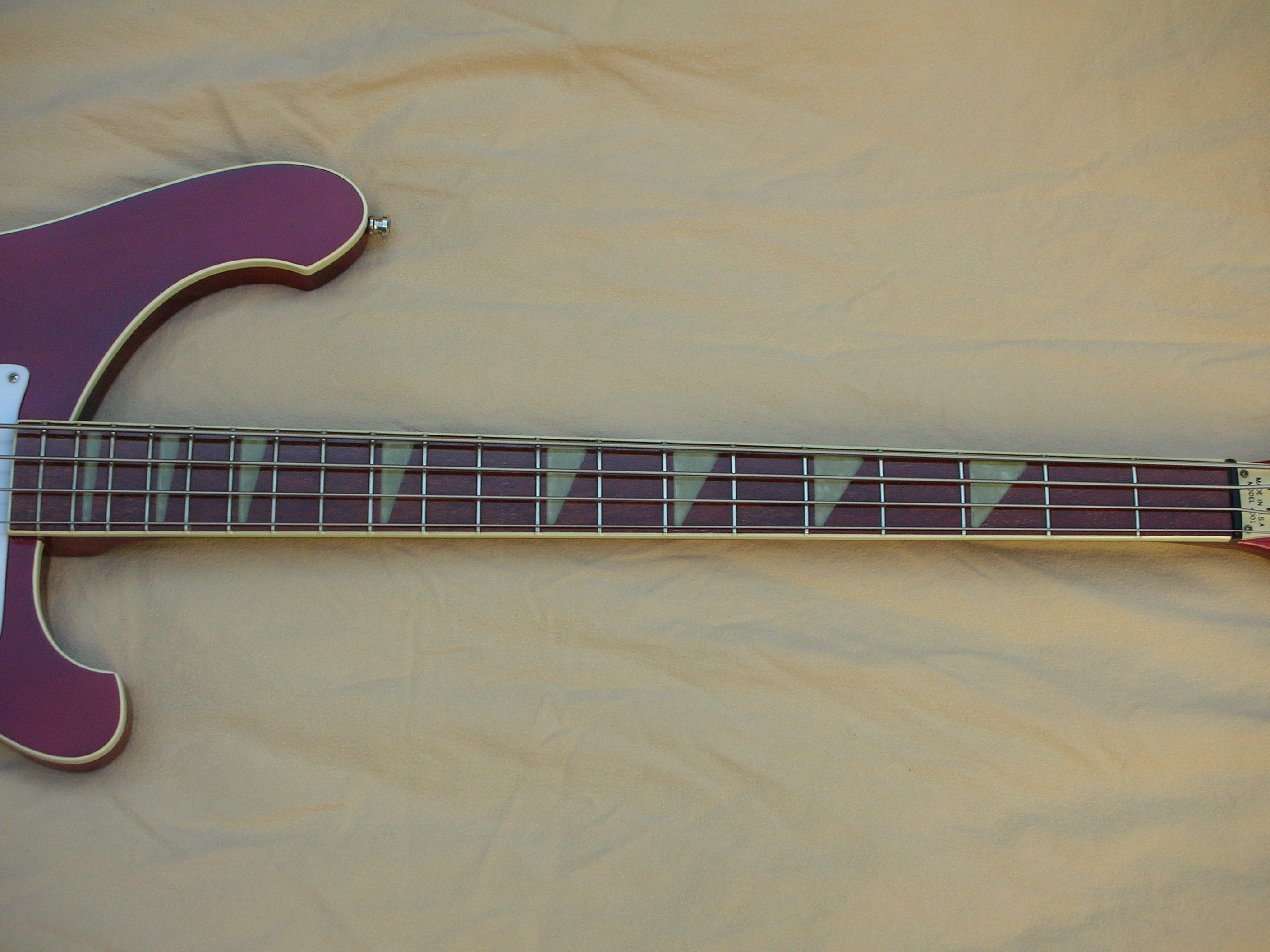
Oh, and yes...Your '79 4001 would have had the old softer frets. Here's a nice, original '79 for comparison:Gilmourisgod wrote:I must have had the old softer nickel ones on my 79' 4001, I'd forgotten about the tarnish, but now that you mention it I remember that the frets would go dull looking if you left it in the case awhile, or on parts of the neck that didn't get played much.
Yes!rickaddict wrote: Here's my $.02: Get yourself another Rick. Play it. Hear it. Look at it. Smell it. It is art and will please your senses. Informal scientific studies have shown that Rick ownership leads to happiness in most bass players.

Nobody has brought up the washer/maple plug solution from many years ago that works really good. By filling the gap between the bottom of the 3 screw area of the tailpiece and the rout it sits in, you do not pull the tailpiece down into the rout and pre-stress the tailpiece to lift at the point it hits the body by the rout.pag wrote:I also use RS66LD strings by the way and its just a fact of life that a moving roundwound stainless steel string
will wear your frets out.
Thats why guitar repairers have a job.
Going back to the start of the thread is the question of what do you do to cure tail lift?
I think its a valid question and although its been discussed many times so have lots of other
aspects of the 4000 series design.
Lets have some more ideas please.
This would be a good time to mention that this is not necessary in newer instruments as the rout depth now matches the tailpiece, although with some tolerance due to sanding and finish thickness.johnallg wrote:Nobody has brought up the washer/maple plug solution from many years ago that works really good. By filling the gap between the bottom of the 3 screw area of the tailpiece and the rout it sits in, you do not pull the tailpiece down into the rout and pre-stress the tailpiece to lift at the point it hits the body by the rout.