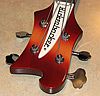
Is there something wrong with this picture?

Vintage, Modern, V & C series, Fretless, Signature & Special Editions

Moderators: rickenbrother, ajish4

dale_fortune
Intermediate Member
Posts: 1241
Joined: Sat Oct 30, 2004 6:00 am

Post by dale_fortune »

10/32 thread die is what Fender and Gibson also use.
size 10 producing 32 threads per inch. Not sure what that would equal in metrics.
rickfan60
Senior Member
Posts: 5395
Joined: Sun Apr 11, 2004 5:00 am

Post by rickfan60 »

Thanks Dale. I thought that's what it was but I wanted to be sure. If you can't get one Ilan, I will send one over to you.
User avatar
loverickbass
Veteran RRF member
Posts: 1409
Joined: Mon Jul 29, 2002 5:00 am

Post by loverickbass »

Hey Ilan, your bass was born the same month and year my Azureglo was! We are kin folk now.

Cole
User avatar
headbanger
Veteran RRF member
Posts: 735
Joined: Sat Jan 20, 2001 10:06 pm

Post by headbanger »

I had a tough time finding a 10/32 die in Australia where everything is metric also. It's now a prized posession!
Ilan, clean the rods with steel wool & coat them with floor polish & they should go in(or out) easily. You don't HAVE to arch them before they go in, but sometimes it can help. Bow the neck by hand then snug them up.
User avatar
johnhall
RIC
Posts: 3926
Joined: Tue Sep 26, 2000 11:17 am
Contact:

Post by johnhall »

Why don't you just tap it metric and use a metric nut to fit it? You can then use a metric wrench to adjust it as well.
rickfan60
Senior Member
Posts: 5395
Joined: Sun Apr 11, 2004 5:00 am

Post by rickfan60 »

Nuts like that can be hard to find in any thread.
dale_fortune
Intermediate Member
Posts: 1241
Joined: Sat Oct 30, 2004 6:00 am

Post by dale_fortune »

I have to agree with John. That would be the most logical way to do it since the metric die will chase new threads right over the 10/32's
This why he is the CEO
User avatar
cheyenne
Veteran RRF member
Posts: 6263
Joined: Fri Feb 16, 2001 11:39 am

Post by cheyenne »

You might try this place, they have all kinds of stuff.

http://www.boltdepot.com/
"Knowledge is Power"
User avatar
ilan
RRF Consultant
Posts: 2903
Joined: Thu Jun 13, 2002 7:00 pm

Post by ilan »

Thanks for all the good advice!
"A Noble Instrument Must Be Nobly Regarded"
rickfan60
Senior Member
Posts: 5395
Joined: Sun Apr 11, 2004 5:00 am

Post by rickfan60 »

Coupling nuts like that are easily found in larger sizes with 1/4-20 being the most common. Little ones like those found on Rick truss rods are not readily available. Because they are so often munged, I have tried to source them for replacements.
User avatar
thx1955
Veteran RRF member
Posts: 2824
Joined: Thu Nov 14, 2002 6:00 am
Contact:

Post by thx1955 »

Would it not just be as easy to get a new set of trussrods ??
"It's Red Jim, but not as we know it...."
User avatar
jps
RRF Consultant
Posts: 37509
Joined: Wed Feb 12, 2003 6:00 am

Post by jps »

They aren't made any more. Lucky for me I have a NOS set of the old rods I bought back in '83, just in case.
User avatar
johnhall
RIC
Posts: 3926
Joined: Tue Sep 26, 2000 11:17 am
Contact:

Post by johnhall »

Ted, McMaster Carr has nuts like those in every configuration, thread, length, English or metric. I can't imagine that GIN Engineers in Israel doesn't have much the same stock.

You don't even have to chase over the same threads- just cut off 20-25 mm of the rod and start fresh.
rickfan60
Senior Member
Posts: 5395
Joined: Sun Apr 11, 2004 5:00 am

Post by rickfan60 »

I checked with McMaster Carr a while back. The smallest width they offer is 3/8". They don't seem to have a 1/4" in their catalog.
rictified
Senior Member
Posts: 8040
Joined: Sat Apr 19, 2003 5:00 am

Post by rictified »

I think the aluminum block get pushed over from using high tension strings over a period of time. Sometimes even if you cut a length of the rod off it will happen again unless you use very light strings. You may also have a hard time getting the neck to be exactly straight. The steel in those rods is soft and under too much tension they will push the block down bending the tapped ends downward at the same time, it's very common with old 4001's. I had two 4001's done, on one of them the machinist cut off the threaded ends and welded some hard steel for the new ends, the block never moves downward as the hard steel will not bend. On the other one I just had new ends made and threaded and that one continues to bend downward unless I use very light gauge strings like TI's. And once it happens it does it again very easily, bending the ends up again doesn't really work very well as gradually they usually bend down again. I didn't ask the machinest to make hard steel ends he just took it upon himself to do it. I had misgivings at first was afraid that all the pressure would pop the fretboard but it's been 2 years and I've had no problems with that bass at all. I have stock Ric nickels RW's on it, sounds and plays great, it's my only RW bass right now.
Post Reply

Return to “Rickenbacker Basses: by Joey Vasco & Tony Cabibe”